Showing posts with label Salt Marshes. Show all posts

Monday, September 23, 2024

Water Ghosts

 Emily called them "little water ghosts". Dozens of jellies floated and pulsed in the hazy green bay upon we floated on a warm, breezy mid September day. They were ghostlike but tangible, lingering in view for extended time and existing their extraordinarily simple little lives. Jellies waft with the ebb and flow of the tide and other currents. This means they're plankton, which may buck a traditional sense of the word. Planktonic animals are often though of as microscopic, or at least very tiny. But jellies aren't strong enough to fight the tide, the ride with the flow, and that makes them plankton. 


These jellies were mostly Sea nettle, Chrysaora quinquecirrha. Smaller, more transparent, and perhaps more elegant than the often seen Lion's mane jellyfish that are also numerous in long island sound. They were so numerous that some drifted into my anchor line, losing bits of their long and delicate tentacles as they did so. Though just a minor irritant to a human swimmer, these jellies are death incarnate to tiny fish and crustaceans. Passive as they are though, it is very much up to the prey to make an error. The jelly is not going to chase it down.


As I pulled up my anchor line, it tugged through a Sea nettle, breaking bits off of its long tendrils. This seemed to upset me more than it did the jelly as it continued pulsing away as though nothing had happened. I never like breaking bits off of a living thing needlessly, even if it's a mindless little water ghost. 

Thank you to my Patrons; Erin, David, John, Elizabeth, Brandon, Christopher, Shawn, Mike, Sara, Franky, Geof, Luke, Noah, Justin, Sean, Tom, Mark, Jake, Chris, Oliver, oddity on Display, Sammy, and Cris & Jennifer, Courtney, and Hunter for making Connecticut Fly Angler possible. If you want to support this blog, look for the Patreon link at the top of the right side-bar in web version.

Tuesday, September 12, 2023

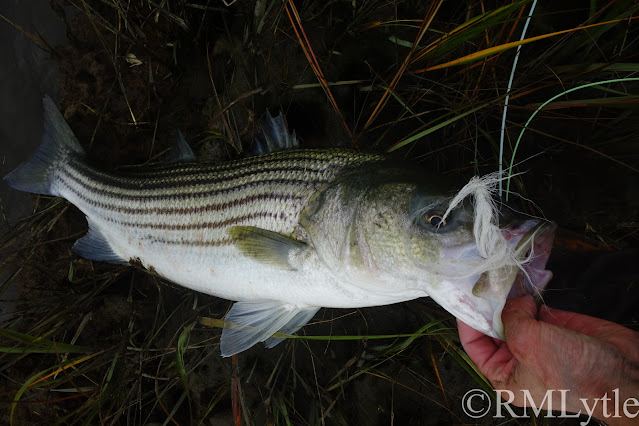
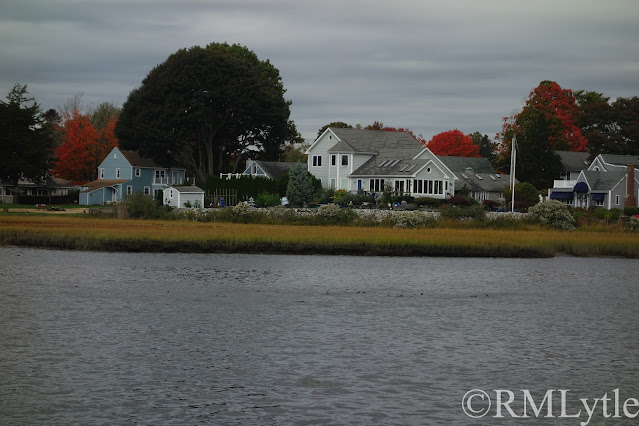
Photo Essay: Lavender Tidal Marsh Fish


Thank you to my Patrons; Erin, David, John, Elizabeth, Brandon, Christopher, Shawn, Mike, Sara, Franky, Geof, Luke, Noah, Justin, Sean, Tom, Mark, Jake, Chris, Oliver, oddity on Display, and Sammy for making Connecticut Fly Angler possible. If you want to support this blog, look for the Patreon link at the top of the right side-bar in web version.

Saturday, November 26, 2022

An Extremely Meaningful Blitz

 I learned the ropes of striped bass fly fishing in a localized area on Long Island Sound. It was the perfect training ground, with tidal creeks, rocky points, beach front, and sand flats all in close proximity. Many parts of the Connecticut shoreline have all of these geographic features within close proximity, but I stuck with one area initially. I gained confidence in this area, as there happened to be a lot of fish there that year. There were even some pretty nice fish in the mix, and some encounters I had that year will stick with me for a while. I was ecstatic with what I'd found in this fishery. I made the faulty assumption that it would always be that way. 

The next year things were a little different. The tidal creek that had been the epicenter of my fall run the year prior had some fish but very few. There were some nice fish in the spring but the fall was underwhelming. These spots then wouldn't produce well for five years straight. I began to think that first year would never be repeated. Though some years saw good numbers of bass, especially small ones, there was never a lot in that specific spot. 

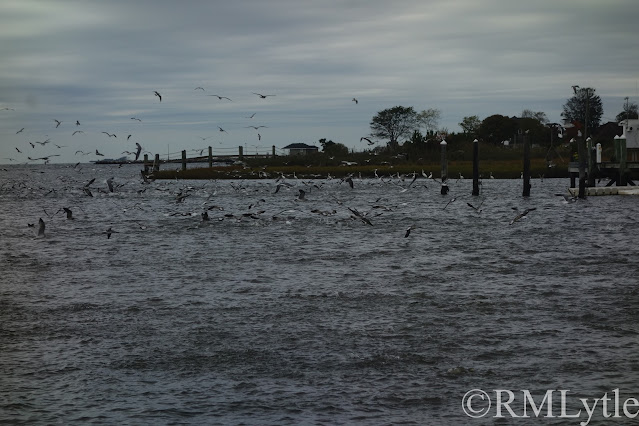
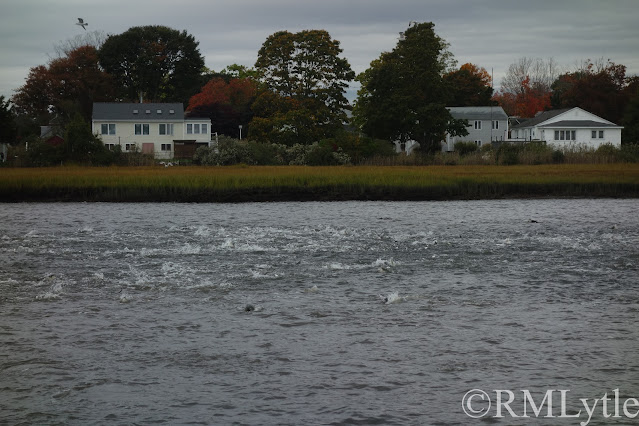
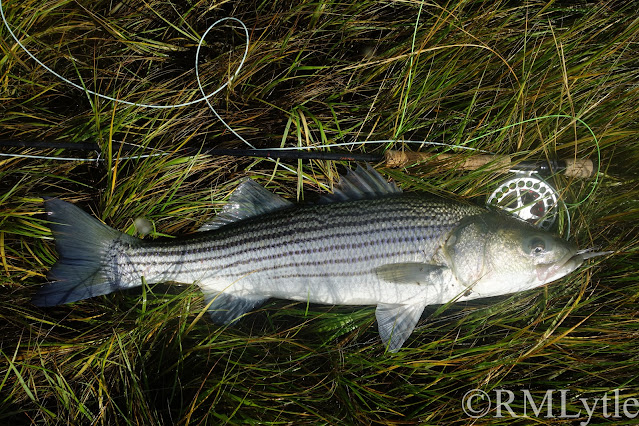
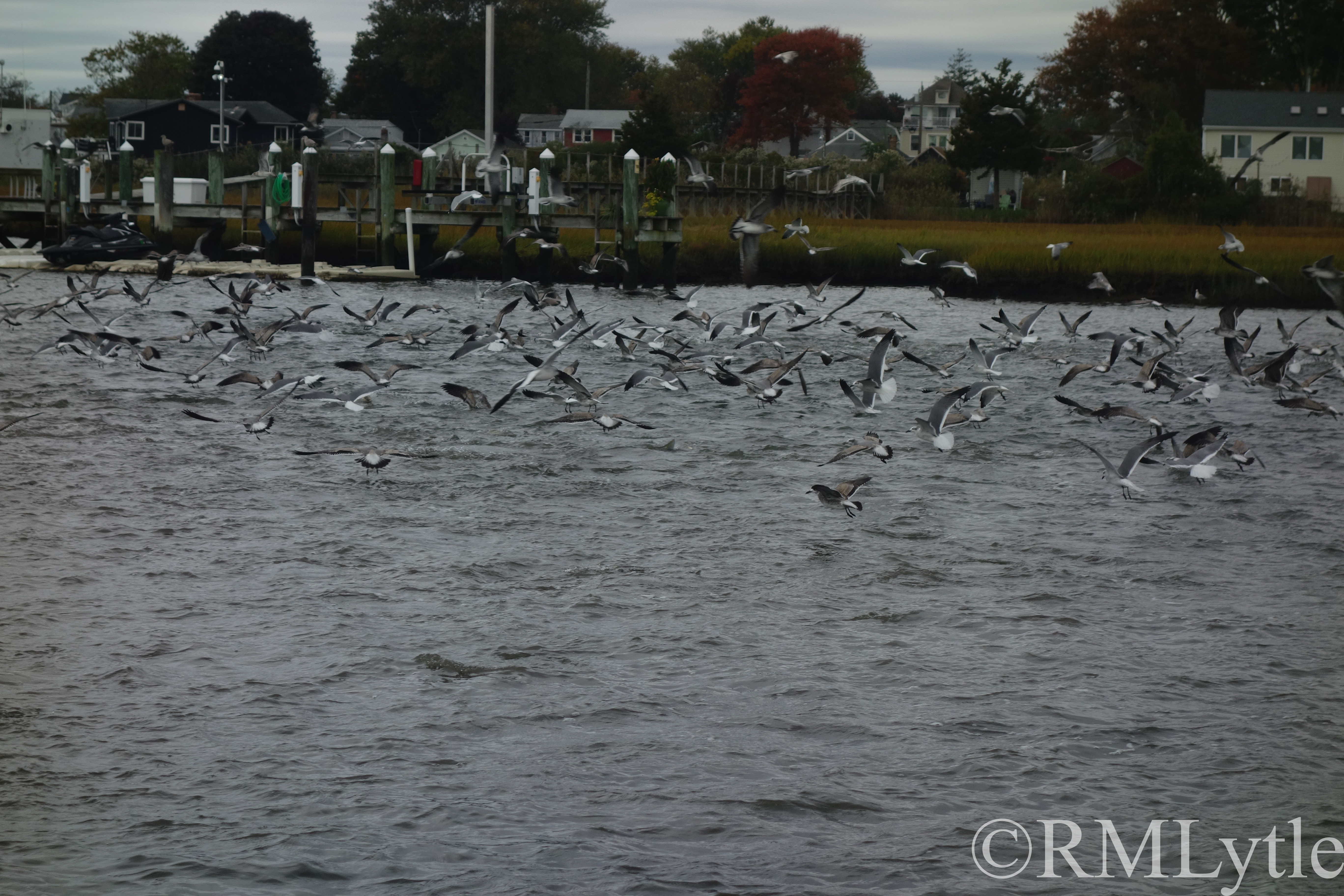
Then came the fall of 2022. October was one of the most spectacular- probably the most spectacular -striped bass fishing months I'd experienced. For a while I was following one body of fish almost daily, and it was epic. Then I sort of lost track of them. Deciding they must have moved on, I began driving around and stopping to watch for birds or blowups on my daytime missions. Two days after I'd lost track of the fish, I crossed one very familiar bridge and turned my head to see a massive cloud of birds over the creek. I whipped a u-turn as soon as I safely could and parked. Not even donning waders, I grabbed a fly rod and my sling pack and ventured into the marsh with a palpable sense of anticipation. I didn't even make it to where the birds were before spotting a blitz in a marsh cut where I'd not seen loads of breaking bass in years. The fish were on peanuts, averaged about 27 inches, and were ravenous and easily caught. 
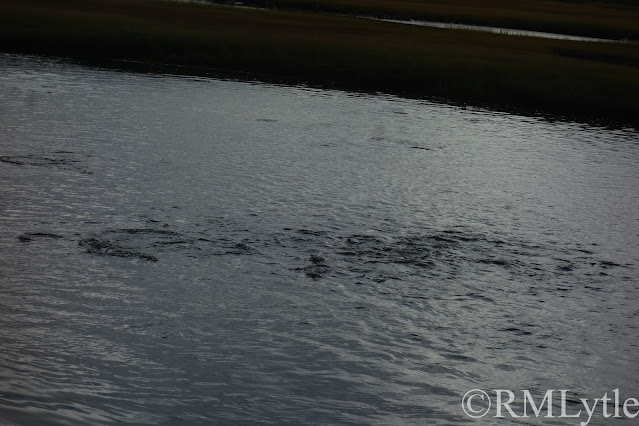

I roped in bass after bass on a white Hollow Fleye, many of them being low end slot fish and a fair number being smaller. The size of the fish and ferocity of the blitz were very similar to those of that formative year of my striped bass fishing. It felt like a homecoming of sorts. After years if lackluster results this water- one of my favorite places -was suddenly giving up the goods again. Things slowly winded down right in front of me, and in time the decision was made to go to where all those birds had been. I couldn't have anticipated just how crazy that would be. 
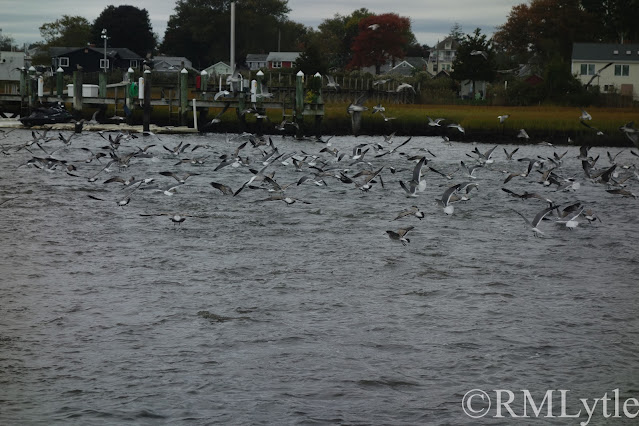

I had just walked up to the most spectacular, expansive, and prolonged blitzes I had ever encountered. There were acres of bass and hundreds of birds laying siege to peanut bunker in a narrow tidal creek. This was a show to beat all others, a display of life and death that touched every sense. The visual spectacle was, of course, plainly evident. Thousands of iridescent juvenile menhaden sprayed out of thew choppy water, often followed by a linesider going airborne in hot pursuit. The birds provided their own sights to fixate on the laughing gulls dipping to grab the peanuts, hovering low over breaking fish, wings not beating effortlessly as they often can but, rather, completely frantic. Nothing I could see in that little part of the world at that moment was calm. It was chaos. If I closed my eyes, and I did a few times, I couldn't hide from it. The sound may have actually rivaled the sights as evidence of the mayhem. The gulls calling was audible from afar of course but so was the sound of the bass. It was a dull roar, like a waterfall, with higher pitched splashes and pops coming through. I could almost feel it. At times I really could when the bass would pin a school against the mud bank at my feet, the vibrations of their many bodies impacting the sod transmitting to my feet through the very ground I stood on. There was a smell and even taste to the air the signified the death of baitfish as well. It's an almost sweet smell with some vegetable like aspects. If you've been around a wild bunker blitz, you know what I'm talking about. It's an almost melon like smell with hints of fishiness to it. 

It's hard to really put into words what a blitz like that is like and what it feels like to be in the middle of all of that. It's even harder to describe what it was like for me being in such a special place with all of that going on around me. This was a meaningful day of fishing for me. Though I knew that this wasn't likely to produce any out-sized fish, that getting larger fish was no more predictable here than winning big at a slot machine, this blitz was more significant to me than so many of the big fish blitzes I'd already experienced this year. 


There were certainly big fish in the mix, so the chance was always there. At one point, having downsized to a kinky muddler just to diminish the damage to my larger flies, I hooked a smaller bass. It wasn't tiny, maybe 20 inches long, but much smaller than many of the fish I was catching. I was fixated on the activity around me and not really paying any mind to the fish I had on when there was a massive explosion, as if a large dog had just jumped into the creek. My rod buckled and I just barely caught sight of the flank and tail of the preposterously large striper that had just engulfed the schoolie I had on. My hook pulled free mere seconds after the attack and I'd never get to know quite how big that fish was. It'll certainly be a memory that will stick with me for the rest of my life though. 

Another sight that is ingrained in memory from that day was a school of bass so thick that they filled and darkened the water column, with the fish at the very top sunning their tails and dorsal fins in dry air. This wasn't a blitz, just a school of fish so thick it occupied the entirety of the water column. I'd never seen anything like this, and maybe never will again. 


After a spell, I actually had to go back home. I left the blitz in progress. Being gone long just wasn't an option though, returning that very same day had to happen. I also felt like I needed to share this spectacular thing with some friends. I asked Garth if he wanted to come and he did. My friend Boots and I had talked about fishing that day as well, so I gave him a call. He'd actually been with me one of the last good days of that formative first season in this spot as well. These two guys would get the gravity of this, that's what was important. 

Some people might think it was foolhardy to think this epic blitz would still be going on. In my mind, there was no way it wouldn't be. It was just too large, too vigorous, and had already been going on at a somewhat subpar tide... had to continue. Well...


Garth and I drove down together, Boots would get there a little later. We were in the fish right away, and if anything the spectacle had increased in intensity in some ways. This event had now seemingly been in progress for six hours. It would go on for many, many more, and that was something I couldn't have anticipated. 


We gawked. We caught fish. We struggled to process the extraordinary event that was right in front of us. There are bigger blitzes, I've seen plenty of them. But for a blitz of this size and duration to take place in a narrow system of tidal creeks is very special. It doesn't happen every day. Boots finally found his way to us and joined in the revelry. He was soon trying to catch bass on all of the plugs he'd not yet caught stripers on, plugs that had special meaning to him. And because the fish were so ravenous it wasn't all that hard to get one to eat almost anything. 


For the fish, this day represented and important and yearly part of a migration. Water temperatures were falling and the days were getting shorter. These fish were heading towards their winter homes, and their biology drove them to pack on the pounds while they could. Some of the fish we were catching were so heavy set they looked downright rotund. They had round, saggy bellies. The really small ones almost looked like tadpoles, carrying their freshly gained weight exclusively in their stomachs. As with so many aspects of the day, photos just didn't do it justice. 


As it got darker I anticipated that this blitz would end. Nighttime blitzes are rare. Nocturnal surface feeding isn't, but concentrated blitzing is. This was the blitz that refused to end though. The sun fell and it was still going on in the fading light. 


As the sky darkened, the fish merely moved rather than calming down. We followed them down to the mouth of the creek and continued to catch fish into the night, our hands becoming shredded and raw from the rasp of countless striper mouths. The number of fish to hand was likely well in the hundreds at that point, and the thought of tying into something much bigger convinced me to continue casting. That and the knowledge that this was a special event. I told Garth, "enjoy this while it lasts, because we may never experience this again. These are our good old days". I'd love to believe that I was wrong, but there's no way to guarantee that we'd experience a tidal creek blitz like this in our home waters again. So we stuck with it until it seemed absurd to stay a minute longer. My hands were bleeding, my sleeves were crusted with salt and dried bass slime, and I'd waded into the creek wearing leather boots and khakis in air temperatures that were dropping into the high 40's. When the fish put on a show that good, I don't let much stand in the way of being in the middle of it all. Sharing this show with a couple of good friends in a location that was incredibly important  to my development as an angler was priceless. 


Thank you to my Patrons; Erin, David, John, Elizabeth, Brandon, Christopher, Shawn, Mike, Sara, Franky, Geof, Luke, Noah, Justin, Sean, Tom, Mark, Jake, Chris, and Oliver for making Connecticut Fly Angler possible. If you want to support this blog, look for the Patreon link at the top of the right side-bar in web version.

Monday, March 7, 2022

Big White Perch & The Lifer Magic Phenomena

 When Noah and I first started fishing together, one of the first fish we began researching and attempting to find were big migratory white perch. The lake we both grew up fishing had an introduced and stunted white perch population, so I think the whole appeal was in catching the much larger native version of a species we'd been catching for years. We'd heard that they fought pretty hard and could exceed 15 inches in length. Noah actually caught some one day, in summer of 2016, while striper fishing. As soon as we specifically targeted them though, we suddenly couldn't find them to save our lives. We were plagued by bad conditions and often just horrible luck. Sometimes were were even told there were plenty right where we were fishing, but we always failed to catch any. 

White perch follow an anadromous lifestyle in their native range along the CT coastline. Some fish in the larger tidal systems, like the Connecticut River may, never actually enter salt or brackish water at all, but along the coast are scattered populations that have a significant saltwater based component to their lifestyle. I should note that white perch are not really a perch, though they're described as a perch-like fish. They belong to the genus Morone and family moronidae, the temperate basses. They are far more closely related to white bass and striped bass than they are any perch. They do often fill a similar niche and even school with yellow perch when the two are present in the same habitat, and as far as body and fin structure they aren't completely dissimilar, so the naming can be forgiven in my opinion. 

Throughout much of the year, many white perch are messing around in tidal salt and brackish water, while some of their brethren are up in freshwater. They aren't a perfectly migratory anadromous fish like herring or shad, and unlike striped bass, most of which enter the ocean and perform some manor of significant migration, it seems a fair percentage of white perch are content to knock around in fully fresh water for most of their lives. Others only seem to wander into freshwater to spawn, and these guys and gals are the biggest of the big. These are the white perch that might well attain 16 inches and weight several pounds. These were the white perch Noah and I wanted to catch, and we couldn't seem to. 

This brings up a somewhat interesting phenomena we've noticed as life listers. Since we dedicate such a significant amount of time to targeting completely new species, we're routinely aware of this odd and frequent occurrence. It often takes an exceptionally long time to catch the first of a species, sometimes even unnecessarily. Then, once that first one has been caught, we find it either easy, or just easier to catch that species, whether we're actually targeting them or not. At first glance you might think we learned some key piece of information in the process of catching the first one that resulted in the rapid increase in success, but that isn't it. And though Noah and I had already caught probably thousands of white perch, our process of catching salty ones exemplifies this perfectly. We didn't approach it without prior knowledge. We knew spots, whether we were told them or dug them up through thorough research, or even just happened to be fishing them and saw someone else catching big white perch there. And it isn't like white perch are a remotely technical fish. Moreover, we had already caught the species, we just hadn't successfully targeted the populations with a saltwater component to their life history. 

Then Noah caught one this past fall. I was with him when that happened, maybe you read the post. Then the funny thing happened. He proceeded to start catching white perch consistently out of the very places we'd been trying for years to find them at. Lifer magic, and this wasn't even a real lifer. I hoped at that point that my time was next, that after years of trying I'd finally have my trophy native white perch. I began searching for them in Rhode Island, in places I knew were known to produce. No luck. Then, while back closer to home in an old haunt targeting holdover stripers with Noah and Garth, it finally happened. I proceeded to catch a few more after that. The seal is broken now, so this should suddenly become much much easier. 


Lifer magic is certainly not an isolated phenomena. Fisherman tend to be a little superstitious, sometimes very superstitious. Most of the time, I'm not. Save for this one case.

And maybe a few others.

Thank you to my Patrons; Erin, David, John, Elizabeth, Brandon, Christopher, Shawn, Mike, Sara, Leo, C, Franky, Geof, Luke, Streamer Swinger, Noah, Justin, Sean, and Mark for making Connecticut Fly Angler possible. If you want to support this blog, look for the Patreon link at the top of the right side-bar in web version.

Thursday, January 6, 2022

Last Stripers of 2021

Trotting through a marsh in December often feels solemn to me. Maybe that's just because everything is very dull. There's a general lack of vibrance in the winter salt marsh.  Everything is some form of grey or tan. Winter holdover stripers offer just a little more color than the scenery, too, as they are often more pale and lacking in spunk than they were just a month or two before. Most of the water I cover is devoid of fish and may only have the slightest evidence of any life at all. Perhaps what makes winter striper fishing enjoyable. Walking up to a deep cut and seeing a swirl or casting a Clouser and feeling the dull thump of a striper eating the fly are very much in contrast to the overall apparent dead-ness of everything.


Catching fish where fish aren't generally expected to be or at a time of year they aren't generally a prime target can be fun. Of course some of the CT holdover striper fishing is far from a secret anymore, and that has just lead me to wander further afield, in marshes and creeks where actually encountering my intended target species feels a bit more improbable. I find just enough to keep me interested, and sometimes as the day comes to a close I realize that the dead winter marsh isn't all that dead at all. It's just in a light sleep.


Winter is taking hold little by little in bits and spurts. It doesn't feel like it every day, but the salt marshes and their resident bass are taking naps. They'll wake up again for real in April. 


Until next time, 

Fish for the love of fish.
Fish for the love of places fish live.
Fish for you.
And stay safe and healthy.


Thank you to my Patrons; Erin, David, John, Elizabeth, Brandon, Christopher, Shawn, Mike, Sara, Leo, C, Franky, Geof, Luke, Streamer Swinger, and Noah for making Connecticut Fly Angler possible. If you want to support this blog, look for the Patreon link at the top of the right side-bar in web version.

Tuesday, November 23, 2021

November Morones

 Noah and I headed out under dreary skies one November hoping to find some big striper blitzes. Some had been happening in the days before, and indeed that very morning in a different area. It had rained a lot the before, though, and that often puts striped bass into a lethargic mood sends the bait packing. We were still hopeful that a large biomass of stripers would be around, especially since there had been tremendous numbers in the days prior. Our first drift on a key mud flat produced a 28" bass for me, and multiple boils and hits for both of us including with some particularly good fish. That made me very hopeful. Subsequent drifts came up empty.

Morone saxatilis


After a few runs through water that should have been but wasn't giving up fish, we made our way into some backwaters to looks for what would likely be smaller but more willing fish. We set up at a choke point where lots of hickory shad were rolling. I picked up Noah's light setup while he continued to throw bigger plastics for stripers. At first I just used the jig he had tied on, then I switched out and actually tied a Clouser on. Noah had figured out that a lot of treamers that i'd left lying around his van  were perfectly cast-able on his light setups. I was interested to mess around with it in a situation where it would be particularly conducive. I also wanted to see if I'd have any interest in buying such a setup for clients who aren't interested in fly fishing, as ultralight tackle has a lot of crossover with fly gear and I'd like not to limit myself in terms of clientele. I caught a load of shad on both his jig and my Clouser, and they were a lot of fun on a light spinning rod. 

Alosa mediocris                            Morone saxatilis

Something then made me switch back to the fly rod though: a fish Noah caught, a fish he and I have been after together for years. Our mortal enemy, our biggest foe. Our most difficult adversary. A large brackish-water white perch. 

It took a big plastic, which just seemed ridiculous. The fish was 13.5" long and very hefty, a truly impressive specimen, and of course I immediately wanted to try to catch one of those.

Morone amaricana


I didn't. Noah didn't get another either. We ended that portion of the trip having had both Morone species present in CT on the boat though, and I certainly haven't experienced that before. Noah hadn't in a long time. It was pretty cool.

Until next time, 

Fish for the love of fish.
Fish for the love of places fish live.
Fish for you.
And stay safe and healthy.


Thank you to my Patrons; Erin, David, John, Elizabeth, Brandon, Christopher, Shawn, Mike, Sara, Leo, C, Franky, Geof, Luke, Streamer Swinger, and Noah for making Connecticut Fly Angler possible. If you want to support this blog, look for the Patreon link at the top of the right side-bar in web version.

Monday, January 25, 2021

Winter Brook Trout on Cape Cod

Meandering lowland streams are the dominant type of river in Southeastern Massachusetts. The geology there wouldn't allow anything else: the hills are small and rolling. There are no mountains here. But there are brook trout. For most, images of mountain lakes and brawling freestones are conjured by the thought of brook trout. These coastal streams are nothing like that. What they are, though, is nutrient rich havens for some of the last sea run brook trout populations in New England. These vegetation-rich streams are often guarded by brush and bog and are difficult to fish. I've spent many days on brooks of a similar character in the Connecticut River Valley, so I feel pretty much at home on the char streams of Cape Cod. A few days after Christmas, my partner, Cheyenne, and I set out to explore the Cape. It would be my first visit in the winter. I was keen on seeing some of the streams I know out there in a different season.

After a lovely breakfast in Buzzards Bay, we made our way to one of the coastal small streams I've had the pleasure of getting to fish a few times. I wanted to stick to the tidal stretch, knowing full well this decreased my odds of encountering a brookie. If I did catch one the odds were much greater that it would be a true sea-run fish. Additionally, I'd be staying out of the water these fish use to spawn. Fry don't emerge from redds until February or March. The last thing I wanted to do was tromp on a well obscured redd and crush the developing future generation of brook trout in it. The importance of not wading on spawning habitat is not well observed. If you aren't willing to respect these fish by staying off the gravel they spawn in you should not be fishing these waters. 


Fishing for brook trout in a salt marsh is a surreal experience even when I'm not catching or seeing any fish. The gear I'm carrying, the fly on the end of my leader, and the way I'm fishing are no different than what I'd be doing on many Connecticut brook trout streams. But the sights and smells are not at all the same. The water rises and falls with the tide. The marsh mud produces an odor that gives me a sense of what I should be expecting. But striped bass nor fluke nor bluefish swim this marsh in any notable abundance in the month of December. Brook trout, however, wander in and out of this marsh year round. At least during the low end of the tide on the day I was there though, salters were scarce. I went without a touch. The hoar frost, however, was lovely on the dead, marsh grass.


There were other things to see, so we moved along. With the sun warming the ancient dunes and kettle ponds, we crested a hill and found ourselves next to another of the Cape's rivers. I'd fished this one with Noah in the summer and we each caught a beautiful brookie . I was a little more confident. One run produced nothing. The next also seemed lifeless. The glassy pool below called out to me. I wasn't in waders so I couldn't get into the best spot to fish it. I did have a casting window and a little bit of know-how on my side though. 

I changed to an unweighted Hornberg. I let fly the longest cast the brush would allow then began feeding line out to let the fly float downriver.  When it reached the tailout I twitched the rod tip aggressively and sunk the fly. I then retrieved it back up the pool. About halfway in, I saw a fish dart from under the brush-covered bank and smash that Hornberg. I set the hook and a gorgeous brookie began leaping around the pool. Back-lit by low winter sunlight, the jumping brookie was surrounded in golden droplets. It was a magical moment in time. I walked the fish upstream, keeping her in the water so Cheyenne could see her. It was a lovely fish. Whether this char had spent any time in saltwater I do not know, but any native freshwater fish from a place where humans have had as severe an impact as on Cape Cod is special. 


With that fish landed, I was satisfied. I need not catch any more. Later, we ran into Geoff Klane and a buddy of his who were also out after brook trout. I kept the rod packed away but it was good to chat with Geoff for a bit. Covid has made fishing with friends much more difficult these days so any socially distant interaction with my friends near the water makes me yearn for this virus to be over with so we can all enjoy each other's company again.


After saying goodbye to Geoff, Cheyenne and I headed to the dunes of the Outer Cape. It was cold out there, and we saw neither seals nor white sharks. A couple miles out I could see a huge flock of birds that appeared to be over a blitz. In December the options are few. It must have been bluefin tuna. Seeing life out there in the winter was an exciting surprise. On the bay side, a beautiful sunset lit up the sky. 

I really ought to spend more time on Cape Cod in the winter.

Until next time, 
Fish for the love of fish.
Fish for the love of places fish live.
Fish for you.
And stay safe and healthy.


Thank you to my Patrons; Erin, David, John, Elizabeth, Brandon, Christopher, Shawn, Mike, Sara, Leo, C, Franky, and Geof for making Connecticut Fly Angler possible. If you want to support this blog, look for the Patreon link at the top of the right side-bar in web version. 

Edited by Cheyenne Terrien

Friday, September 18, 2020

Frigates and Falling Off Boats

 The day started as a simple mission to get a frigate tuna by any means necessary. There was an exceptional abundance of the species in Buzzards Bay, Block Island Sound, and into Eastern Long Island Sound this year, far more than normal. Auxis thazard is a very small tuna species, rarely exceeding a few pounds, and nearly identical to another small scombrid, the bullet tuna, Auxis rochei. Every specimen I saw clear enough photos of caught in New England this year were A. thazard, determined by the height of the corselet under the second dorsal fin. In A. rochei, the corselet is never less than 6 scales. I was with new Noah, here on out to be known as Garth so as to mitigate confusion. There's few people I'm willing to share scombrid rocks with, as they come at a premium in CT, and knowing the times and tides takes time. But Garth had proven to be trustworthy and conservation minded, and I knew he'd appreciate the fish for their rather astounding beauty. I'd already gotten to see him hooked up to a few chub mackerel from the boat, but from shore any scombrid is a different animal and there's nothing quite like your first. Mine was a tunny, so there wasn't much buildup. It was maxed out from the start. But Garth would get to practice on some smaller fish first. It wasn't a chaotic bite from the rocks. I got one chub mackerel and lost others, Garth hooked and lost a couple. A couple hours in I watched my friend Liam hook, fight, and land a frigate. That was the first I'd seen in person. It was a beautiful fish. 

The whole time, Garth was telling Noah that the bite was crazy and that he should get don there. This was absolutely an exaggeration, and we mostly thought it would be funny if he dropped everything and hurried down to meet us. Which he did, with the boat. By that time he arrived the wind machine had cranked up a bit and I was pretty convinced that it would be smarter to stay on the rocks, but I'd also encouraged this so I wasn't just going to leave Noah hanging. That said, when, a big school of frigates began busting in the boat ramp pocket and we were drifting against the rocks, I said "f it" and got up on the bow and started casting, leaving it to the inexperienced Garth to resolve the situation. He did so y grabbing one of the oars and shoving off the rocks as hard as he could. This wasn't the right move, it pivoted the bow out hard and left the stern against the rock. This quick action sent me swiftly into the water. I scrambled back into the boat fly rod first, now thoroughly irritated as well as soaked and fishing I'd just stayed on the rocks. But what was done was done, I suggested we get ourselves in a line of travel of the blitzing frigates, anchor up, and let them come to us. Eventually this did work and I hooked and boated my first frigate tuna. This was my first new fish species in a very long time, and I'd almost forgotten what it feels like. 

Pure joy.

Lifelist fish #165, frigate tuna, Auxis thazard. Rank: species.

That little fish started doing rapid tail beats shortly after I took the first photo of it, basically becoming an extremely powerful little vibrating machine, shaking my whole arm. This is something scombrids do sometimes when removed from the water, but it was the first time I'd seen it. I found it hysterical. The fish didn't stop until I put it back in the water. The release was hilarious, as I decided to simply put the fish back in while it was tail beating. I let go and it made two quick circles before straitening out and rocketing away.

As the tide progressed the number of frigate blitzes diminished and we began bottom fishing, which wasn't easy given the wind. We did get sea robins but not much else. After a while Noah and I began brainstorming and thought about the possibilities of the fishing in some marshy backwater areas we'd found lots of hickory shad in that time of year in years past. We decided to pick up and move, just to see. The same areas had held big stripers and bluefish as well, and numbers of smaller fluke. So there had to be something. What we ended up doing, oddly enough, was something new... crabbing. Just to see if we could do so effectively. With the heads and organs of the sea robins we'd kept as bait, we went after blue crabs because we never had before. And it as fun. We did get a few legal crabs but not enough to justify keeping them. It's good to know though that, if we decided to we could.


As we sped back through narrow creeks towards the launch on our way out, I sat on the bow and dangled my feet, realizing how lucky I was. I've got such good friends, I live in a fantastically diverse part of the country, and I've been afforded the freedom to explore it. Not everyone can say that. Fishing itself has dulled in it's luster for me some recently, partly because I'm just tired of some people and some notable negative aspects of "the fishing community", and more and more I just want to go do whatever I feel like. That's meant I've fished much less recently. But I'm happy. I'm exploring. I finding wildlife. I'm looking for undocumented snake populations, catching crabs, chasing storms, and falling off boats. And it's all great. I put "fish for you" in the footer of every blog post, but the biggest thing I've learned this year is that I haven't really been doing that, even when I thought I was. So this time, really think about what the following means to you, if you haven't already:

Until next time,
Fish for the love of fish.
Fish for the love of places fish live.
Fish for you.
And stay safe and healthy.


Thank you to my Patrons; Erin, David, John, Elizabeth, Brandon, Christopher, Shawn, Mike, Sara, Leo, and Franky for supporting this blog on Patreon.