Showing posts with label Urban Fishing. Show all posts

Sunday, September 14, 2025

Gotham Fish Tales & Fishing Culture

 Kevin, Rick and I plumbed the murky waters as Kevin's Maverick gently drifted the edge of a deeply dredged channel in the harbor in the shadow of industry- giant industrial oil storage tanks, wharfs, and smokestacks were the backdrop. This is the case for many places where rivers meet the ocean in the northeast. Though much disrupted and in many ways ecologically compromised, there are still fish in such places. Periodically around us a flipping menhaden disturbed the otherwise flat surface, and overhead ospreys whirled and periodically dove to catch them. Kevin and Rick were working flutter spoons this particular morning, and in a short time some arches began to appear on the sonar. Not long after that, they were doubled with slot sized striped bass. The iridescent flanks of a striper may seem a stark contrast against the unnatural surroundings, but fish and city harbors are entirely synonymous. I've fished urban settings for much of my life, and though I certainly love to get away from obvious signs of human disruption, there's also just something that appeals about catching fish where they seem to be thriving despite monumental human pressure. I've long enjoyed catching fish in the shadow of industry and intense population density, because it can sometimes give me a glimmer of hope... if they can live there, we can bring back so many things that have succumbed to human impacts. This is a modern American luxury in many ways, as in many cases the centers of industry in this country had long polluted the waters they were built on to a point of lifelessness, and without the clean water act and clean air act, among other pollution controls both state and federal, there likely wouldn't be much fishing to do in the Cuyahoga River, Newark Bay, or Providence River. In other parts of the world; developing, industrializing nations, there are places where one wouldn't want to fish, where dissolved oxygen is a rarity and human waste is not. I must admit that the fact that urban fishing is in any way productive or appealing is a fortune of my place, both in time and geographically. And that doesn't mean that people are still trying to eek ichtyes from waters in Delhi, Phnom Penh, and Nantong. 

Angler and guide Geoff Klane works an urban New England canal

New York is our country's most populous city, with around 8.48 million people. Depending where you look, it ranks somewhere from 28th to 11th in the world's most populous cities. I've long wanted to fish New York City. I've not made the effort yet, but I'd like to. One of the big reasons was a documentary I stumbled on some years ago called Gotham Fish Tales. Photojournalist Robert Maass started filming crabbers, shad netters, charter boats, and recreational anglers in the city in 1996, and released the film in 2003. It portrays a tiny and diverse subculture of the New York populous... those who fish the waters that ebb and flow around the most metropolitan of American metropili. This is a slice of fishing culture in the pre-social media age, and I think it's an especially important piece of media for any angler in the northeast to see and hopefully appreciate. The cast of characters it portrays is just classic, and Maass let's them carry the story. Only occasionally do you hear him at all, only asking a question from time to time. From recreational anglers casting snapper bluefish and schoolies in the notoriously Gowanas Canal to eel fisherman cleaving horseshoe crabs to bait pots, Gotham Fish Tales does a good job of highlighting fisheries that were both just picking up, as well as those that were dying. More than two decades later some of the places that Maass filmed fisherman aren't accessible anymore. Some may even have better fishing now than they did then. You can find Gotham Fish Tales on YouTube here: www.youtube.com. Also worthwhile, Joe Cermele interviewed Robert Maass on Cut & Retie: open.spotify.com

Though I'm generalkly more interested in ecology than in people and fishing culture, there is something to be said for preserving that history. People fish for all sorts of things in all sorts of places, in many different ways and for many different reasons. Whether or not I think those means and ends are ecologically sustainable or should even continue has no bearing on the cultural value of remembering and preserving all things fishing. We shouldn't fill buckets of flatfish anymore, but we also shouldn't forget that once upon a time, within plenty still living angler's memory, fisherman were doing that. I have a deep interest and respect for the history of angling and what it has to tell us about both fish and people. I worry that much of that history is going to fade away, and many fisherman don't know and don't care what it was like, even just twenty something years ago. 

Thank you to my Patrons; Erin, David, John, Elizabeth, Brandon, Christopher, Shawn, Mike, Sara, Franky, Geof, Luke, Noah, Justin, Sean, Tom, Mark, Jake, Chris, Oliver, oddity on Display, Sammy, and Cris & Jennifer, Hunter, Gordon, Thomas, Trevor, Eric, Evan, Javier, Ryan, Dar, Eric, and Truman for making Connecticut Fly Angler possible. If you want to support this blog, look for the Patreon link at the top of the right side-bar in web version. 


Sunday, March 23, 2025

A Few Screws Loose

 The idea that trout don't live in ugly places is bull. Well, I guess we can find beauty in a lot of places, but the crusty railroad bridge abutment I sat on watching water slide by beneath, tucked within a couple hundred yards between roads lined with industry and shabby houses isn't most people's view of pretty. Nor mine, really. But there is an aesthetic of sorts to decay. When my neurodivergence wandered down the path of model railroading, I took joy in rust and grime and making things look old. I used chalk dust, sometimes dry sometimes not, to make streaks on iron oar cars. I tried to get walls and stonework to look worn, because that was natural. Paint chips, railroad ties crack, and metal rusts. At ten years old I was plenty conscious of that. I looked up to model makers who created urban landscapes that looked right more so than I did those who focused on dramatic natural landscapes. Perhaps that carried over with time, because though I have little interest in building a model railroad through a crumbling urban ecosystem of my own creation, there's still draw to fish a trout stream through the real thing. 

Not long ago I heard a switch-up of the old trout and beautiful places quote, this one was "trout don't live in ugly places, but they're stocked in them". This doesn't hold up either, because the very reason I sat on that bridge abutment was because this urban, grungy stream held trout that were born there. Some quite nice ones in fact. On a different day not far from where I sat I stood on the bank while my friend Grant blew a shot at a very good wild trout indeed, one we both saw enough of to make us wince when that line went slack. Of course, these were brown trout, and their ancestors had indeed been stocked. But they are wild trout none-the-less, and just one example of many in such a setting. Trout hunting has taken me past homeless encampments, under factories, and around more than a few discarded needles. In southern New England it would even seem that some of the prettier, wilder streams have all but lost their ability to produce good wild fish while some urban streams continue to kick out quality fish. It's a tenuous existence, of course. I've watched two of my favorite urban wild trout streams collapse over the last five years. These fish are riding a razor's edge. 

Just a few feet below me was clear water and rock, but also a heaping pile of nails, screws, and other discarded metal. I see a lot of things dumped from urban bridges and this was no surprise. It was quite a volume though. It would be interesting to know what becomes of this and other human metallic waste. In some places our species is creating artificial mineral deposits, some exceptionally concentrated. The current river courses of many Great Lakes tributaries could probably be mined for lead in the distant future. And this pile of rusting nails, if it doesn't just rot away first, could conceivably become some sort of iron deposit in a conglomerate rock layer of this river's substrate. 

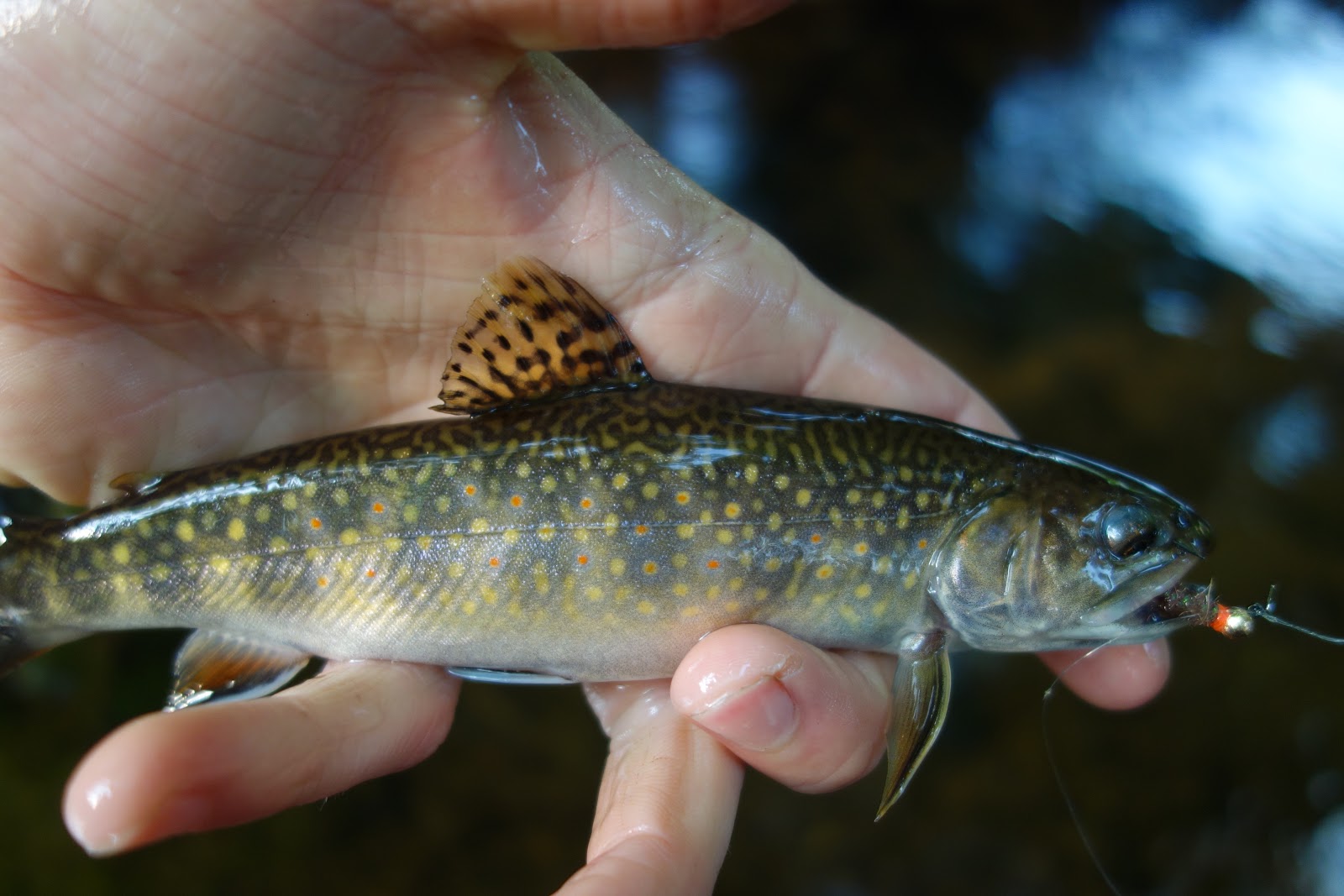
Long before that ever happens, though, I hoped to catch some sort of stream born non-native salmonid. Ideally a robust one with orange on its belly and sharp black spots on it's flanks. A beautiful in wild thing that shouldn't be there, in a landscape of our own creation, a river marred unrecognizable from it's former glory. Sometimes, we don't even know what we had after it's gone. 

Thank you to my Patrons; Erin, David, John, Elizabeth, Brandon, Christopher, Shawn, Mike, Sara, Franky, Geof, Luke, Noah, Justin, Sean, Tom, Mark, Jake, Chris, Oliver, oddity on Display, Sammy, and Cris & Jennifer, Courtney, Hunter, Gordon, Thomas, Trevor, Eric, Evan, and Javier for making Connecticut Fly Angler possible. If you want to support this blog, look for the Patreon link at the top of the right side-bar in web version.

Saturday, January 27, 2024

Fly Fishing for Quillbacks in Ohio

 My now-partner-then-friend Emily dropped me off next to an unfamiliar river in an unfamiliar town in the middle of Ohio. Unfamiliar to me, that is. Emily had grown up around there, but I'd actually never fished in Ohio before this trip. Now I had about an hour to figure out a short stretch of river full of unknown-to-me species, and there is nothing more exciting to me that literally just that- getting dumped next to a random river full of fish species I'd never caught with a fly rod in hand. A low-head dam below a bridge immediately called to me... these sorts of things are a fish magnets by default, being that they are choke points at best an migration barriers at worst. I had an Ausable Ugly on... what else... and went about tight-lining the spill over. The first fish was a smallmouth bass. Leave it to the aggressive and ever-present Micropterus to beat all else to the fly in such a situation. Unlike home, though, smallmouth were native to this place. These creeks and drainages in Ohio had been teaming with smallmouth for ages before they were dumped in Connecticut. I do love a native fish. 


A couple more smallmouth later I decided to move down into the slower water and look for some suckers. Though they'll often sidle right up to the base of a dam in the faster water in the spring, many of the sucker species will settle back into the deep, slow pools for the summer and fall. That's exactly what I found. In a lovely deep hole bellow a bridge were various redhorse, quillback, and some white suckers. The quillback immediately became my primary target. Quillback carpsuckers (Carpiodes cyprinus) are so named for their similarity in appearance with carp. They aren't carp, but unfortunately the unearned poor reputation carp have long held in this country also carries over to species like carpsuckers and buffalo. Given my exceptional reverence for these species it seriously hurts to see photos of them dead on the bank with holes in them... I won't apologize, bow fishing is a scourge and the bad characters in that community FAR out-weigh the good ones. Every time I see a "carp" being foisted on a spear that is actually a native sucker, quillback or buffalo it gives me both mental and physical discomfort. But these ones were safe, save for a little prick in the lip. At least that was my hope. Quilbacks are notoriously fickle and even more so on an artificial fly. I know a small number of people that have caught them and there are no defined tactics. Unlike bass or trout you can't pick up dozens upon dozens of books, watch hundreds of videos or find magazine articles galore about how to convince a carpsucker to eat a fly... this was something I'd have to find out on my own with whatever time I had left to fish this spot that day. I do love a challenge. 

I stood pretty much on the same rock for the rest of my time there, studying the behavior of the quillback. They were fairly active foragers, moving around and feeding methodically. I noticed that the focused most of their effort is spots that had a little bit of vegetation or small collections of detritus. They sifted through this stuff, presumably looking for tiny insect larvae and nymphs, their small mouths working much the same way a sucker's or carp's does. I estimated that I'd need quite a small fly to dupe one of them, and tied a size 20 Pheasant Tail onto 6x tipped, with two shot just above it. For a while I tried to present to specific fish, and this didn't work at all. Either they ignored the presentation or I lined them and they spooked. Eventually I got smart and realized that they were so methodical with their feeding pattern that if I dropped the nymph stationary on an algae covered rock or in a pile of detritus, one would eventually make its way to the fly. They weren't feeding in the drift anyway, but on stationary things. So I found a suitable spot near where two were feeding and settled my nymph in a clump of moss green algae and waited. It was probably only three minute before a quillback started rooting around in that clump of algae. I payed close attention to my shot- I couldn't see my fly but I could see the weights -and hoped that if the fish picked up my fly they might move. 

My anxiety was high as I watched the fish feed and my shot sit stationary on the bottom. This was one of my most coveted North American fishes; I really, really wanted to catch one of these. My shot never moved though and that individual moved on. I stood there for another five minutes trying not to move my rod too much and dislodge my fly before another moved in. This one seemed to notice the fly and move directly to it. The shot twitched on the bottom and I struck. In retrospect, I hit that fish way too hard. The anticipation had been killing me. The was a bright flash of a brassy color and a momentary sensation of tension, then the fish hurried off and my fly and shot landed in the water behind me with a plop. I slumped my shoulders and groaned. I didn't know if I'd get a better shot than that. 

For a while the quillbacks went quiet. They clearly didn't appreciate that disruption. So I decided to present to some redhorse. These fish were in slack water and up in the column. Bad targets, really, I can't recall ever getting suckers that were resting high in the column to eat. But I'll be darned if the first one I sunk a Walt's Worm past didn't immediately move to it and take! As interested in the quillback as I'd been, I'm an absolute redhorse freak. I adore this diverse genus and the crazy challenge of catching them on flies. 

Lifelist fish #199, Moxostoma erythrurum, golden redhorse. 


Though my time at this spot was about to wind down and I'd failed to catch a quillback, just getting to stand in the midst of an unfamiliar community of fishes and catch a new species was full filling enough. Even better, I had come up with a methodology for targeting quillback with the fly that should be sound and, if I ever encounter them feeding in the same manner again, should produce one. I will target them again, that much is a guarantee. 

Thank you to my Patrons; Erin, David, John, Elizabeth, Brandon, Christopher, Shawn, Mike, Sara, Franky, Geof, Luke, Noah, Justin, Sean, Tom, Mark, Jake, Chris, Oliver, oddity on Display, and Sammy for making Connecticut Fly Angler possible. If you want to support this blog, look for the Patreon link at the top of the right side-bar in web version.


Monday, February 24, 2020

Down & Dirty Browns Up North

It's rare that I head north during the winter. I typically keep my trout fishing south of the CT/MA line from December through March, but when the opportunity arose to go explore a river to the north that I've wanted to for a while, I was perfectly happy to cross that line knowing that I could well come in contact with a wild brown of two feet or bigger. Besides, I was getting sick enough of the incessant repetitiveness of going to a river, fishing nymphs, fishing streamers, and catching very little other than trout, doing so somewhere I'd been interested in for a while would be at least better than fishing the same old places I had been all winter. So, towards the snow and older temperatures I ventured.


I assumed I'd be on my own for this outing. I also assumed at first that it would be very short, but I managed to get more than six hours in, and my good friend Brandon, who knew the river well, was able to make it out and show me around the place.
My first impression of the river, it was about what I'd expected. A developed, industrialized, heavily human-impacted river, much like some of my favorite brown trout streams. That may seem weird but its true, I like mid-sized to large streams that have healthy but not especially numerous wild trout and a few really big fish. In southern New England, very few streams match description aren't urban, gritty, gungy places. These streams aren't conducive to huge numbers days, don't get the best hatches you'll ever see, and often don't hold every fly angler's attention very long. I felt pretty comfortable here though. Murky water and the promise of meat-eating browns kept my head in the game.


My first fish. my first brown trout in the particular state we were fishing, actually, took a jig sculpin pattern. It positively slammed it, being one of a pair of small browns both after the fly simultaneously.


I then went 0/3 in that same pool with a Bunny Bullet Sculpin under an indicator. One of those three takers was indeed an absolute slaunch, a HUGE wild brown. It was on and off in short order but I saw enough of it to know it was the largest wild trout I'd stuck in a long time. Would that I could have stuck it better, though.

And then things got slow. For hours, actually, Brandon and I both went fishless, despite changing locations, flies, and general methods. Fisherman like to find things to blame on their lack of ability to catch fish; what I came up with for this afternoon was a water colder than air situation. The river got progressively murkier throughout the afternoon, so it was clear snow was melting into the river and that typically prevents the water temperature from rising even though the air temperature does. Whatever the case may be, we weren't catching fish. Until late, that is, when my indicator plunged for the first time in a long time in a manor that wasn't snag-like, and I set into another small brown that had eaten a BHHESH. She wasn't much, and didn't signify a pattern as neither Brandon nor I had another take while nymphing, but she kept the lights on.


We fished into darkness, hoping for a miracle. That miracle came in the form of a violent strike on my olive Heifer Groomer, an eat that took me completely by surprise in the waning light and old water. The fight was short but sweet, the fish going airborne a couple of times. It wasn't huge, but it was an absolutely gorgeous specimen of a wild Salmo trutta. It was worth the ride up and guaranteed my return.


Actually, scratch that: it was the monster I lost that guaranteed my return. It may be May or June by the time I do get back there though. In the meantime, I've lots to do. and I'm very pleased to report that a lot of it doesn't have to do with trout.
Until next time,
Fish for the love of fish.
Fish for the love of places fish live.
Fish for you.

Thank you to my Patrons; Erin, David, John, Elizabeth, Brandon, Christopher, Shawn, Mike, Sara, Leo, and Franky for supporting this blog on Patreon.

Wednesday, January 22, 2020

Hunting Wild Urban Trophies

"Trophy trout" is a relative title. A trophy trout should be considered any wild or multi-year holdover trout well in excess of its stream's average size. In the wild trout river you fish most, that could be 12 inches, it could be 24 inches, it could even be 30 inches if you are so lucky to live in one of those rare places where those fish exist. Both of the following statements are also true: fisherman tend to exaggerate the number of large fish and how big the fish get in popular streams, yet there are also a lot of  streams that hold truly big trout by anyone's standards that get largely ignored. My trophy hunting revolves mostly around looking for what few wild trout there are in the least heavily trout-populated part of a river that still has trout. Show me a mile long stretch of river that has no more than 50 trout and maybe no trout at all at certain times of year, that's the water I'm looking for here in Southern New England. Often, it's the dirty, urban, bottom end of a trout stream where that old brown trout spends his winter. Below that roll dam or next to that shopping cart could be the biggest trout you've ever seen. But you've got to be really committed if you want to catch that fish. It might mean covering miles on foot without seeing a single fish. I've done it, I've done it so much. I've come home aching deeply, dehydrated, in actual pain. I've thought to myself so many times "why the f*** do I do this to myself?". 


My current favorite project stream to target large wild brown trout close to home is just such a river. It has a couple tributaries that truly are packed with fish, just tons of them. There are some pretty serious ones as well, like the one I named Dave. But the main river, mainly the bottom third of the trout-friendly (barely) stretch, has but a small number of wild fish with a startling average size. It also has a handful of true trophies. It's very tough fishing. The fish are so spread out and move so regularly that you need to cover every lie in two miles of river to have a real chance. It is very easy to lose confidence. Not catching fish is as necessary a part of this trophy hunt as is the actual catching. And it's not a "weeding out" thing. You could tie on a small nymph and try to find the more abundant juvenile fish, but the truth is there aren't many of them here either. Not as few as the monsters, but not enough to make nymphing even worth my while. The more I've targeted large trout the more I've come to believe that a small to medium sized streamer that is both a little intrusive and eye catching and a good representation of the fish the trout eat most is the best way to catch big browns. That goes double for this water, streamers are the  On this water, my three favorites are Coffey's Sparkle Minnow, Swentosky's Full Pint, and Schmidt's Maraceiver, none tied to a length exceeding four and a half inches. In the fall when trout are angry and about to or just post spawn, the Sparkle Minnow comes into play. Throughout the season, the Full Pint imitates the large tessellated darters that are extremely abundant. When fish have slid into the glides and are more apt to take a swung fly stripped slowly than anything else, the Maraceiver in olive and white or yellow, tan, and orange has proved its worth.


On my most recent visit, easily one of the best outings I've had on this urban ditch of a wild trout fishery, it was the Full Pint at the bat. I caught three wild trout. Yeah. Three. I walked two miles of river up and down for them. And I just called it one of the best trips I've had there. Think about that before you take up this sort of pursuit, it isn't for everyone.

Two of those three fish were quite nice though. Not the true monsters I was seeking. But, dare I say it, one was close to trophy status and another wasn't that far off either. The smaller of the two good sized browns ate in a spot I'd never pulled a trout from. That happens a lot in this stream, at almost the same rate over time. There are an awful lot of good lies that I've not pulled trout from yet despite fishing them many times, and these fish do move constantly. This was just one more spot checked of the list, one I'd expected sooner; an inside seem, just below where two tongues of current meet, perfect depth and perfect riffled surface.... He ate on the fall. He already had it before I made my first strip of the retrieve, that just set the hook.


The larger one ate in a spot I've pulled one smaller brown out of in the fall three years ago. It was heavy white water with soft finger like swirls behind a bedrock ledge. She ate in the swirl closest to me, not a rod length away. It was a beautiful, visual take. Not at all fast and aggressive though; she ate that streamer no different than she might have an emerging mayfly. How long was she? I don't know. Almost certainly under 20". Long enough for a quick celebration after she swam off.


Until next time.
Fish for the love of fish.
Fish for the love of places fish live.
Fish for you.


Thank you to my Patrons; Erin, David, John, Elizabeth, Brandon, Christopher, Shawn, Mike, Sara, an Leo for supporting this blog on Patreon.

Saturday, June 8, 2019

Convergence '19: Shad

Of all the species that converge on the rivers and streams of the Northeast in the spring, very few are both an aggressive and hard fighting fish and an extremely abundant one. Only American shad really match that description. A larger cousin of the river herrings, Alosa sapidissima were once much more abundant than they are now, but are also a relative success story in comparison to river herring. Whereas the river herring abundance is too low to permit harvest, or indeed possession (intentional fishing for of alewife and blueback herring is illegal in CT, including catch and release), shad are abundant enough that harvest is permissible. I have eaten shad, but I was rather underwhelmed... I much prefer to pull on them for a few moments, get them to jump a time or two maybe, then let the return to their migration. 

With my 40 inch striper successfully caught, I felt even more invigorated to explore some, fish new waters this spring run, and fish for some of the other species that I haven't as much over the last few years. One of my goals was to experience a truly good shad bite. I fished for American shad for the first time in 2017 with Ben Bilello. That was fairly late in the run, and though we caught some shad it wasn't an especially good bite. The water was low, very few fresh fish were in the river, and a lot of my expectations were subverted... it was a little strange. (American Shad Brown Lining)
With the intention of getting Noah his lifer American, we chased the shad north to intercept the peek of the run. Fishing some of the same water as I had with Ben, but under much, much different conditions. Better conditions. Equipped with my 11'6" spey rod, I could comfortably reach the far seem in which most shad seemed to be hanging out in throughout the day, and use the length of the rod to mend and manage the drift. Getting the depth, swing speed, retrieve, and depth was key, and the shad would often change what they wanted or where in the run they were in a matter of seconds. Fishing with a spinning rod, Noah struggled to get a take. I've had so many non-flyfishers allude to the idea that fly fishing is what one does when the stop caring about catching a bunch of fish. Well... that's just stupid. It would come as a surprise to these people how numerous the circumstances are in which fly will not only out-fish conventional, but absolute trample it. This was one such circumstance. Some spin casters were catching fish, but not as consistently as I was, and in the end Noah got his lifer American shad on the fly. 


This same bright red fly, tied by Ben, caught my first American shad in 2017


I found that red worked very well throughout the day, then from about 7:00 until 8:30 dark green and red (red at the tail and green on the dropper tag) performed equally well. I had a steady pick of fish all afternoon though, except when we moved trying to find somewhere where the shad were more accessible to a single hand caster, for Noah. But Noah did see a small, totally lit up bowfin during that exploration, so I suppose it was worth it to a degree.


After successfully acquiring his lifer shad,m Noah switched to soaking bait, which really did have the potential to produce something crazy. He ended up with a bunch of American eels and one white sucker. So he had a unique slam of sorts, three highly migratory species with very different strategies. American shad being anadromous, growing to sexual maturity in the open Atlantic and running into freshwater rivers to spawn; white sucker simply making upstream runs to their nursery waters in the same freshwater systems they'll always live in, and American eels being catadromous, growing to sexual maturity in freshwater then swimming to the remote waters of the Sargasso Sea to spawn. It's this fascinating variety that makes spring run fishing so exciting to me.


If you enjoy what I'm doing here, please share and comment. It is increasingly difficult to maintain this blog under dwindling readership. What best keeps me going so is knowing that I am engaging people and getting them interested in different aspects of fly fishing, the natural world, and art. Follow, like on Facebook, share wherever, comment wherever. Also, consider supporting me on Patreon (link at the top of the bar to the right of your screen, on web version). Every little bit is appreciated! Thank you to my Patrons; Erin, David, john, and Christopher, for supporting this blog.

Sunday, June 2, 2019

The Absurdity Continues

The stream in which I caught Dave (A Monster Small Stream Brown) two weeks ago continues to be some of the best small stream fishing I've ever seen, full stop. I wish I could get up there more often. I fished it Saturday afternoon and evening, And the bite was just as obscenely good as it had been every time I've fished it this spring.


Except this time, for each trout I caught less than 7 inches...


...I caught two over 9 inches.


Once again, browns were the predominant catch. But I did encounter pockets of brookies, a few of which were very hefty though not particularly long. The water was lower than it had been but still not low, and by now I've explored the entire system as thoroughly as possible. I've got a good idea of where the cold spring seeps are as well as warm effluent and pond outflows. There are some exceptionally deep pools with plenty of overhead cover, more insect life than other streams in the watershed, and a good population of white suckers, common shiners, and blacknose dace. Long bubbly riffles keep the water well oxygenated. Despite abundant garbage, skinny riparian buffers, and urban setting, this stream is a gem... for now. All it take is one chemical spill, or some less than conservation minded anglers finding it to just wreck the place. These fish are, unfortunately, sitting ducks. I highly recommend that if you know of streams like this, tread lightly. Tell nobody, be stealthy, and do what you can to be the eyes in the field for enforcement officials that are spread too thin in this state. Note potential chemical spills, fish kills, poaching and the like, and report it.


I only really fished two flies, not on the same rig. I was fishing a 9ft 5wt with 7ft leader (incl. tippet) tapered from 0.020 down to 4x. I fished a size 10 Ausable Ugly in any water I was covering for the first time that day, whether going upstream or down, because;
 1: It can be dead drifted on an upstream presentation or dangled, swung, and stripped on a downstream presentation
2: It's combination of weight and size mean it makes a loud 'plop' when presented with a tuck cast or aggressive roll cast, which can draw fish out of brush or undercuts to seek it out.
3: It's just a kick ass trout fly!

I fished a size size 12 Sexy Walt's Worm going upstream through water I had already worked, because;
1: It's slim, minimalist profile would likely attract fish that weren't interested in the bulky, large Ausable Ugly.
2: It effectively imitates both the freshwater shrimp and cased caddis that are relatively abundant in this system.
3: It's just a kick ass trout fly!

This interesting looking pale brown wrapped my around every branch possible but wasn't' big enough to break itself off. 
The Ausable Ugly took the lions share, partly because I fished it more than the Walt's, and partly because it was just the better fly for this kind of water. And, frankly, I have more confidence in the Ugly on any stream anywhere than any other subsurface fly. Drop me on any trout river in the world and tell me I can only fish one fly pattern, that'll be the one. Done deal. That being said, I did have the Walt's on when I landed a couple of the bigger trout (landed, and that's an important detail) of the outing.


The two biggest trout I hooked both gave me the slip. Both took the Ausable Ugly while fish it dead drift upstream. The first was a roughly 18 inch very orange-red fish that I'm not certain wasn't a massive brook trout but was more likely a wildly colored brown, which charged a good five feet into an undercut and broke off, despite my dropping the rod down deep and putting the breaks on. The second was a brown of at least 20", but clearly not Dave, which I had on for a while but threw the hook on it's first and only wild three foot high leap. I didn't have any chance at preventing either loss, so even though it was momentarily exasperating it was laugh like Dr. Ian Malcolm then curse the fish out kind of exasperation. So, for the time being, the 20"+ brown is named "You F*****".  But, with 28 fish on the Ugly and 14 on the Walt's, and a bunch of foot long, fat, gorgeous wild browns, I wasn't going to be doing any complaining. It was continuous, wild, exceptional bite, just as it had been each other day I'd been. I should emphasize, I'm a self professed "not a fish counter", but I've started to do so here and on some other occasions because I realized that it might actually provide some valuable data as this and other streams changes. As I've mentioned over and over, most of this water has appeared utterly troutless for years. I'm still at a loss. But I'm going to ride this wave for as long as I can and hope it doesn't break too violently.


If you enjoy what I'm doing here, please share and comment. It is increasingly difficult to maintain this blog under dwindling readership. What best keeps me going so is knowing that I am engaging people and getting them interested in different aspects of fly fishing, the natural world, and art. Follow, like on Facebook, share wherever, comment wherever. Also, consider supporting me on Patreon (link at the top of the bar to the right of your screen, on web version). Every little bit is appreciated! Thank you to my Patrons; Erin, David, john, and Christopher, for supporting this blog.

Monday, November 19, 2018

Hiding in Plain Sight

There's something rather special about an urban wild trout stream, especially the ones barely anyone knows about. There are probably hundreds in the Northeast. Streams running along highways. Next to city parks. Right through people's backyards. There's trout there. There's also graffiti, road noise, and usually some litter. What attracts me to fish these streams? The counterintuitive nature of their existence, for one thing. Some have said that trout don't like in ugly places. Though beauty is subjective, that are certainly many that would call most of the urban trout streams I've fished ugly places. And they might be. But I find beauty in the fact that caddis, dace, midges, mayflies, suckers, and trout are perfectly capable of living so close to people if given half the chance. That, and I get some sort of weird satisfaction out of catching a wild brook trout living in a discarded bathroom sink.


Yesterday I fished new water, adding three new streams to my list, each deep within the urban jungle and all holding an extraordinary amount of life. The first stream was the only one I had serious questions about. I knew it could really only be a seasonal trout stream at best, having a top draw dam as it's source. But if it were seasonal there would most likely be trout in it this time of year looking to spawn in its numerous gravel filled tailouts. The first cast I made proved there were trout there as a substantial brown materialized and swiped at my fly before disappearing again and never returning. A few runs downstream a small brookie broke the skunk.


I eventually became frustrated with this little creek, being without waders and having exceptional difficulty navigating it. I moved on to the next, which made good of itself just as quickly. I missed a good trout that made far more attempts at my Ausable Ugly than made sense for a brown, but that is what it was. I would come back and dupe that fish one last time later. Moving upstream I found a very deep hole that would undoubtedly be holding a few fish. On the way up it produced a brookie. On the way down, two brown trout. 


Pressing on I began to see active redds. The first had one small female brookie with two males fighting over her. Another had a pair of browns, both over a foot long. I tried and failed to get into a good position to photograph either. The window to do so is closing rapidly too, which is a bummer. I do like sharing photos and videos of trout doing what they are supposed to do (instead of, exclusively, fish with hooks in their faces).

There's a redd there. If you can't see it you have no business wading over gravel from October till March. 
Onward and upward I reached the confluence of the two streams that formed the one I had been fishing. I went up the one on the left first. It was the smaller of the two and proved very difficult to fish. It gave up one brookie before I left it. Its brother on the right was easier but still difficult. The first fish to come out of the shadows there was probably one of the smallest browns I've ever caught.
I knew there were bigger fish than that here and continued plying what water I could get to in hopes of finding one. What I didn't expect was to encounter what really would be the fish of a lifetime in a stream of this size. I cast my fly to the head of a relatively shallow run and rolled it back down towards me. As I drew the rod up I saw a shockingly large fish following the fly down. There was a tell tale white flash of mouth, and I set the hook into the unyielding weight of an 18 inch wild brown trout. The fish didn't react quickly but sloshed around in the shallow water, continuing downstream past me. I turned the rod down, trying to keep pulling the fish down, but to no avail. The hook pulled, hitting me on the wrist and sticking there. I gasped both from the pain of being whacked by the splitshot and bead and loosing an unrealistically big brown.

I refused to let that be it and began working back downstream to get some of the water and fish that I hadn't fished to efficiently on the way up. I was rewarded with more than half a dozen fish, including a stud of a brookie and the brown I had missed where I started, but that big fish still irked me. I'll be back big fella. You'd best keep your wits about you. 


If you enjoy what I'm doing here, please share and comment. It is increasingly difficult to maintain this blog under dwindling readership. What best keeps me going so is knowing that I am engaging people and getting them interested in different aspects of fly fishing, the natural world, and art. Follow, like on Facebook, share wherever, comment wherever. Every little bit is appreciated! 
Thanks for joining the adventure, and tight lines. 

Saturday, September 1, 2018

When the Opportunity Arises...

...fish!

It may be short. It may be rainy, windy, snowy. It may be on water you know nothing about. But when the opportunity arises, take it.

On Friday the opportunity arose and I find myself on a small urban stream I poke around on from time to time. It isn't the cleanest stream out there, nor the dirtiest. It doesn't have a wild trout population, but stocked fish and rogue browns and brookies are around from time to time. The fish are plentiful, but not as easy as they might seem. Being stealthy is smart no matter what your query. Even a bluegill will run to cover in the skinny water of a small stream. Besides, I'd seen just about everything from big largemouth to pike to carp in here and I took no chances. I wanted to see how many species I could catch in the tiny window of time I was presented with.


The first six fish I caught were all different species. How's that for variety? I could easily have caught two or three more without getting a duplicate. I believe to date I've caught a dozen species from this stream and seen a half dozen others. 

Micropterus dolomieu

Ambloplites rupestris

Semotilus corporalis

Lepomis auritus

Lepomis macrochirus

Lepomis gibbosus
Though as many more fish were brought to hand I failed to catch a seventh species. All were duped by a simple shad fly: Pearl crystal flash tail, chartreuse hare's mask dubbing, black lead dumbbell eyes,  2x long size 8 mustad. Simple and effective. 

It really doesn't hurt to carry a rod and small box of flies in the vehicle for all opportunities that may arise. And although panfish, fallfish, carp, bass, snapper blues, or other common species may not be your favored targets, they are darned good practice. The more you come to know them and the little spots they reside in, the more you may come to enjoy them for what they are. 


If you enjoy what I'm doing here, please share and comment. It is increasingly difficult to maintain this blog under dwindling readership. What best keeps me going so is knowing that I am engaging people and getting them interested in different aspects of fly fishing, the natural world, and art. Follow, like on Facebook, share wherever, comment wherever. Every little bit is appreciated! 
Thanks for joining the adventure, and tight lines.