Showing posts with label Walleye. Show all posts

Monday, July 26, 2021

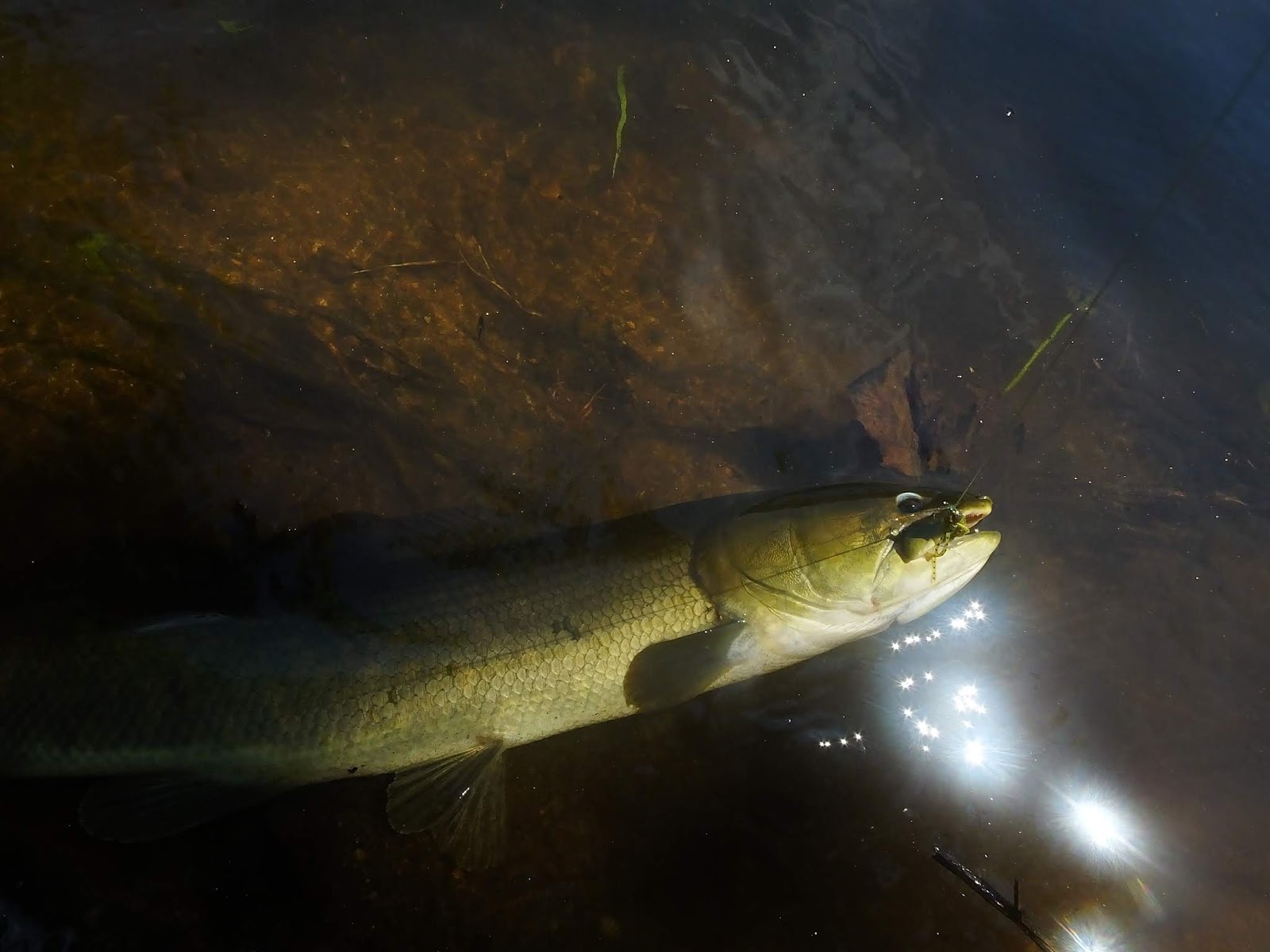
Electric Summer Walleye

 We've obviously had a lot of rain this summer, more than we've had here in a long time. Some of it has come along with some beautiful night-time light shows. I've been interested in chasing severe weather for far longer than I've fished, and this season I've had some good chases and some busts. Notably last week I made a very poor forecast and missed an incredible supercell. A few nights, though, I've been able to stay at home- the storms came to me. One night- just after the tropical remnants -I had a pretty good show just to the north. I did kinda poorly behind the lens but didn't go completely empty handed. 


Another advantage of big rain is a slight improvement in summer land-based walleye fishing. Overall, summer is a poor time for getting walleye on the fly locally. Heavy rain can lead to a quick reprieve though, drawing walleye into shallow water for a short time. As the lightning activity declined that night I made my way to a reliable walleye spot.

The fishing was slow,. Dreadfully slow. Even in March I get pretty good bycatch, usually. I was surprised to go a half hour without a take from any fish of any sort. Then along came a long snake of a walleye to make my night. 


Walleye are sneaky little bastards, often making their way in and out of the water, I can reasonably expect to catch them on fly in mere hours. It has taken a pretty long time to dial places in well enough to be able to catch them almost on command. They are very habitual though, so once I was able to determine patterns it got much easier. That goes for most fish, though. Take that into consideration when you have a successful outing. It is probably repeatable. 

Until next time, 

Fish for the love of fish.
Fish for the love of places fish live.
Fish for you.
And stay safe and healthy.


Thank you to my Patrons; Erin, David, John, Elizabeth, Brandon, Christopher, Shawn, Mike, Sara, Leo, C, Franky, Geof, Luke, and Noah for making Connecticut Fly Angler possible. If you want to support this blog, look for the Patreon link at the top of the right side-bar in web version. 

Edited by Cheyenne Terrien

Thursday, May 6, 2021

Early Season Walleye

 Catching large walleye on the fly is a low-grade obsession of mine. Though I don’t find myself nearly as compelled to spend hours on the water looking for a 30 inch walleye as I do seeking large striped bass, it is something I’ve put a lot of time and thought into. Over the last five years I’ve caught a half dozen walleye eclipsing 27 inches, one of them at 28 ½ inches. Those are impressive walleyes, especially on the fly, but I won’t really be satisfied until I break the 30 inch mark. Eventually, I’d really like to break the fly tackle world record as well.

Spring 2021 has, so far, been lackluster both in terms of number and size. The conditions that lead to really strong bites haven’t presented themselves much, and on a handful of occasions when it seemed like the conditions were really good there still just wasn’t a bite. On a few nights, fish were stupid shallow and extremely finicky. I found myself experimenting in different conditions with new flies. Perhaps the rising star was the Edson Tiger. I needed something lighter and with a slimmer profile when the fish were setting up in 6 or 7 inches of water on a rock bar, and that fly came in clutch on a handful of occasions. 

Of course, the old standby chartreuse and yellow Woolly Bugger took its fair share of nice walleye as well. There were certainly nights though when I knew there were fish in front of me but it was failing to draw interest. It would seem that I ought to try some new color variations. Olive and black tend to be lackluster, and I’m not quite sure why. The biggest walleye I caught this spring did take the chartreuse and yellow, but a downsized version.

Erratic weather conditions complicate the process of looking for big fish drastically. Old data, meticulously collected over the years, seems irrelevant some seasons.The fish fly off the cuff, the water temperatures rise and fall without stimulating the expected behavior, and good pressure and moon phase windows don’t provide the expected results- but all I can really do is keep going, keep fishing hard, and keep recording the data. The quest for trophy walleye continues.


Until next time, 

Fish for the love of fish.
Fish for the love of places fish live.
Fish for you.
And stay safe and healthy.


Thank you to my Patrons; Erin, David, John, Elizabeth, Brandon, Christopher, Shawn, Mike, Sara, Leo, C, Franky, Geof, Luke, and Noah for making Connecticut Fly Angler possible. If you want to support this blog, look for the Patreon link at the top of the right side-bar in web version. 

Edited by Cheyenne Terrien

Monday, April 12, 2021

Big Smallmouth, Walleye, and the Importance of Chartreuse & Yellow

 With late winter/early spring rain comes my first real shot at large walleye on the fly in my area. This is one of my favorite times of year, when getting big fish on the fly becomes a regular occurrence again. I've gotten more and more into targeting trophy specimens of each fish species I regularly fish for, and consistently getting large walleye on the fly is one of my proudest achievements. With the weather perfect for it on March 26th, I set out just after sunset confident something exciting would happen. But before I could catch a walleye, a big swirl in very shallow water drew my attention. I had on a woolly bugger with a yellow tail, chartreuse body, and white hackle, a fly that I could not lie without. I dropped it where the swirl had been and quickly felt a grab. It didn't feel like a walleye, and was soon airborne to prove that it most definitely was not... I don't think walleye actually jump, but smallmouth bass sure do. My first smallmouth of the year was a pretty damn good one. 


Though the yellow & chartreuse Woolly Bugger is primarily my choice for big walleye and crappie, it has produced many big smallmouth bass, largemouth bass, and some bullheads and carp as well while night fishing. It loses some of its charm in daylight, which isn't all that surprising. But for whatever reason between the time the sun sets and before it comes back up again, there are few flies for freshwater "warmwater" species that will draw quite as much attention. 

On to the task at hand: get the first walleye of the season. 

It didn't take that long. The fish was right along the contour I'd expected, ate just like a walleye should, and gave the slow, head-shaky fight most walleye perform. It was a typical one for this spot but a nice walleye for the fly rod. I rarely see big fly tackle walleyes, most seem to be around 18". My average is 23". Much of my success can be chalked up to living right near a spot where large walleye routinely move into very shallow water. 


That was the first, but a couple weeks later it is still my only walleye so far this season. This season is off to a slow start. Smallmouth and the huge early season crappies though? Very different story; stay tuned. 

Until next time, 

Fish for the love of fish.
Fish for the love of places fish live.
Fish for you.
And stay safe and healthy.


Thank you to my Patrons; Erin, David, John, Elizabeth, Brandon, Christopher, Shawn, Mike, Sara, Leo, C, Franky, Geof, Luke, and Noah for making Connecticut Fly Angler possible. If you want to support this blog, look for the Patreon link at the top of the right side-bar in web version. 

Edited by Cheyenne Terrien

Sunday, January 10, 2021

Closing November With a Salamander, Opening December With a Walleye

 November 2020 was the warmest November in my memory. I saw the last timber rattlesnake of the year on the 5th and the last black racer of the year much later than that. Stripers remained surface active well into December. So when the final day of November came with a good heavy rain and more unusual warmth, I went out to see if I might find one last spotted salamander crossing the road this year. This past year gave me the most remarkable spring amphibian migration day I've experienced yet, and it seemed likely it would show off a few more herps very late into the fall. With close to ideal conditions, I set out driving an area I'd had exceptional luck with during the spring. After an hour of driving very slowly down windy back roads through wooded Eastern CT hills, I was about to give in and accept defeat. I'd seen a single green frog and a couple wood frogs that cleared the road before I got to them. That wasn't much. Then, while another car passed me, I saw the tell-tale shape of a large mole salamander on the center line. I flipped the car around as soon as I could and hoped it would still be there when I got back. Sure enough, there it was. It hadn't moved at all. I put my hazards on, donned my safety vest, and went out to photograph the last salamander I'd see in 2020. 

See Spot run.

I was pleased enough with that to head straight home. But the next night was pretty warm as well, and I knew the influx of rain would get some other animals to move, too. Some would remain moving a couple days after the rain would end. What I was most interested in the night of December first though was Sander vitreus.

Walleye.

Though the spring rains are undoubtedly my favorite time to fish for these white eyed nocturnal predators, fall and early winter provide another great opportunity. I made tracks to my favorite creek mouth with my five weight and a box of woolly buggers- all that is needed to catch big walleye in these conditions. Heavy rains draw big walleye to creek mouths almost year round, and they are available within fly casting range in shallow water for a short period during and after the deluge. This night was ideal, and I wasn't at all surprised when the third cast resulted in a doubled over rod. This was clearly a gigantic walleye. I've had a few fish between 27 and 29 inches in my short time frequently seeking trophy 'eyes, but this was clearly in a league of it's own. The head shakes were huge. My heart sank when my line went slack. That was probably a 30 inch class walleye. It was still early though, and I kept plumbing the depths. Eventually I was in again. It was no 30 incher but it was still a great fish, more than enough for a brief celebration. 


It's tail was huge and it had great colors. That fish ended up being the last walleye of both that night and the year- not a bad way to end it. I look forward to spring; I'll still be after that 30 incher. I won't be satisfied until I've broken the walleye fly rod world record. Until next time.

Fish for the love of fish.
Fish for the love of places fish live.
Fish for you.
And stay safe and healthy.


Thank you to my Patrons; Erin, David, John, Elizabeth, Brandon, Christopher, Shawn, Mike, Sara, Leo, C, Franky, and Geof for making Connecticut Fly Angler possible. If you want to support this blog, look for the Patreon link at the top of the right side-bar in web version. 

Edited by Cheyenne Terrien 

Friday, September 4, 2020

You Put a Hex on Me

Hexegenia limbata. It might be the most well known Latin name for a bug among those that tempt trout with the fly in the Eastern United States. That's in part because, like some other species, it doesn't really have a wide spread name. There's "giant Michigan mayfly", and the hatches on Michigan's famous trout streams, which were tailor made for this silt and mud loving insect, are legendary. But they occur in far more places than Michigan. So most call these bugs Hexegenia, or just Hex for short.
Also owing to their fame is the gigantic size of these mayflies. When bunches of Hex duns drift on the surface, even fish of epic proportion take notice. Very few other hatches can draw even mostly piscivorous fish's attention like the hex, not in this part of the world. And though their fame lies in the places where both trout and Hexegenia habitat overlap, these bugs draw fish of all sorts to the surface, and most Hex habitat isn't trout habitat. These are after all a slow water, muddy bottom mayfly, and throughout much of their range that means they're in water too warm to hold trout year round. Id encountered Hexegenia in CT a handful of times over the years, and mostly it was a good hatch to catch smallmouth during. Then, one night in late July I stumbled upon an extremely heavy hex hatch in mixed-species water, bringing basically every fish to the surface. I had nothing remotely appropriate that first night and got totally skunked. But I became obsessed with this particular hatch and ended up fishing it night after night, into the first week of August. For about an hour and a half to two hours after sunset each evening the river literally boiled with fish feeding on giant mayflies. Bluegill, rock bass, white perch, yellow perch, largemouth and smallmouth bass, channel catfish, common carp, bullheads, walleye... everyone had joined the party. The sound was like no other... I've heard vastly more loud feeding frenzies, but never anything this loud and sustained and on an insect emergence. Unfortunately it was also such a blanket hatch that it was tricky fishing. It wasn't easy to target fish because they were cruising at random. There were so many bugs that it was also genuinely impossible at times to tell which was my fly. And of course the fish had a lot of targets to choose from. When I did catch fish, it was mostly white perch. This is something I wont complain about, catching white perch on dry flies is not a normal occurrence, and some of these were frankly huge.


On the third night I hit the hatch, I hooked a very large channel catfsh. It ate almost at my feet, and in the dim glow of the street I could see the whole fish. It may have been as big as 15lbs. And it was up and gulping these bugs. My heart was about beating out of my chest when I set the hook and it tore off. This was not a 5wt appropriate fish. When the line went slack and my fly came back with the hook point broken off, I almost cried. Unfortunately that was the only very large and unusual fish I got a chance at during this hatch, though I also had a near 30lb carp swim up and gulp a cluster of Hex right in front of me, and saw a giant walleye one night do the same.


Towards the end of the hatch, when it was actually a mix of duns and spinners, I figured out that fishing from the opposite bank I had been was wildly more effective. This may seem strange, it turned out having that one streetlight in front of me rather than behind me let me actually see my fly, and I now also had a better angle to the current and could feel when fish ate the fly submerged. Unfortunately I then only had one more night of heavy feeding on the giant mayflies. But that was at least good for the only bass and by far the largest white perch. And too me that was satisfaction enough. I do want to catch some of the more wild fish that I saw taking advantage during this hatch next year, but just being there each night to see one of the biggest combined fish and insect biomasses I'd ever been witness to was memorable.


There really is nothing quite like the Hex. Those giant ephemeral bugs, so large yet so weightless in my hand, drying and flapping their hands all over the surface of that river... with the pops, boils and splashes of hundreds upon hundreds of fish ringing through the night air. What a remarkable natural event.
Until next time,
Fish for the love of fish.
Fish for the love of places fish live.
Fish for you.
And stay safe and healthy.

Thank you to my Patrons; Erin, David, John, Elizabeth, Brandon, Christopher, Shawn, Mike, Sara, Leo, and Franky for supporting this blog on Patreon. 

Tuesday, September 1, 2020

Channel Catfish on the Fly

I once caught a quite nice channel catfish on the fly, a specimen right around 10lbs, by accident. It was an incredible battle, even on an 8wt. Ever since, big catfish on the fly is something that has quietly called. But I just never really felt confident enough to target big cats. I didn't feel like there were odds in it where I fish. In the midwest and south, different story, there are more catfish and bigger ones. But at home I was worried I'd have a hard time getting flies in front of enough catfish to actually catch a good one. I know how snappy channel catfish are, any time I've ever seen one during the day and put a fly on it, it ate. So perhaps my confidence should have been higher than it was. One mid-summer night I decided to see if there were any big bass willing to eat on top at dusk in a local river. And, failing that, I had sight fished fair size channel catfish there and the past and seen white catfish, a species I've not caught on the fly. Maybe I'd try to dredge one up.

It took all of half an hour for me to give up on bass. I switched to a longer leader and a heavy Complex Twist Bugger, and began plumbing the depths. It was slow and it was boring and it almost got old before I got the first taker... not a catfish at all, but a fairly nice walleye.


Things continued to drag on slowly after that, though in the glow of a street light I did see the tell tail shapes of catfish glide by. I moved a bit and then I moved some more, then almost an hour after I'd gotten the walleye, my bugger got slammed again and I set into something angry. This time the fish made a very strong run, and I had a feeling this was what I was after. I didn't make quick work of this fight because I couldn't. Even with a 10wt this fish was shockingly able to control parts of the fight where I'd normally have the upper hand. These fish can beat largemouth bass up one side and down the other... channel catfish are much, much stronger.

When I landed her I got pretty damned excited. It had been literally years since I caught my last and only good channel cat on the fly, and it's also just so great when a plan comes together.


I then continued fishing for an exceptionally long time hoping for a repeat of that... and nothing. Some things just aren't easy. I know I could get these guys with bait, and probably very easily. But I'd so much rather dredge streamers for hours, if not days, just to come up with a few fish and maybe another good one. It's not easy, but I'm not looking for easy. I fish to stimulate my brain... and right now I'm thinking up ways to fish similar flies in different water with far more catfish and a lot more species in the not at all distant future. Ohio, anyone?
Until next time,
Fish for the love of fish.
Fish for the love of places fish live.
Fish for you.
And stay safe and healthy.

Thank you to my Patrons; Erin, David, John, Elizabeth, Brandon, Christopher, Shawn, Mike, Sara, Leo, and Franky for supporting this blog on Patreon. 

Saturday, June 6, 2020

The Value of the Hand-twist & Figure Eight

There are a lot of ways to retrieve a fly and every retrieve has it place: a fast and erratic two-hand, a slow strip with pauses, full arm swing strips, the jerk-strip,  rod-tip lead... the list goes on and on. But one retrieve I use a lot and don't see as utilized as much by fly fishers in the northeast is the figure eight retrieve. It did not take me long after I started fishing still waters to figure out that a lot of fish were more likely to eat a fly retrieved at a continues pace with no substantial pauses, and though this can be achieved by lifting the rod at a steady pace when a short cast is made and by doing a slow rolling two hand retrieve on a long cast, but my choice retrieve when fish want a fly that never stops completely is the figure eight or hand twist. I rarely ever do a proper figure eight though, I just make a loop. With the line through a loose loop made by the pointer and thumb of my rod hand, I hold my hands close together, then pinch the line between the thumb and pointer finder, wrapping it around my pointer, then pull a loop into my palm with my other three digits. I then drop that loop while repeating the motion to make another. And over and over and over.... if that's hard to visualize, just try to do it anyway. If you can't figure it out, just keep trying... I did. I did until I found what worked for me and sometimes I did it for so long my hand would cramp severely from so much repetition. But I'm glad I figured it out because I've stood right next to other fly fisherman doing a different retrieve and caught fish consistently while they struggled to get any.

One scenario in which I'd be pretty much lost without this retrieve is early spring walleyes. The slow steady retrieve not only produces strikes but the constant contact with the fly makes it difficult to miss the extremely subtle bites. Often, all I feel is a vague sense of tension. I'll accelerate the retrieve then lift the rod and only then get a true sense of the fish's weight. These big predators eat tiny streamers with a subtlety akin to a brown trout eating an emerger.


To the point that these takes are subtle... walleye fights are all too frequently regarded as boring. That isn't typically my experience. The take does not match what follows. Do they hold up pound for pound compared to many other species? I have to say, some species, no, but you can't just skate them in on the surface either. They're big sweeping headshakes and short dogging runs never fail to get my heart pounding. So don't take what people who have only ever trolled walleyes say as gospel, they can indeed pull pretty hard.


Given their genetic closeness to walleye it shouldn't be surprising that yellow perch are duped by the hand-twist retrieve too. Actually, though in a different family entirely, it was white perch on which I perfected this methodology. And today, for my money, it remains the way to catch them. But I would be so lost without it fishing for trout in stillwaters, stripers feeding on small shrimp, crappies, bluegills, smallmouth... the list goes on for a while. This is a necessary tool in my arsenal and I infrequently see it utilized by other fly fishers in this part of the world. I never understood why.


Until next time,
Fish for the love of fish.
Fish for the love of places fish live.
Fish for you.
And stay safe and healthy.


Thank you to my Patrons; Erin, David, John, Elizabeth, Brandon, Christopher, Shawn, Mike, Sara, Leo, and Franky for supporting this blog on Patreon. 

Sunday, May 10, 2020

Underexploited Fly Rod Fodder

I've grown a deep appreciation for walleye over the years, an appreciation for their habits and their looks, more so than their taste. When anglers talk about walleye they're most inclined to talk about how good they taste. Their fight is mostly tossed aside, and that is forgivable given the most common techniques used to catch bigger walleye. And on the whole I find fisherman tend to undervalue a lot of the other aspects of walleyes that endear them to me. I think a significant part of the reason walleye got under my skin, here, in CT, a place without the sort of "walleye culture" that exists in paces like Lake Erie or parts of Ontario and Manitoba, is the tool I use to catch them. See, I don't particularly care to catch a walleye trolling, or even on a spinning rod and jerk bait or jig, or even through the ice for that matter. That's all fine and dandy but it isn't for me. I like to fish for walleye, and every other species of fish, with a fly rod.

And, not to toot my own horn, but I've gotten pretty good at it.


Spring is the time I most look forward to for seeking out trophy walleye. They venture shallow and big egg laden females become targetable. There are still a lot of secrets you will have to wait for me to reveal as far as these fish go, because locally I seem to be the only one dialed into the fly tackle stillwater walleye game. Connecticut may not have a great walleye fishery compared to the midwest, but what we have is pretty decent and under-exploited, especially by fly rodders. I may only catch a few trout over 20 inches a year and I fish for trout a bit more than walleye. But when the conditions are right I can reasonably expect to go out and catch at least one walleye like this: 


You can say all you want that walleye don't fight worth a damn but until you've pulled on one of that size with a 5wt, your argument is invalid. They pull pretty hard in shallow water and on the right tackle. And, frankly, even if they didn't I'd still be out there after them because they are impressive looking creatures with a beautiful color pattern un-matched by other species in the area. Nothing else looks like a walleye here. We don't have sauger or zander, but I can't wait to catch those close relatives of the walleye too. 

Of course, one of the bonuses of my springtime walleye fishing is the excess of bycatch. This big crappie is one of a number I caught this season while fishing for big walleye.


Now crappies... honestly they don't do much on the end of a line. They really aren't hard fighting fish. But when my little woolly bugger gets inhaled by a big 'eye, well, I know what I've got. 


With the early season winding down substantially my opportunities to catch really big walleye will become isolated to certain weather windows. I'd like to break the 30 inch mark and have seen fish well over it already this spring. I'm hopeful though not confident that I've still got a shot. 
Until next time,
Fish for the love of fish.
Fish for the love of places fish live.
Fish for you.
And stay safe and healthy.


Thank you to my Patrons; Erin, David, John, Elizabeth, Brandon, Christopher, Shawn, Mike, Sara, Leo, and Franky for supporting this blog on Patreon. 

Wednesday, November 6, 2019

November Shallow Water Walleye

When there's a chill in the air and the water is getting not just cooler but cold it's time for me to start looking for my 30" fly tackle walleye again. Cold nights on the lake are lonely, and I like it that way. Just me, what few crickets are left, the herons, and the fish. 


The spring fishing tends to be better overall, and it can be so, SO good, but the fall fishing is a little different. At least in the places I fish, it seems harder to get a handle on. And these are all stillwaters, it's funny to me how many assume my walleye are river fish at first. I can count on one hand ho many walleye I've caught in rivers... three. Three total. Perhaps it's because CT walleye stillwaters are so hard to get a handle on that it's easy to assume my fish must not be from lakes. It isn't easy to get them on the fly, unless you have a lot of time, a lot of will, and take notes consistently. I've seen the fishery go through interesting swings since I started. I caught my first walleye on the fly on July 1st 2015, out of a pond, after sunset, on a big articulated streamer. Through 2015 and 2016 I had good walleye fishing at night during the summer in two bodies of water, though the bulk of it was in the aforementioned pond. That pond also produced good fish in the fall and early winter of both those years, especially on warm nights and cloudy, rainy days. That pond started to show signs of decline, producing only three walleye in 2017, only one in 2018, and none at all this year. In 2018 though I nailed down a spring pattern in a larger body of water, then a fall pattern as well. This year that effort gave way to more consistency, though the fall fishing remains sort of on again, off again. In the spring it seems that once the fish are "there", they're always there until June when they start to get sporadic, and if you can't catch them that's your own fault. In the fall it never really gets solid. One day being great doesn't mean the next day, even if the conditions seem better on paper, won't just be a perch slay-fest with not a walleye to be found. This fall I've had far more off days than on days, but I'm getting a little better at determining the subtleties. 

Yesterday (Nov. 5th) was the first day that produced the target species this fall, though it started out with... not that.

Micropterus salmoides
This largemouth was a bit of a weirdo. The fight confused me severely. I had no clue what I was going to get, or even how big. I can't even describe it... it was just odd. Not the typical late fall slow, dogging, maybe a jump or two, largemouth fight. 

And after that I got what, for this lake at least, wasn't a bad white perch. Were I expecting to catch more this size or even just a little smaller I'd definitely have kept it. Lucky for it I wasn't in the mood.


Then I got that faint touch and set into something that did sweeping headshakes and 10ft runs. I know a good walleye from the first seconds of the fight, and in shallow water, on the fly... let's just say the idea that walleye are no fun on the other end of the line gets dismissed pretty quickly. These fish do pull, even on the heavy gear I'm using on my quest to best a true behemoth. And because a walleye kept grows no more, she went back. They all do in my trophy hunt spots.


Until next time.
Fish for the love of fish.
Fish for the love of places fish live.
Fish for you.


Thank you to my Patrons; Erin, David, john, Elizabeth, Chris, Brandon, and Christopher, for supporting this blog on Patreon.

Tuesday, July 16, 2019

An Incredible Multispecies Day


After revenge on the bowfin lost two days before, I returned to the scene of the crime. I'd told myself I wasn't going to target pike this time and that I'd focus on bowfin. But I just couldn't help myself. I've not caught a lot of pike. I rigged up the Christmas Ornament and ripped it allong the weed lines. It didn't take long. I was two hand retrieving when the first fish waked up on the fly then blew up. It was a nice clean little fish and fought hard.


The next fish blew up much harder, and turned my attention away from trying to spot a bowfin while working the fly. I jammeed it and immediately felt that it was solid fish. Not a monster but my new personal best, the second in two days (the previous day is written up in a patrons only post on Patreon).


I got right back to it after that watching that fish motor off and sight fished a third pike. 


This was now my best pike day it CT, but I wanted to see what else I could squeeze out of the morning. I wasn't seeing bowfin here, so I changed spots.


Musk turtle
Not long after switching locations, I stuck a fish I really didn't expect; a beautiful little walleye.


I followed up the walleye with two decent bass, one 18 incher and one 16 incher. Both took fairly small flies off the bottom. I find that when sight fiahing for largemouth I can best get an uncertain and picky fish to commit by letting the fly settle on the bottom for as long as 30 seconds, then giving it a series of quick hops. Both of these fish slammed the fly as soon as it came off the bottom. The first and bigger of the two had a unique two-tone face and hyperpigmentation melanosis. I've named hime Harvey Dent.


I've caught a lot of bass though so these fish weren't really getting my that excited. When I saw a channel cat nosing through the rocks looking for food though, that got my heart rate up. I dropped the fly in front of it and it took. A few minutes later I missed a take fron another. Now this was turning into something of an interesting day.


Still seeing no bowfin, I moved again. I worked my way up a bank where Noah and I had found a number of bowfin eating a sucker carcass last year. For most of it there were no signs of bowfin but plenty of bass and yellow perch. I hooked one largemouth on a laydown that was no question north of 20 inches. Would have like to have touched that one.


12 inch perch

Then I found bowfin. They were a real pain in the ass for about an hour though. I lead one in circles for five minutes straight and it just would not commit. Eventually though the tide turned, literally, and fish that would not commit suddenly were everywhere and very willing. I stuck six bowfin total. Now I was on my best bowfin day ever too!


With more black bass, some big bluegills, rockbass, amd redbreast sunfish in the mix, I ended the trip far later than I'd intended and with way more fish to hand, including a lot of trophies. I had seen some pretty wicked things too. I had a huge largemouth come out from a laydown and t-bone a perch I'd hooked. If I carried a net I'd have caught that fish. It would have been a personal best for me I'm certain, though degraded by not bei g a fair catch.


In a nutshell, that morning was lunacy. I haven't come close to covering it all in detail, but this is what you get when I have to write up a post on my phone in a coffee shop in Rangeley. I hope you can fill in some of the gaps. 

If you enjoy what I'm doing here, please share and comment. It is increasingly difficult to maintain this blog under dwindling readership. What best keeps me going so is knowing that I am engaging people and getting them interested in different aspects of fly fishing, the natural world, and art. Follow, like on Facebook, share wherever, comment wherever. Also, consider supporting me on Patreon (link at the top of the bar to the right of your screen, on web version). Every little bit is appreciated! Thank you to my Patrons; Erin, David, john, and Christopher, for supporting this blog.