The cold north wind really got things going. The bait is flushing out of the estuaries, the bass and tunny are on the move, and there a few bonito and bluefish around too. This is the season of chaos, fast action and visually spectacular feeds. I you'd like to fish the fall run with me, book soon! I'm running trips along the Rhode Island beaches until the end of November. Day and night, weekdays and weekends. Email me at brwntroutangler@gmail.com if you're interested!
Saturday, October 2, 2021
Thursday, September 30, 2021
Multispecies Fishing in an Old Maine Harbor
Until next time,
Monday, September 27, 2021
False Albacore Fly Woes: Day 1
Little tunny- more commonly but less correctly called false albacore -are one of the most coveted species for light tackle saltwater anglers in the northeast. They are as hard fighting a fish as you can tie into with your feet on dry ground. The're also very pretty. I caught my first tunny in 2016. Then I really hammered them with consistency in 2017. 2018 wasn't bad either. Then I didn't target them much at all through two very poor seasons in 2019 and 2020. I decided that 2021 would be different and have chose to target hardtails at ever opportunity. Welllll... it has not been good. Despite and early showing and quite a few days with good numbers of fish around, I've struggled to catch any. Some of it was poor timing, some of it was bad luck, some of it was me having m head up m own ass when fish actually showed in range. Whatever the story the first month of my tunny targeting went down painfully. This post is about the day it started.
On August 27th I set out hopeful but uncertain of what to expect, Henri had hit Rhode Island just days prior and I knew there had been some albies caught near Fallmouth just prior to the storm. I hoped the storm had pushed them further west. When I started out, nothing was showing on the surface. I dragged the fly along the bottom hoping to pick up something not so fast while I waited to see some life. I did pick up some fish: small seabass and fluke.
| Why running and gunning isn't effective |
Until next time,
Saturday, September 25, 2021
Sea Robin Appreciation Day
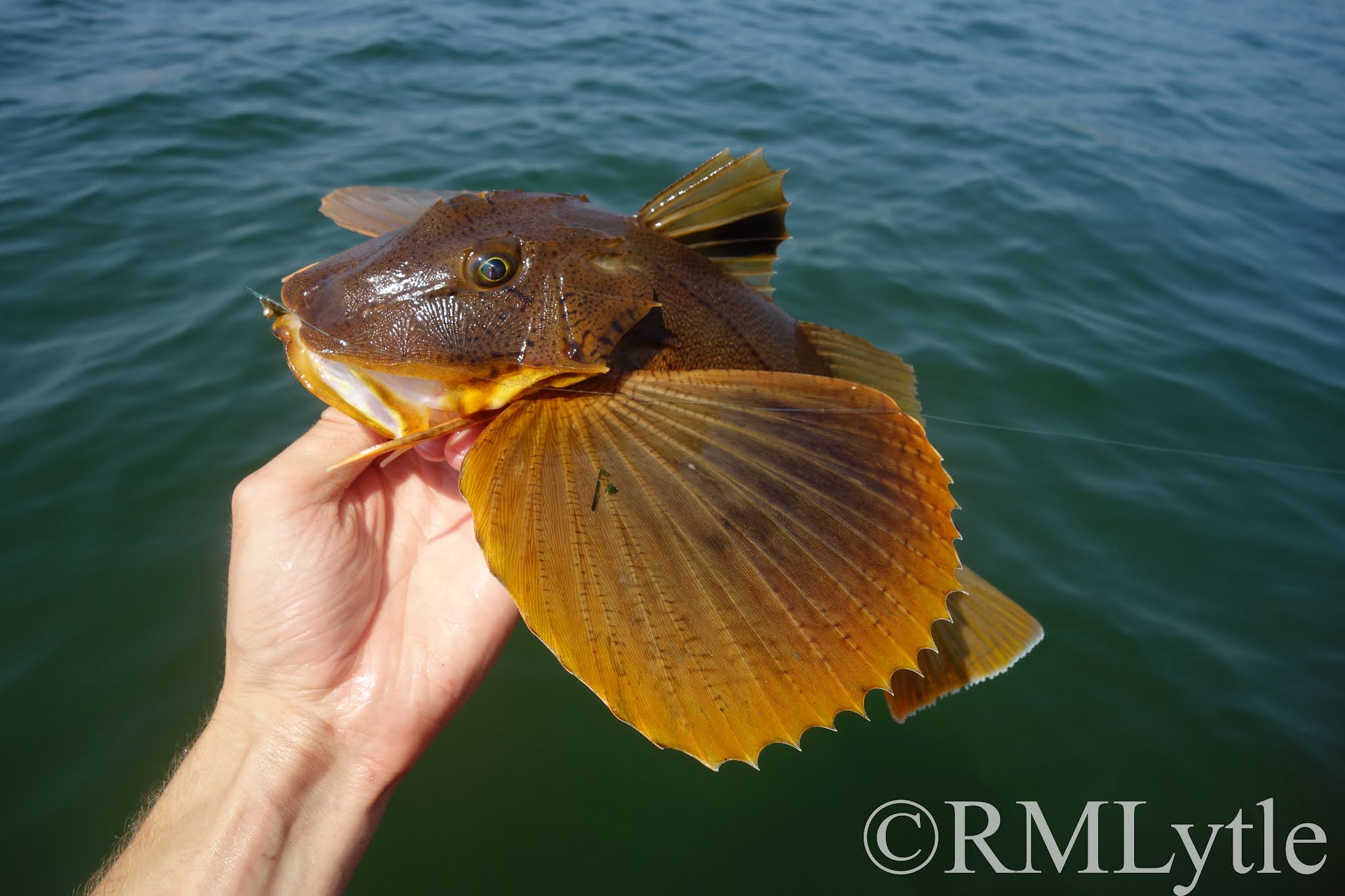
I'm back folks, and now wellll behind. For the next week or two this blog will still be stuck in summer. And one of my favorite things about summer is goofy orange fish with wings. I didn't spend as much time this summer getting rods bent by casting at sea robs as I sometimes do, but I did have a couple crazy bites.
Sea robins get a lot of dislike, and frankly I am sick of it. More and more anglers are coming around, but I still find dead striped sea robins left on jetties and dumped on the side of the road regularly. It's disgusting and unacceptable, and as with any fish that meets a similar fate the reasons many anglers treat sea robins in such a manor are based in ignorance and silly entrenched misconceptions. Fluke anglers often hate sea robins as they are frequently the fish they catch most. Perhaps they have no idea that the fish they are releasing is every bit as good eating as the fluke they are after, and a far more sustainable fish to utilize?
Cleaning sea robins is intimidating, I can certainly confirm that. Filleting them is difficult, but well executed it does utilize enough of the meat. Perhaps a better way to do it is to basically turn the fish into a drumstick. This is the video, put out my "The Fisherman" magazine, that I used to learn how to clean sea robins: HOW TO: FILLET A SEA ROBIN.
If you like keeping and eating saltwater species and don't already eat sea robins perhaps you should! Diversifying our take and easing pressure off of over-harvested species like winter flounder, fluke, stripers, bluefish, and tautog can only benefit things. I've found that fresh sea robin bled and kept on ice tastes every bit as good as fluke, and there are certainly a lot more sea robins around. The species spawn repeatedly throughout the season, leading to their high abundance. However, responsible and conscious angler should release the very fat, large individuals. These are almost always egg filled females, and they'll bear no more meat than a male of the same length but lesser weight anyway. As with an fish holding onto a strong spawning stock is important; I'm promoting harvest not depletion.
Another critique I hear about sea robins is that the are ugly. And, frankly, what!? That's just dumb. Look at these things. Look at the colors, look at their wings! Look at those cool little legs! I'll never understand the beauty standards anglers hold for fish. I think sea robins are one of the wildest, prettiest, coolest looking fish we have around here!
We should all learn to be a bit more appreciative of the fish species that aren't popular. Man of them fight hard, some of them taste good, some of them are just really really cool. All fish are important both as species and as individuals when present within their native range, and it's about time more anglers learned to know and respect ALL of the species the catch.
Until next time,
Wednesday, September 8, 2021
1wt Hickory Shad
Some days I don't find quite what I set out looking for... many days, frankly. I spend a lot of exploring new water, or fishing familiar water at new times and in new conditions. I have to do this to stay on top of things. I'm trying to have a running schedule of what goes on everywhere I fish throughout the year. One evening a little while back I was looking for bonito. I was not finding said bonito though, and there weren't really bass around to pick up the slack. I did have my 1wt with me though, and that provided me an opportunity to do something a bit different when I found a school of peanuts being disturbed by hickory shad late in the day.
It seems to be a bit easier to get hickory shad feeding on very dense peanut schools than it is to get schoolie bass. If the Triple P is off, hickories are your friend. Sinking a fly under the peanuts and fishing the periphery is effective, and it doesn't seem that matching the profile of the peanuts matters at all.
I could have just used my 5wt again, but I wanted to really test the 1wt. Anyone that has caught these shad knows they fight pretty well for their size. I figured the little rod had just enough backbone to land fish without killing them. I was right, I had no problem adequately fighting these fish. It was certainly more fun though. I have an old Ocean City reel on that rod right now and the drag is really loud. So far though I hadn't had the chance to hook a big enough fish to really make it scream. The hickories did just that. It was awesome.
Of course, hickory shad are a delicate fish compared to most. If you aren't prepared to give them everything you've got on such light tackle, or to take them home with you, don't use a 1wt. If you utilize the strategies I highlighted in my recent fish fighting post though you'll have no problem safely catching and releasing shad on a 1 to 3wt fly rod and 4x.
As the sky darkened more and more I realized I had to slow down my retrieve until I was hardly moving the fly at all. Most of the fish ate it as it sunk. I'd make a cast, let the fly fall, and suddenly I'd be tight. I didn't need to set the hook, the fish did it for me. Eventually though the feeding diminished too much and the bite was over. It sure was fun while it lasted, and far better than giving up after failing to find the bonito.
Until next time,