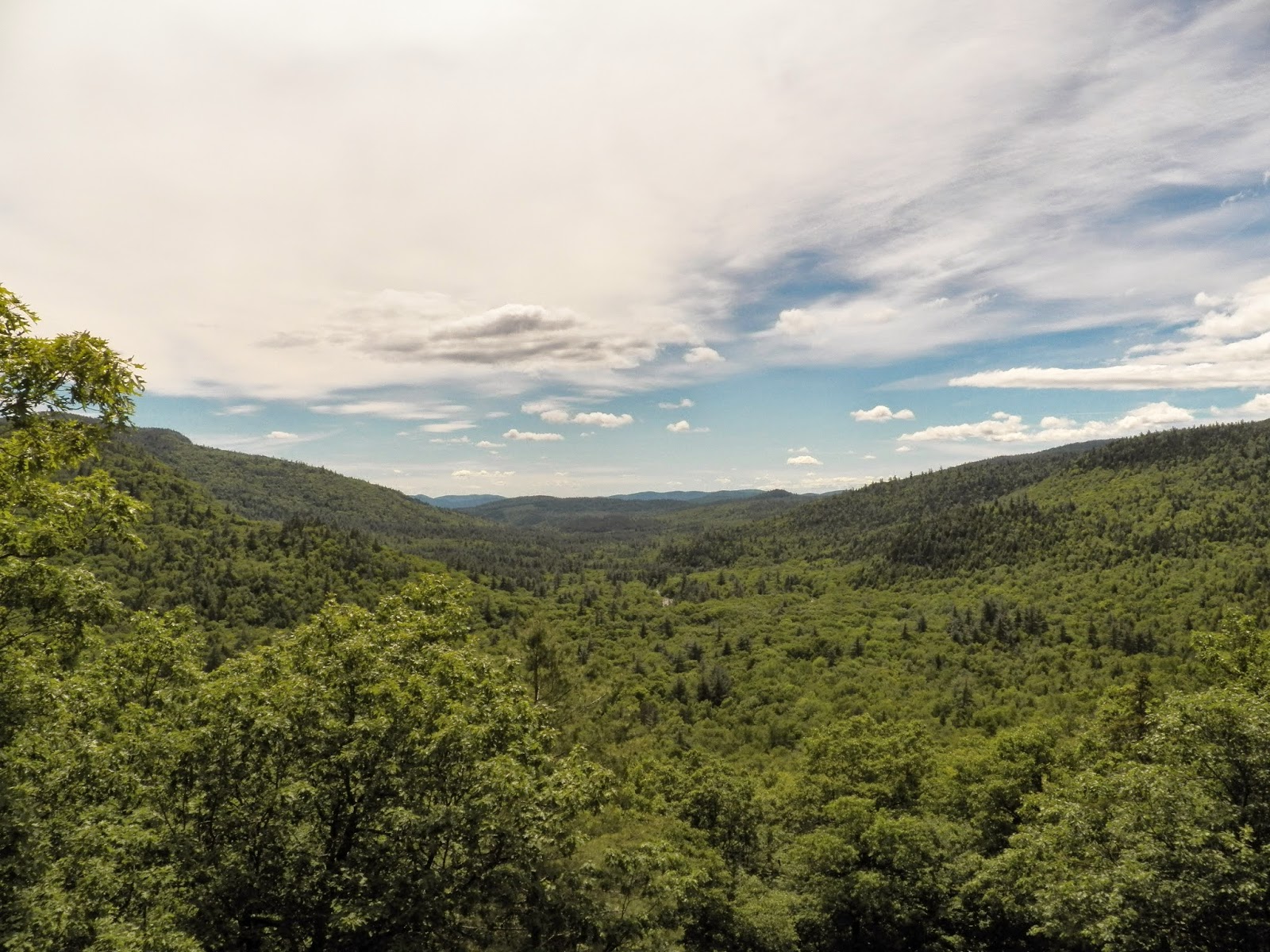
The North Woods have more than a few extra people this time of year. The touristy type that wouldn't dare come up when the bugs are worse, or when air is frigid and all the forestry roads are closed and gated. I would love to visit these hills in the winter sometime. The night sky must be just mind blowing. As it was it was pretty incredible, but we aren't quite there yet...
With all of the camps in the easy to access spots occupied, we ended up editing our plans. After a lot of frustration we came to a very cool spot and decided to call it home for the weekend.


As we immediately discovered there was a pretty awesome stream at the bottom of the ravine in our backyard, so we got to fish without driving anywhere the first day. But would it hold anything?

Sure enough I let a stimulator float on the clearer than crystal water and it was taken by a beautiful wild brooky. Then I did it again and again. The only variation in species was a very strong salmon smolt. In fact that is the only fish this weekend that wasn't a brooky. I'm more than OK with that, every one was mind-blowingly beautiful, and some were just a step above the rest.


I found that the fish in this stream were very light in color, particularly the smaller ones. Given the extremely clear water and light granite bottom this is a logical adaptation.

After sitting by the fire and complaining about the traffic and music from other campsites, and a brief wander into the woods to experience the magnificently clear sky and startling darkness, we settled in for the night and I began to dream about the places we would visit the next day.
We awoke shortly after the sun. The cool mountain air made getting out of the sleeping bag an unfavorable proposition, but the prospect of bacon made it a bit easier. We soon discovered that a critter had climbed all over the car. The dust kicked up by passing vehicles made the perfect medium for a paw print painting.

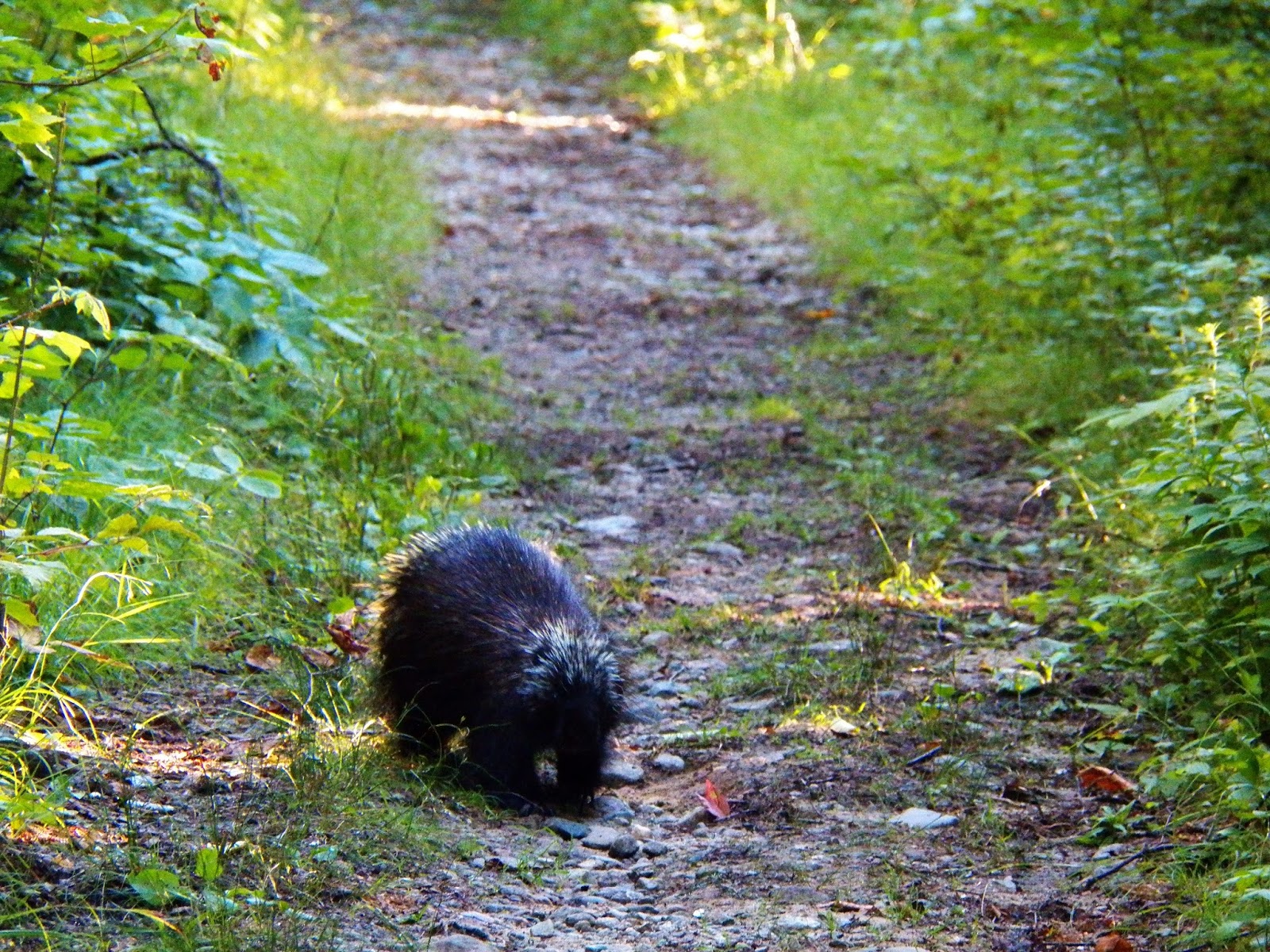
After some nourishment we geared up and drove up the road to a trail head. A mile and a half up the hill was one of the places I researched. Rumors of gin clear ponds that stay cool year round kept me up at night going over maps and stocking lists. Clearly most of the ponds were stocked with fingerlings via helicopter, but I found inside information about a secret place where the brookies are wild and the pressure minimal. We were about to find out. But first, porcupine break! We spotted him coming down the trail and stopped. Porcupines have bad eyesight, so it continued down towards us until it was ten feet away. I said "Hey porcupine" and it stopped, gave us the stink eye and waddled its way up the trail and into the woods.



Then up and up we went, until suddenly the trees opened up and we arrived in heaven. The wind was coming over the pass and rippling the surface of a crystal clear pond. There was no car noise, no loud campers, no high altitude air traffic. Just wind and birds and bugs.


The water was so clear we could see the bottom all the way across the shallow ripple free end of the pond. In it were brookies. Small brookies. Big brookies. Cruising, rising, sitting on springs or what looked to us like redds. It only took me a few casts with a Parachute Adams to entice my first wild still water brook trout to the surface. A lone angler from Massachusetts who had just arrived clapped his congratulations.
There was a noticeable difference in these fish. The scales seemed a bit larger. This was more perceptible from how they felt in hand than how they looked. These were amazing fish. I fell in love with this place as soon as the first fish began swimming back into the clear cold water.

Dry flies and bucktails caught the occasional fish, but by far the best producers were mallard winged wet flies. My favorite was a red one. I had brought along a small cork popper, and I actually got a few to take that. One sky rocketed for it on two consecutive casts and was clearly quite large.


The fish pictured above is one of the most beautiful things I have ever had the privilege to hold. Every wild brook trout is a thing to behold, but catching them in the setting we were in; the type of wilderness mother nature intended them to live in; was just divine.

 |
| Clear green water and a wild char on the line. |


After lunch we went to a lower elevation. We discovered a stream last year that we were certain NEVER gets fished. It's far to much of a pain in the butt. If it wasn't for the beautiful little fish that go nuts for dry flies we probably wouldn't fish it either.
 |
| The bears are eating a lot of berries this time of year. Enough to turn there scat purple! |

The stream was as awesome as I remembered. In the beaver ponds fish were rising to midges and caddis. It didn't take much to fool them into eating an artificial. It was so easy my dad did it while falling over!


The big gal bellow has such a pronounced lateral line. Just shows why they react so quickly to the fly hitting the surface.


Unfortunately the pool that I was most looking forward to fishing had shrunk while the others had grown. Of course all of the hundreds of fish in that pool had just moved into the others. Another upside, there were some good patches of mud exposed to show some nice clear bear tracks. Nothing like seeing a huge clawed paw print in the ground to remind you to keep an eye out.


The farther up we got the fewer and farther between the fish were, so when we reached the only trail crossing we were ready to go.


As soon as the sun set I was out like a light. We woke up at around 8:20 and went down to the stream for one last bit of fishing it turned out that it was some of the best fishing of the trip. We both caught a lot of fish, something like 30 by my dad and low to mid 20's by me. Plus, we each got some really nice ones. The color variations were pretty cool. My two best producers were the Ausable Bomber and a red, yellow, and black wet fly. My dad caught about a ten inches on a bead head nymph.


And that's about all she wrote! We packed up and headed out. The last few looks at the White Mountains showed clouds and rain moving in. Our timing could not have been better, and I guess that sums up the whole trip. It was terrific all around.