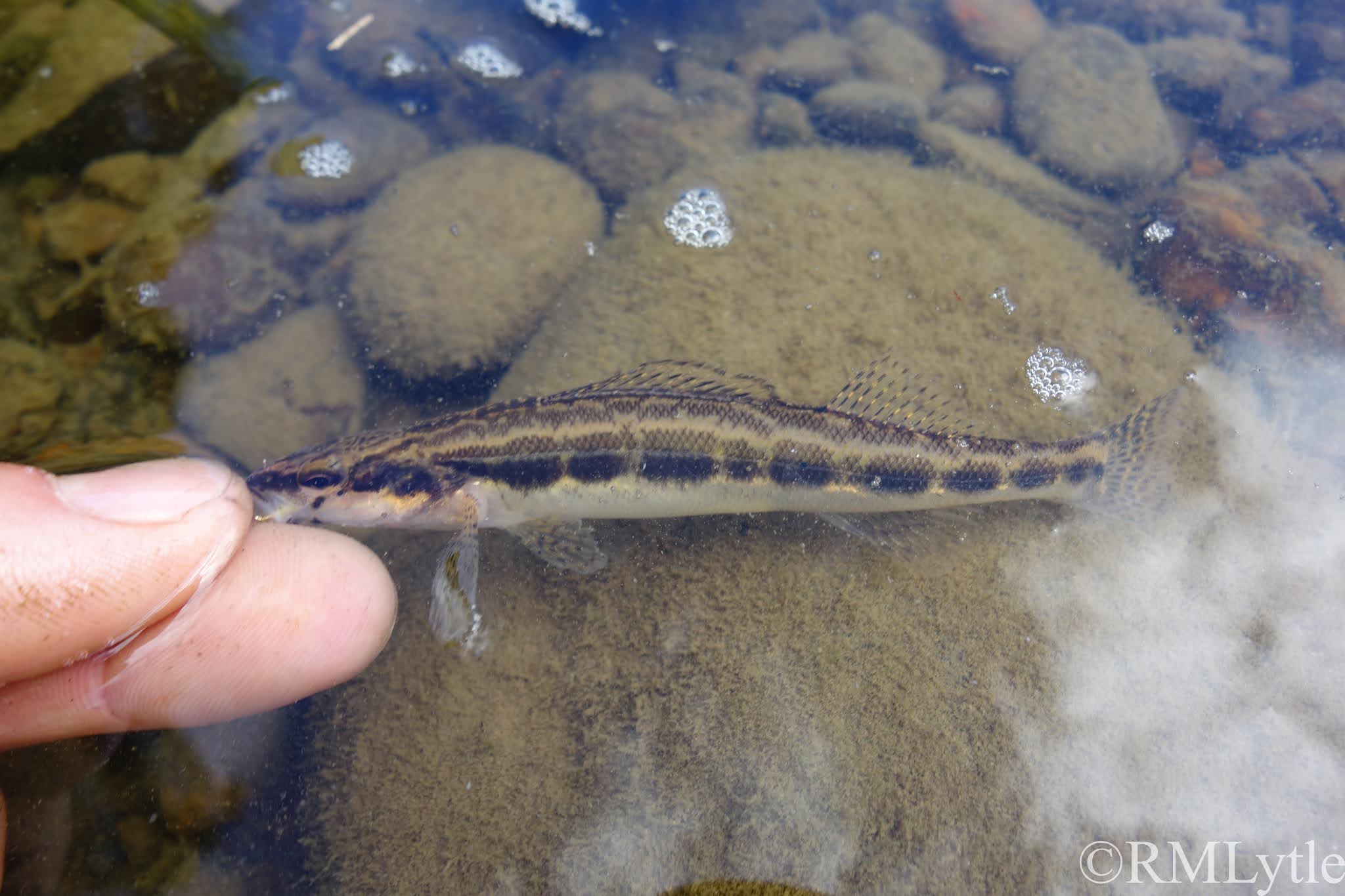
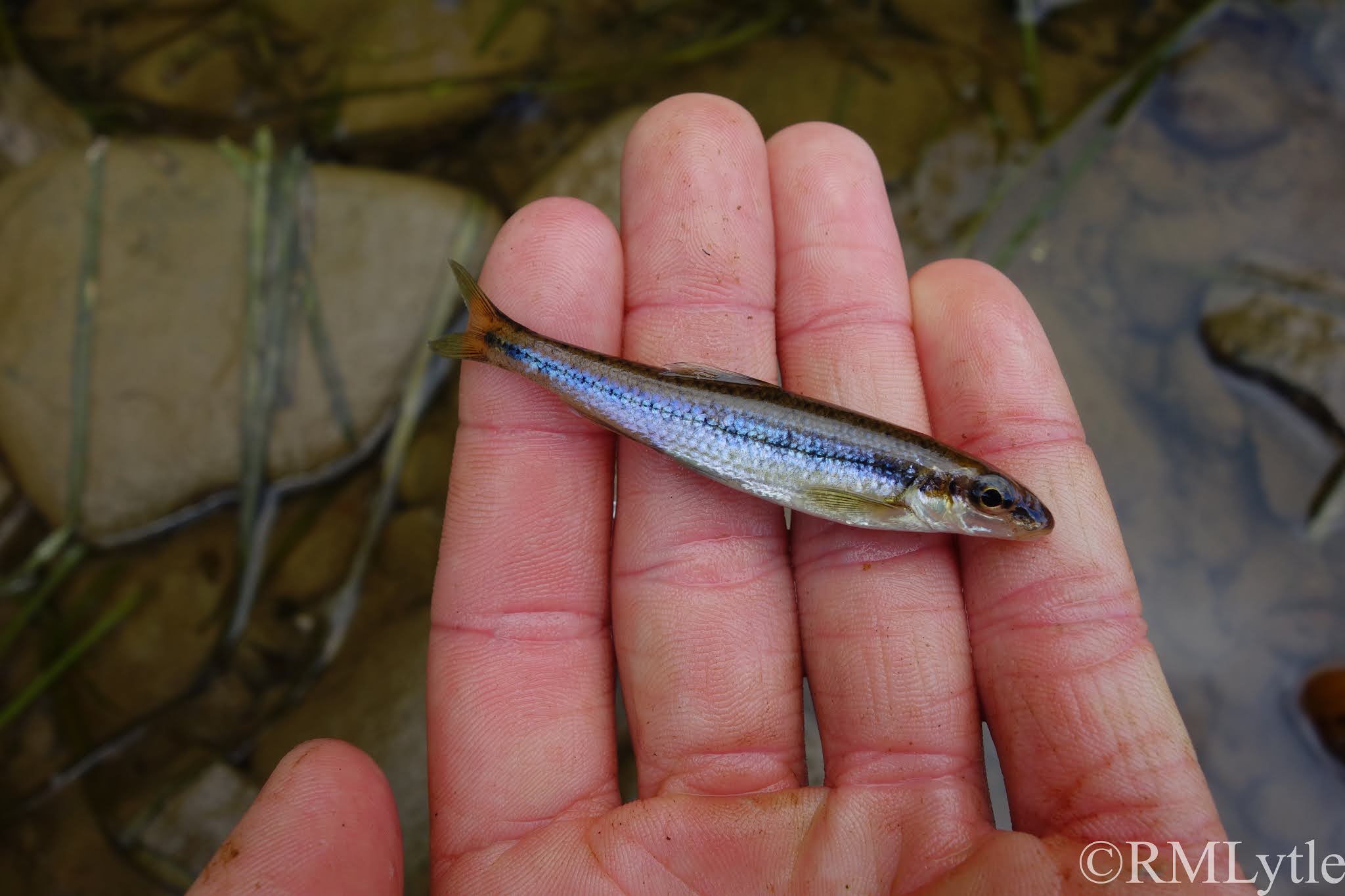
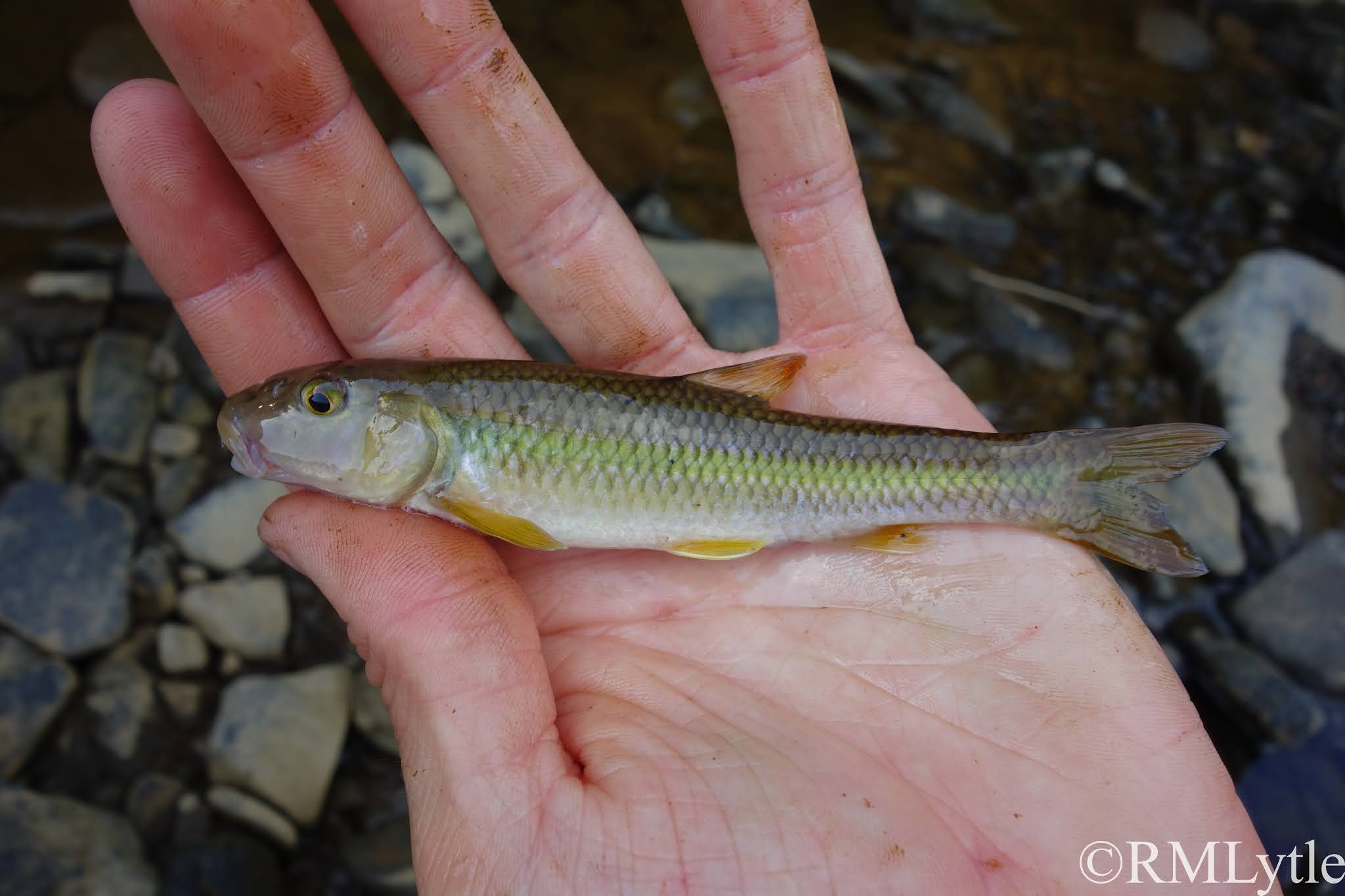
Showing posts with label Micro Fishing. Show all posts

Monday, March 18, 2024

The Rainbow Darter, #200 On The Fly

 Darters are interesting little fish that go ignored by most anglers. Members of the family Percidae, darters share lineage with yellow perch and walleye. If you look at their morphology this isn't terribly shocking, their fin arrangement and build aren't at all dissimilar from perch, with a spikey forward dorsal and big, rounded rear dorsal. Their patterning often matches up pretty similarly too, though it is incredibly varied. Darters are extremally diverse in fact, comprising a subfamily (Etheostomatinae) made up of five genera ( Ammocrypta, Crystallaria, Etheostoma, Nothonotus, and Percina). Of these, I've caught species in two genera: Etheostoma and Percina. Though I live in an area with a notable lack of darters- Connecticut only has two species -I am a big fan of them and when the opportunity arises to target them in areas with more diversity I like to. Of course, they're often very tiny, so it can be a real challenge to get them on the fly. Percina weren't terribly hard as they're larger and a bit aggressive, so longhead darter and logperch were quite easily acquired once I fished around an abundance of each. But the Etheostoma are little bit tricky. And oh boy can that ever be both appealing and irritating. Combine their difficulty with their exceptional diversity and you've got a recipe for a hunched over, frustrated CT Fly Angler with a very sore back sneaking around shallow streams. 

And such was the position I found myself in on a clear, clean flowing mid-sized river in central Ohio this past fall. I knew this area had a number of darters that I'd not yet added to my life list, and I was having no trouble finding a bunch of different ones in the shallows. And some of them were quite ornately colored. In fact, I could already tell that one of the species represented in this spot was the rainbow darter, one of a number of species that are graced with extravagant blue, red, and orange coloration. Their name portrays their beauty, and though they are quite widespread and can be fairly numerous a lot of anglers totally skip over their existence. Brook trout, eat your heart out... if colorful, nearly gaudy elegance is your type, rainbow darters give fontinalis a serious run for their money. Fly fisherman may quickly jump to a salmonid as the prettiest freshwater fish but I struggle to pick between darters and sunfish in terms of the colorful species. 

As I slowly wandered the tail out of a run, examining the bottom carefully, I noted small aggregations of darters around clusters of rocks with vegetation growing on them there were a few species represented though I couldn't identify each. I rigged up carefully: a size 22 hair big with a tiny piece of squirmy worm material affixed to the bend of the hook (darters like something to chew on, I've noticed) and one small shot just a couple inches ahead of it on 6x tippet. Finessing a fly down in front of a tiny darter in this current would be almost akin to dropping a nymph in front of a trout in 10 feet of water in a raging, turbulent flood. It's a very tricky dance that requires precision and patience, one I was already well familiar with. 

The shot placement is a key. If you place a split shot immediately ahead of a fly, it can drop right down to the bottom nd you don't have to control two separate entities down there; the split shot and fly act as one. But some darters like attacking the shot. For some this can almost work in your favor when the fly is right at the shot, eventually they get it in the process of trying to kill the lead ball (it comical, I'm not quite sure where their infatuation with them lies). But some of the really small ones, like the ones I was seeing, my attack the shot once and be done. So I had to play an odd game of keeping the shot far enough away from the fly as not to distract the darter but close enough to have control over where on the bottom the fly settles. Closer means more control, further means less chance the darter just attacks the shot and never cares about the fly. This is, obviously, not an exact science. It requires an immense amount of trial and error. In this case about an hour of it. I had darters attack the shot, run and hide, or hit the fly but not get it in their mouths just right. Persistence pays off though and eventually I did manage to hook one. It was a diminutive but colorful little creature, my first rainbow darter. 


Lifelist fish #200: Etheostoma caeruleum, Rainbow darter. Rank: Species

Though this certainly wasn't the most impressive example to the species, it was exciting to get my first of one of the more well known colorful Etheostoma. When they spawn in the spring the mature males really color up something fierce and I'd very much like to catch one of those. But there's always another fish, isn't there? Darters are just one of a large number of whole families and genera that go largely ignored by the angling world as a while. They flee from the path of completely unaware wading anglers and scuttle for cover as our drift boats shadow the riffle bottom. I don't expect everyone to want to catch two inch long fish on hook and line, but it still surprises me that many just have no interest in learning about them at all. 

Thank you to my Patrons; Erin, David, John, Elizabeth, Brandon, Christopher, Shawn, Mike, Sara, Franky, Geof, Luke, Noah, Justin, Sean, Tom, Mark, Jake, Chris, Oliver, oddity on Display, Sammy, and Cris & Jennifer for making Connecticut Fly Angler possible. If you want to support this blog, look for the Patreon link at the top of the right side-bar in web version. 

Monday, August 30, 2021

Grubbies on the Fly

 Grubby, or little sculpins, are a fairly abundant species throughout New England Coastal waters. They are a small sculpin species that inhabits rocky inshore and even inter-tidal habitats. Nobody really fishes for grubbies. They're too small to eat, for the most part, and aren't big enough to be called a game fish by much of anyone. I think they're pretty cool though, and every once in a while I try to catch some. 


Grubbies are very aggressive by nature and will eat just about anything that fits in their little mouths (actually pretty big mouths compared to their body). This included small nymphs dangled and bounced around the rocky crevices grubbies occupy. 

On a recent quick jaunt in Southern RI, I spent a little time fishing for these charismatic, little goobers. There were as many around as I'd ever seen, literally hundreds, though their exceptional camouflage made them difficult to see until a fly was introduced into the environment and they all came running to try to eat it. Young of the year winter flounder were also present but too small to catch on a size 16 hook. I've begun carrying tanago hooks again at all times so I stop having possible lifers like that slip away. Next time I'll use those. But the grubbies could sometimes get enough of my nymph in their mouth that I could hook them. Not often enough, but sometimes. 


At times, as many as 7 or 8 of the little buggers would be after the fly. They'd materialize seemingly out of nowhere, but in reality they were so well hidden that hundreds could hide within the rocks and vegetation. It was nice to have the opportunity to see a whole lot of them, because their color varied hugely. It's very cool to have not only a diversity of species around, but diversity within one of those species.


Being a life lister, there are loads of species I will only target once, and grubbies could have been one of those species. I do think, however, that catching just one of a species doesn't quite tell their story well enough. Sometimes going out and catching a bunch is warranted. Even if they're just tiny grubbies.

Until next time, 

Fish for the love of fish.
Fish for the love of places fish live.
Fish for you.
And stay safe and healthy.


Thank you to my Patrons; Erin, David, John, Elizabeth, Brandon, Christopher, Shawn, Mike, Sara, Leo, C, Franky, Geof, Luke, Streamer Swinger, and Noah for making Connecticut Fly Angler possible. If you want to support this blog, look for the Patreon link at the top of the right side-bar in web version.

Edited by Cheyenne Terrien

Wednesday, November 11, 2020

Puddle Shiners and Rock-flipping Sculpins (Western PA Pt. 7)

 Our finale full day in Pennsylvania was upon us and Noah, Jake and I wanted to end the trip on a high note. With lower pressure, cloud cover, and showers in the morning forecast we hoped our luck with the bigger predators might improve. Add to it, my grandfather would be joining us on the water for the first bit of the day, it seemed nothing could be better. At first we may be in luck, as the redhorse, drum, and carp were much more active. One thing I forgot to count on is how bad I sometimes am at hooking bottom feeding roughfish, especially suckers and carp. I have days where I just whiff take after take and this was one of them. I whiffed a few carp. I whiffed a nice drum. Then I reefed the set on a huge redhorse and my leader snapped with a sickening whip-crack. It's a good thing I can nymph channel catfish, apparently, because I got a few of them. They weren't big but I'll take any cat on the fly any time, and indicator nymphing them was new to me. 


Jake ended up getting himself one smallmouth redhorse on a worm, but as the morning wore on it seemed we might not get the big fish we were hoping to. We all aught fish at least, and for my money, Some of Noah's were the funniest. There was a puddle on the walkway above the tunnel, where fisherman stand and soak bait in the deep, roiling dam discharge below. They'd clearly been discarding their minnows in that puddle as it was full of them. 


He got one golden shiner, and I think a spottail shiner too. That these fish were surviving effectively in the puddle demonstrates the problems with discarding live bait. A heavy rain could so easily provide these fish a way into the river, and these weren't all native species. Fisherman are not conscious enough about such things, a tiny cyprinid species could wreck havoc on some important native species and the habitat they need.  


As it began to seem our options at this spot were exhausted, we decided to move along. My grandfather headed out and Noah, Jake and I went to the next spot. It was a small freestone stream suggested to us by my grandfather, where we stood a reasonable shot at Jake getting his lifer rainbow trout, as well as catching good catfish bait for that night in the form of big creek chubs. We filled the bait quota but found no trout, but the odd bass instead.


As we were fishing downstream, a family hopped in just below us and continued on down. Not wanting to fish water that had just been fished, we turned back upstream and headed back towards the cars. Noah rushed ahead as Jake and I lollygagged and fished our way up. We ended up finding a pool with some good darter and sculpin habitat, and started micro fishing it. I flipped some rocks and found that some large mottled sculpins were residing under them. It didn't take long for both Jake and I to catch one, and when Noah wondered where the hell we were and came back down he had little trouble getting them to eat either. At the time, this was a lifer for me, but sine then I'e learned that the tiny sculpin I got further up in the Allegheny watershed was a mottled too. 

Lifelist fish #176, Mottled sculpin, Cottus bairdii. Rank: Species

Sculpins are awesome, I really do adore them. They are beautiful little fish and very charismatic. And honestly, any fish that has the gall to still eat after you've essentially lifted up the roof of his house in order to find him is pretty cool. 

Jake then diverted attention to darters and it payed off, he got a lovely fan tail, a lifer for him.

Fantail darter, Etheostoma flabellare

Then we all caught bluntnose minnows, which were lifers for Noah and I.

Lifelist fish #177. Bluntnose minnow, Pimephales notatus. Rank: species.

With lifers now under our belts, at least we felt some goals had been met and we decided to change spots again and seek bigger fish yet again. 
Until next time,

Fish for the love of fish.
Fish for the love of places fish live.
Fish for you.
And stay safe and healthy.


Thank you to my Patrons; Erin, David, John, Elizabeth, Brandon, Christopher, Shawn, Mike, Sara, Leo, and Franky for supporting this blog on Patreon.

Friday, October 30, 2020

Redhorse, Shiners, and Crayfish Eating Snakes (Western PA Pt. 6)

 As dawn broke on our second morning in Pennsylvania, it became abundantly clear to Jake, Noah and I that we needed to make a pretty drastic change. We'd struggled the whole day prior and well into the night to find larger fish that were willing to eat, and we just weren't successful. And now it was the coldest morning any of us had felt in months. Temperatures had dropped below 50 overnight. We hit the same creek where Noah and I had found wild trout the first day, and Jake quickly got his lifer, but we then dropped south. Even though we were inland and not even travelling an hour, we were going into slightly warmer weather. We were headed to another area I'd spent a lot of time around as a kid, but still hadn't fished much. 


We dropped further down the Allegheny watershed, towards a town called Vandergrift and the surrounding area. Vandergrift is where my mother grew up and where my grandparents still live, northeast of Pittsburgh. We'd spend the second half of our trip fishing this area, which is just as species rich though much more impacted industrial activity. It would be interesting to see how the native species were faring in these waters. 

The first spot we decided to check out was a spillway my grandfather has been telling me about for years. It was a spot he'd caught a number of muskellunge at over the years. That was certainly a big draw, but it was a spillway... from shiners to redhorse to huge catfish, spillways draw fish. They're both a barrier to upstream travel, a food delivery funnel, and a provider of deep holding water. We knew the likelihood of encountering things like drum, sauger, redhorse, and buffalo would be pretty high at such a place. And he first few minutes were not disappointing, as we saw multiple sized and species of redhorse. Some were just flashing, but others were actually tailing like carp. Or, frankly, like bonefish. Because if I were going to consider any North American freshwater fish a bonefish, it would be redhorse. They're sleeker than carp and I'm convinced they fight harder, pound for pound. 

As it turned out though they aren't as easy to catch. I was getting snubbed constantly no matter what I presented these fish. This surprised me a bit, I'd expected these fish to be about as difficult as carp and a little easier than white suckers, but at least in the conditions we'd been presented so far they were about as tricky as white suckers if not more. Even with bait they were far from pushovers. 

Incidentally, the first notable catch, by Jake, wasn't a fish, but a reptile. He'd actually caught one the night before as well, albeit a juvenile, and that one had been my lifer. It was a queen snake, an unassuming but beautiful semi-aquatic natricine that feeds primarily on crayfish. They're cool snakes but that's all I really knew about them, I hadn't even realized they lived in the area. 


These were very cool snakes, I saw them exhibit behavior more aquatic in nature than any snake species I'e observed besides actual water snakes (Nerodia). They'd poke out of crevices with everything but their heads under the surface, and spent extended periods of time completely submerged. They seemed especially abundant too, we saw lots of them. 

Eventually I finally caught something noteworthy while indicator nymphing, something very noteworthy. My indicator gave a little shudder, very bluegill like, but I set into something much larger than I'd hooked all day and when it started thrashing at the surface I could see that it was a redhorse, so no matter what it would be a new species. It turned out to be a smallmouth redhorse, endemic to the Ohio drainage and an especially good looking redhorse speceis. It had nibbled a beadhead Hare's Ear soft hackle. 

Lifelist fish #174, smallmouth redhorse, Moxostoma breviceps. Rank:species.


That was a gorgeous fish, a native species that is largely overlooked and an exceptional challenge to catch. I promptly fell in love and had a big goofy smile plastered on my face as I let the fish slip from my hands and back into the muddy river. 


I kept indicator nymphing for a while hoping that might be the effective method, and I did get a few more fish, but not anything exciting. 


By the time I gave up on that, Jake and Noah were hammering down on micros, including streamline chubs which I thought I needed (I'd not yet ID'd mine from the day before). Jake was also catching the odd logperch. So I rigged a tanago and got to it. Of course I could only seem to catch species I already had, but luckily I take photos of fish that may not be new but have some relatives that are similar enough... what I thought was a spottail shiner I'm now as sure as I an be is a rosyface shiner.

Lifelist Fish #175, rosyface shiner, Notropis rubellus. Rank: species.


With two new species on the fly under my belt, I ended the day's outing photographing another queen snake.


From the river we headed to my grandparents' house, where we'd get to say in relative luxury for two nights in their camper. It was great to see them, though strange due to the necessity of social distancing due to coronavirus. Living a few states away from my family leaves long gaps between visits, so though I'd been there and seen them all much more recently than I'd seen Franklin, a lot had changed. It held more of a familiarity though, it felt much less strange. Perhaps the presence of people I know and love is all there is to that.

Until next time,

Fish for the love of fish.
Fish for the love of places fish live.
Fish for you.
And stay safe and healthy.


Thank you to my Patrons; Erin, David, John, Elizabeth, Brandon, Christopher, Shawn, Mike, Sara, Leo, and Franky for supporting this blog on Patreon.


Tuesday, October 20, 2020

Longhead Darters and Streamlined Chubs (Western PA Pt. 5)

As the first full day in Pennsylvania wore on, it started to seem to Noah, Jake, and I that larger predatory fish were just not that active. Though we were on a fantastic watershed for big fish, the more we focused on them the less likely we would be to catch lifers. So I focused more and more on micros.

The Allegheny was teaming with small fish, and many were species I'd never caught. Some were also visually very striking. Peering into a riffle, I could see numerous longhead darters and a few small common logperch. These species are both in the same genus, Percina. They are a bit larger on average than other darters, and also quite aggressive. This meant they were pretty easy to catch on small flies, and with  minimal effort I had another lifer darter species in hand.

Lifelist fish #172, Longhead darter, Percina macrocephala. Rank: Species


I then put a bunch of effort into trying to get a logperch, and I did miss one, but the longheads and ever present silver shiners made this task all but impossible, beating the logperch to the fly time after time. Once, though, when I lifted a small minnow out of the water, thinking it was yet another silver, it clearly wasn't. I had no idea what it actually was, but after Jake caught some of the same fish later in the trip I was able to determine that I'd caught a streamline chub.

Lifelist fish #173, Streamline chub. Erimystax dissimilis. Rank, species.


This was a species I knew absolutely nothing about prior, and still wouldn't if I hadn't caught one. This little fish was quite lovely, though to some it may look completely uninteresting and extraordinary. To me every fish tells a story, a story about life on this planet. Streamline chubs had successfully held a small niche in this big river, changed and evolved from ancestors long gone, only still existing because they're fit to live where they do, as every organism is. To me that's always beautiful, and it makes no life insignificant. 

Back out in the river, I tried to find one more new species in this spot. I started targeting the different smaller darters that were perched up on boulders. This may seem odd, for a fish to be sitting on top of a big rock rather than hiding under it, but I've seen numerous darters and sculpins in freshwater and blennies and sculpins in saltwater doing so. 

Eventually I did catch one of these darters. I'm still not positive on it's identity but it is likely another greenside, so not a new species. 


Though the Allegheny was being oh so stingy with it's larger fish, these small fishes were not a bitter consolation for me at all. I love catching fish, with no exceptions. 

Until next time,

Fish for the love of fish.
Fish for the love of places fish live.
Fish for you.
And stay safe and healthy.


Thank you to my Patrons; Erin, David, John, Elizabeth, Brandon, Christopher, Shawn, Mike, Sara, Leo, and Franky for supporting this blog on Patreon.

Saturday, October 10, 2020

Spotlighting Stonecats and Darters (Western Pennsylvania Pt. 3)

As Noah and I drove through Franklin to where we'd meet Jake, I recognized places that hadn't changed and noticed others that hadn't. To me the biggest change is that my childhood home no longer exists, so though it was tempting to drive by where it used to stand just to see, I felt it would just make me sad. But the bar on the corner, the bank, the schools, the place my Dad worked; none of that looked any different. Even the small ice cream place we were meeting Jake at was very much the same. While we waited I decided to walk back to the river behind the place just for a look. In a quick, short circuit, I saw tons of redhorse and quillback rolling and three (!) different muskies. NEVER leave the rod in the car, dammit! It was getting dark, and we wanted to do something else with our time first. So when Jake got there we chatted for a while, this was the first time we'd actually met him after all, then headed back into town to a park on the river.

Our plan was to use our lights to sight fish for small fish species that become somewhat more active after dark, as well as those that are easier to single out that way. Hunched over, searching the shallows, we soon began to find fish we'd not caught before. Jake spotted one first, a small longhead darter. We ended up spooking that fish. Then Noah spotted a stonecat; a species of madtom, small catfishes of the Noturus genus. We tried to get that particular individual for a while without success, but soon found more. Jake got one before Noah or I. It was the first lifer of the trip for him, and in my opinion the most interesting of the ones caught already between the three of us.


Catfish are incredibly diverse and widespread. They are nearly ubiquitous in waters worldwide. From candiru to redtail to Mekong giant catfish, to saltwater gaftop sail cats, the size and variety of catfish is stunning. And the little madtoms of North America are really cool fish. Stonecats are on the large side as madtoms go, and though their lifestyle matches up with other species in the genus, they're named for their habitat: the undersides of stones in flowing water. Some of what we did looking for them was to flip over stones, and this did reveal a few, but at night they often exit their hides to feed and more were out than in. 
I struck next with a stonecat of my own. It was definitely hard to get them to eat a fly, but I was able to deceive one, or rather bother one into snapping at a tiny nymph. This was my 4th new species of the trip and my first madtom of any species. It was also my 8th catfish species on the fly.

Lifelist fish #169. Stonecat madtom, Noturus flavus. Rank: Species.

Then I found a darter. I'd put my tanago midge in front of many already this night but none were at all interested. Most were quite scared of it, actually. But this one ate. I knew that whatever it was, it was a new species. This individual turned out to be a greenside darter. 

Lifelist fish #170. Greenside darter, Etheostoma blennioides. Rank: species


This was only my second species of darter. CT has only two species, tessellated and swamp darter, and swamp darters are extraordinarily rare. I'd never really gotten to target darters in any areas with much diversity, so I'd only ever caught tessellateds. Darters are some of the most beautiful fish in freshwater. That said, though this greenside was a gorgeous fish, it doesn't hold a candle to, well, itself in spawning season. Like many fish species, darters color up extensively for the spawn, but are much duller the rest of the year. 


We continued fishing, seeing a number of species ranging from sauger to tiny darters and minnows, but Noah then took the cake with a notably large stonecat. His lifer was quite the specimen, and simply seeing it at all was a real privilege. It was such an awesome fish. 


When we got to some faster water, the small black water beetles I've always know as whirligigs became a giant pain, swarming our light and making it impossible to spot fish. So we started to work our way back down. On the way up, Jake had noted a slack, muddy, weedy spot and drew correlation between it and where we'd spotted the first longhead darter. Sure enough, he found one there and then caught it, his second lifer of the night. 

Longhead darter, Percina macrocephala

 By then our spines were destroyed, it was getting quite chilly, and we'd fished quite a lot of water and caught a bunch of very cool fish, so we decided to go find a spot to sleep in the cars. We found a good spot, said goodnight, and went to sleep wondering what the next day might bring. 

Until next time,

Fish for the love of fish.
Fish for the love of places fish live.
Fish for you.
And stay safe and healthy.


Thank you to my Patrons; Erin, David, John, Elizabeth, Brandon, Christopher, Shawn, Mike, Sara, Leo, and Franky for supporting this blog on Patreon.

Wednesday, October 7, 2020

Allegheny Micros (Western Pennsylvania Pt. 2)

 I stood on a huge boulder looking out over the Allegheny River. The water was strikingly clear, but also held that classic blue-green color that I see all over in Pennsylvania, but rarely ever here in Connecticut. It comes from the sedimentary geology. Limestone, sandstone, shale... that's what makes up much of Pennsylvania's bedrock. In Connecticut, we have schist, gneiss, granite, traprock, and brownstone. Different rock, different minerals, different colored water. 

Swimming in this water were fishes I may well have seen as a child, but I was looking at them now with new eyes. I knew at least loosely what I was looking at. Moxostoma, Notropis, Semotilus, Micropterus... latin names came to mind, not simply "suckers" or "minnows" or "bass". I didn't know the exact species of every fish I was looking at, but I was equipped to find out, and that was just so damned exciting.

I'd lived in this place a nature-curious kid until I was 8, now at 23 I was here with the same excitement, joy, and curiosity, but with new eyes and new tools and a lot more experience. So I hopped down with fly rod in hand, ready to tackle whatever the Allegheny was going to throw my way. At the moment, targeting micros seemed the best way to learn what was in these waters. I could see redhorse, quillback, and gigantic smallmouth, but those fish were extremely unwilling. The smaller cyprinids were ready to attack, but still difficult to hook and then keep hooked. Inevitably, the first was a Cyprinella which are a royal pain to identify. Unfortunately, careful examination showed it to be a spotfin shiner, the only Cyprinella I've caught yet. 

Cyprinella spiloptera

The next fish was something very clearly new. It was a chub, one I didn't recognize. Noah got one as well. Some research on my phone resulted in the determination that these were river chubs. My 166th life list fish and my first lifer from these waters of my childhood.

Nocomis micropogon, river chub. Lifelist fish #166, Rank: Species 

A short time later I caught one of the many small Notropis in front of me. I wasn't certain, but I thought it was an emerald shiner. Fellow multispecies angler Tim Aldridge later confirmed suspicions I'd gotten after a little research, this was actually a silver shiner. My 167th lifer. 


Notropis photogenis, silver shiner. Lifelist fish #167. 

After seemingly exhausting our options at this spot at this time of day, we moved again. This time, we stopped at a spot I did remember a little bit. It was a small tributary of the Allegheny that flowed under a bike trail my mother often took me too. Again, this was a place I'd never fished. And again, I was quickly gratified with a species I have no doubt I'd seen as a kid, but knew very little about until recently. As it turns out, Northern hogsuckers are quite abundant in Western Pennsylvania, and we'd see them all over the Allegheny and other watersheds. My first was a juvenile that took a tanago midge after methodically presenting it to each fish in the school repeatedly. Some attacked the split shot, most either did nothing or spooked, but this one did eat the tanago. And what a beautiful little lifer this was! I'd love to catch a large adult so this certainly won't be the last time I target northern hogsuckers. 

Hypentelium nigricans, Northern hogsucker. Lifelist fish #168

In a short time the Allegheny had served up three new species, two were fish I'd noted, seen prior, researched a little, and knew I wanted to catch. One (the silver shiner) was a fish I new basically nothing about then but know a little about now. And look at all three new species and the spotfin shiner together... what a beautifully diverse little group! These are all fish that would be lumped under the heading "bait" by the hoards of online idiots, which remains the most annoying and stupid comment on posts asking for fish identification help. But to Noah, Jake and I, the diversity of these fishes makes them worthy of our time and respect. Fish are fascinating at any size or stage of life. Ironically we also happened to be in a part of the country were the understanding of fish diversity is especially lacking, and it shows in the fact that I, as a nature obsessed kid, new nothing of any of these species at all when I was living there. Nobody around could tell me exactly what I was looking at. Little did I know just how diverse these waters actually are. 

Until next time,

Fish for the love of fish.
Fish for the love of places fish live.
Fish for you.
And stay safe and healthy.


Thank you to my Patrons; Erin, David, John, Elizabeth, Brandon, Christopher, Shawn, Mike, Sara, Leo, and Franky for supporting this blog on Patreon.

Saturday, October 3, 2020

Memories (Western Pennsylvania Pt. 1)

We were going to Ohio. We had a fool proof plan to get on loads of new species around Cincinnati, with a local friend, Jake, as our guide and a good few days at our disposal. Then Covid, or more accurately Connecticut's policies regarding Covid, threw a monkey wrench in the gears. I double checked state listings while we were en-route and Ohio had been added to the list of CT's travel advisory states. I couldn't justify quarantining for 14 days upon returning home. I had things to do. As did Noah. The trip came to a screeching halt outside of DuBois, Pennsylvania as we tried to figure out what to do now.

If there's one thing that Noah and I are good at it's on the fly adjustments. In no time, we had a plan B. Jake started to get ready to drive out to meet us, and we changed our destination to the town I was born in and where I lived until I was eight years old: Franklin, Pennsylvania. 


For me, this trip had suddenly turned into a homecoming, an exploration of water I could be living near had my life followed just a slightly different course, waters I spent my early childhood around, but none of which I fished, or at least remember fishing. The middle Allegheny watershed also happens to be some of the most fish-diverse freshwater in the country, so although we wouldn't have a local guide that knew the ins and outs of the fishery as Jake knows his area, lifers were assured for all three of us. But for the first few hours it was up to Noah and I to do some scouting before Jake got there.

We drove through the bucolic upland areas of northwestern PA before steadily dropping in elevation, following the watercourse of a small tributary of the Allegheny. When it made a more abrupt drop in elevation, the road turned to dirt and we followed it to a pull off. Though I'd been here many times before I didn't quite recognize it. It was the same place but time had altered my memory. We then walked down a trail that was steeper than I remembered, past an old stone furnace that was smaller than I remembered, to as stream that was narrower than I remembered. There, I flipped slab rocks that were smaller and lighter than I remembered and found fewer and smaller salamanders under than than I remembered. That, I'm confident, was the only thing that really had changed. My memory of the quantity of sleek black salamanders that would dart out from under those stones is so vivid. Is it coincidental that my most vivid memories from early childhood are of amphibians, reptiles, fish, and insects? I think not.

Northern dusky salamander (I think?)

One thing I knew was that I'd never fished this place, but we were about to. At a glance it looked almost completely lifeless. It wasn't exactly brimming with minnows and dace like some streams, and it took some really close inspection before fish revealed themselves. Actually it took Noah one cast with a jig for a brown trout to come flying out from under a big sandstone slab. It didn't connect but now we knew they were there. And eventually we found a large hole with some chubs in it as well. Unfortunately, they weren't a new species, but the creek chubs we'd caught plenty of other places before.

Semotilus atromaculatus

As Noah continued to fish a tungsten ice jig, which revealed that not only were there trout in this stream but a few quite large ones, I decided to hone my focus on the shallow tailouts, the sort of water darters and sculpins love.


It took some legitimate patience but eventually I found some sculpins. They were tiny, and if I could catch one it would be in the running for the smallest fish I'd ever caught. It took extremely minute adjustments, but I managed to get two to eat a tanago midge and caught the second. It looked tome to be a slimy sculpin, a species I'd already caught in CT. This may indeed be the smallest fish I've caught on hook and line at much less than an inch in length. Absurd though it may seem to many of you, I'm very proud of this. 


Noah then finally connected with one of the wild browns he'd been dueling with. I rushed up to see it and I'm glad I did. I can't believe, all those years ago, I'd had no idea there were fish like this in this little creek. 


We headed back up the trail, not un-pleased as we'd just found a spot Jake would likely get this lifer brown trout in. I was just in a very strangest mindset at that time. This was the first time in my life I was going back somewhere that had been such a big part of my life after such a long time away. It was surreal. I was looking forward to seeing more of the places I remembered, but was also oddly apprehensive. 

 Until next time,

Fish for the love of fish.
Fish for the love of places fish live.
Fish for you.
And stay safe and healthy.


Thank you to my Patrons; Erin, David, John, Elizabeth, Brandon, Christopher, Shawn, Mike, Sara, Leo, and Franky for supporting this blog on Patreon.