Showing posts with label Hickory Shad. Show all posts

Tuesday, September 12, 2023

Photo Essay: Lavender Tidal Marsh Fish


Thank you to my Patrons; Erin, David, John, Elizabeth, Brandon, Christopher, Shawn, Mike, Sara, Franky, Geof, Luke, Noah, Justin, Sean, Tom, Mark, Jake, Chris, Oliver, oddity on Display, and Sammy for making Connecticut Fly Angler possible. If you want to support this blog, look for the Patreon link at the top of the right side-bar in web version.

Tuesday, November 23, 2021

November Morones

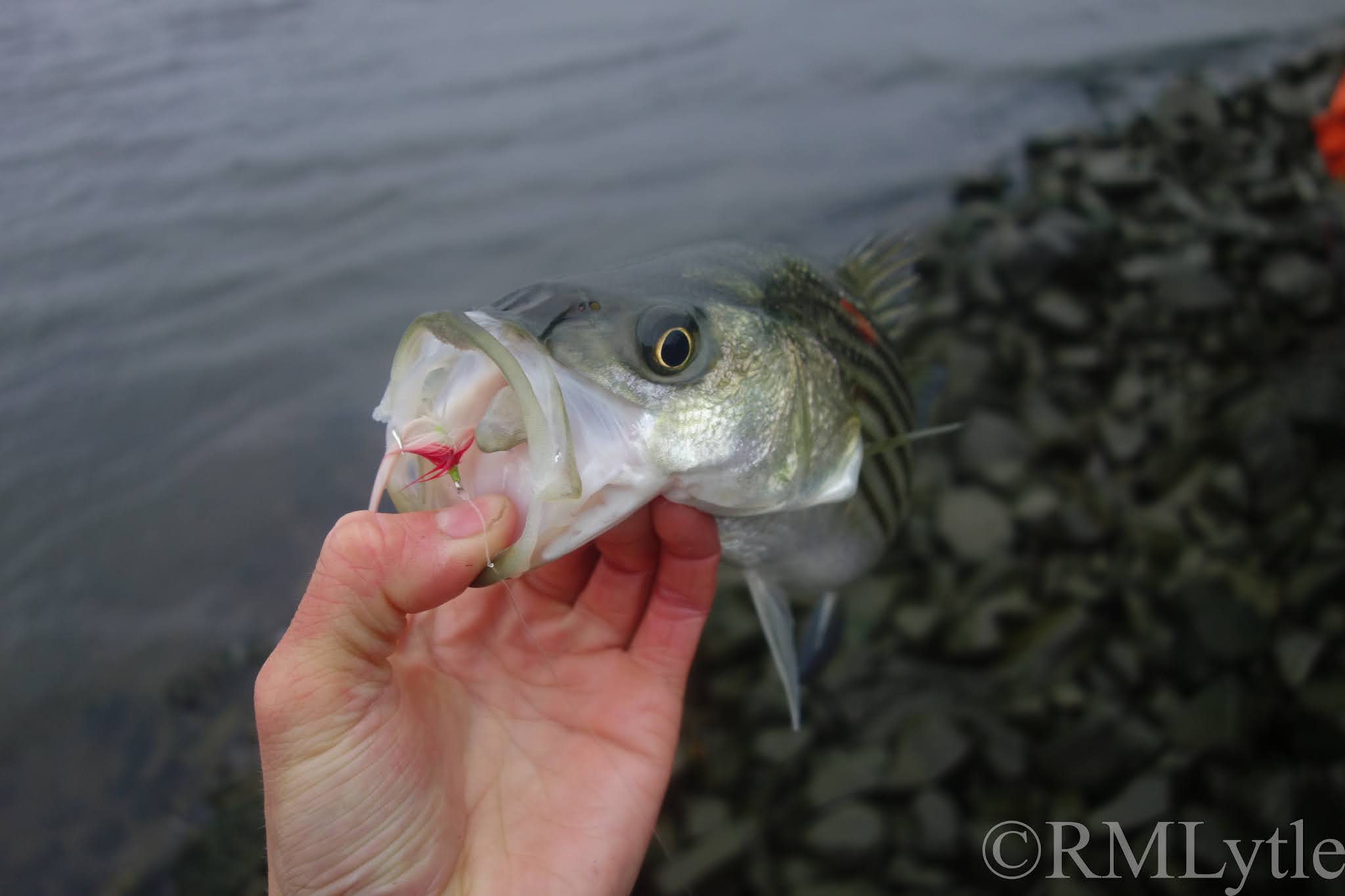
 Noah and I headed out under dreary skies one November hoping to find some big striper blitzes. Some had been happening in the days before, and indeed that very morning in a different area. It had rained a lot the before, though, and that often puts striped bass into a lethargic mood sends the bait packing. We were still hopeful that a large biomass of stripers would be around, especially since there had been tremendous numbers in the days prior. Our first drift on a key mud flat produced a 28" bass for me, and multiple boils and hits for both of us including with some particularly good fish. That made me very hopeful. Subsequent drifts came up empty.

Morone saxatilis


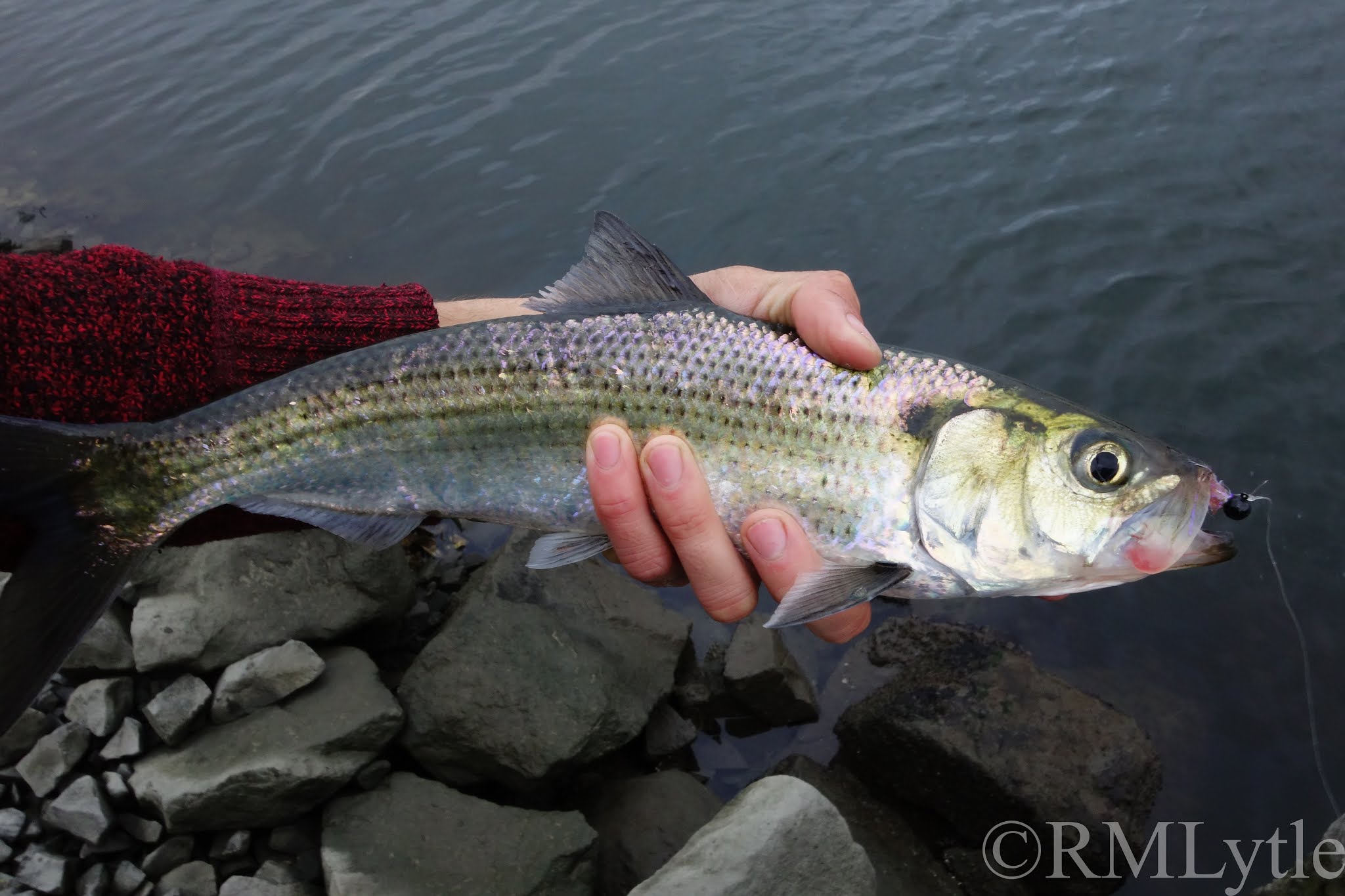
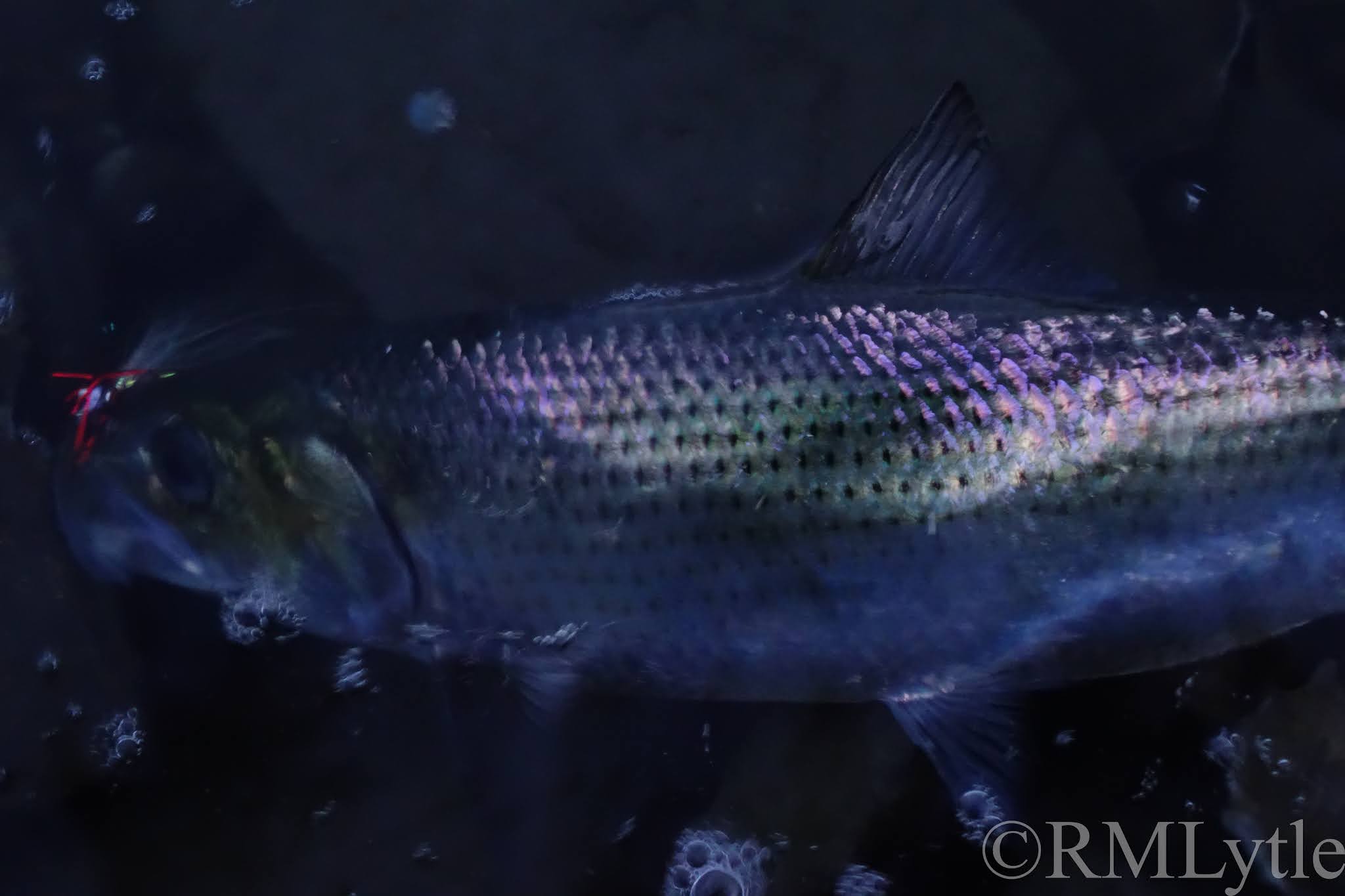
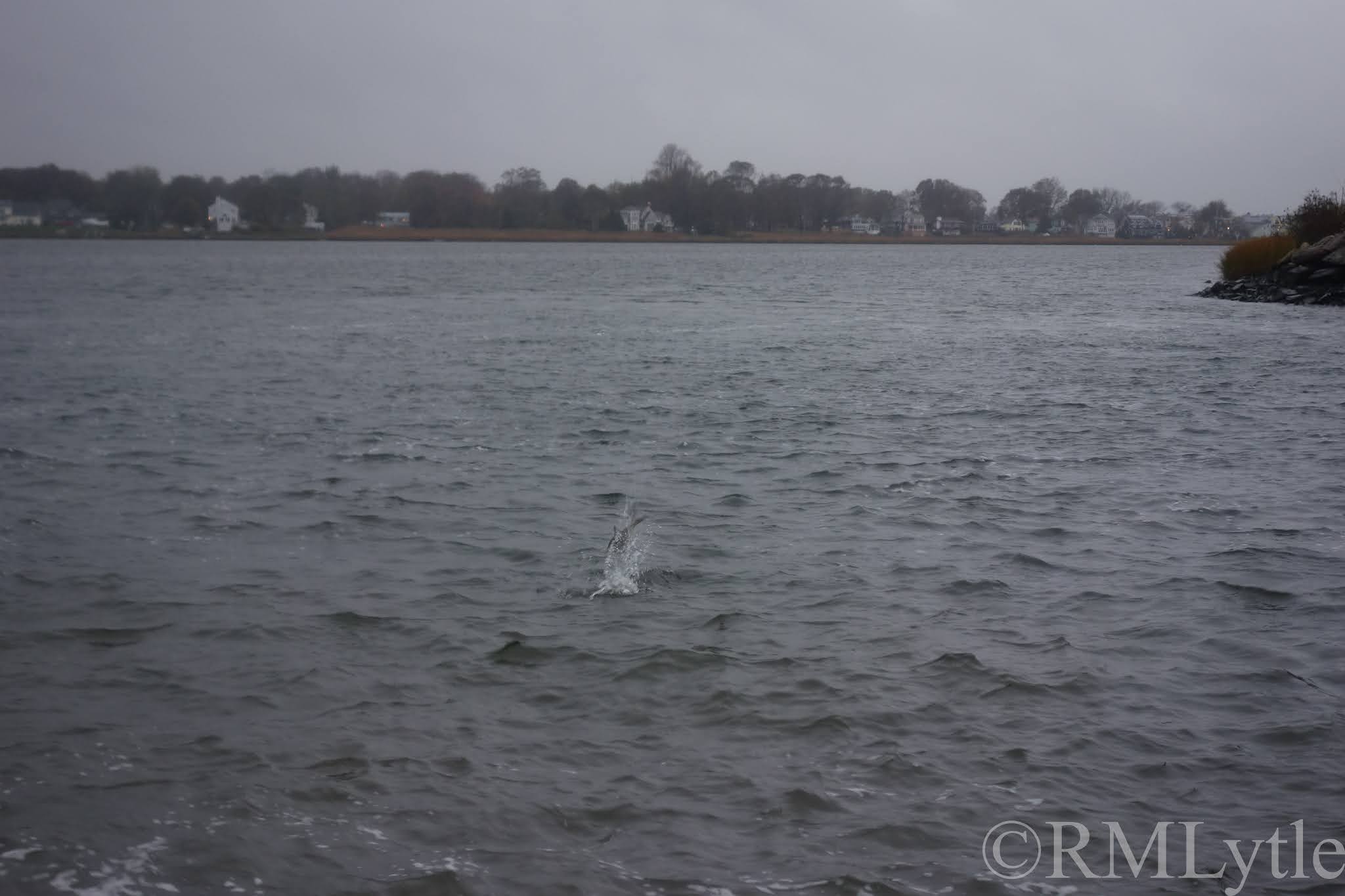
After a few runs through water that should have been but wasn't giving up fish, we made our way into some backwaters to looks for what would likely be smaller but more willing fish. We set up at a choke point where lots of hickory shad were rolling. I picked up Noah's light setup while he continued to throw bigger plastics for stripers. At first I just used the jig he had tied on, then I switched out and actually tied a Clouser on. Noah had figured out that a lot of treamers that i'd left lying around his van  were perfectly cast-able on his light setups. I was interested to mess around with it in a situation where it would be particularly conducive. I also wanted to see if I'd have any interest in buying such a setup for clients who aren't interested in fly fishing, as ultralight tackle has a lot of crossover with fly gear and I'd like not to limit myself in terms of clientele. I caught a load of shad on both his jig and my Clouser, and they were a lot of fun on a light spinning rod. 

Alosa mediocris                            Morone saxatilis

Something then made me switch back to the fly rod though: a fish Noah caught, a fish he and I have been after together for years. Our mortal enemy, our biggest foe. Our most difficult adversary. A large brackish-water white perch. 

It took a big plastic, which just seemed ridiculous. The fish was 13.5" long and very hefty, a truly impressive specimen, and of course I immediately wanted to try to catch one of those.

Morone amaricana


I didn't. Noah didn't get another either. We ended that portion of the trip having had both Morone species present in CT on the boat though, and I certainly haven't experienced that before. Noah hadn't in a long time. It was pretty cool.

Until next time, 

Fish for the love of fish.
Fish for the love of places fish live.
Fish for you.
And stay safe and healthy.


Thank you to my Patrons; Erin, David, John, Elizabeth, Brandon, Christopher, Shawn, Mike, Sara, Leo, C, Franky, Geof, Luke, Streamer Swinger, and Noah for making Connecticut Fly Angler possible. If you want to support this blog, look for the Patreon link at the top of the right side-bar in web version.

Thursday, November 11, 2021

Sunrise Hickory Blitz, Photo Essay


Until next time, 

Fish for the love of fish.
Fish for the love of places fish live.
Fish for you.
And stay safe and healthy.


Thank you to my Patrons; Erin, David, John, Elizabeth, Brandon, Christopher, Shawn, Mike, Sara, Leo, C, Franky, Geof, Luke, Streamer Swinger, and Noah for making Connecticut Fly Angler possible. If you want to support this blog, look for the Patreon link at the top of the right side-bar in web version.

Wednesday, September 8, 2021

1wt Hickory Shad

 Some days I don't find quite what I set out looking for... many days, frankly. I spend a lot of exploring new water, or fishing familiar water at new times and in new conditions. I have to do this to stay on top of things. I'm trying to have a running schedule of what goes on everywhere I fish throughout the year. One evening a little while back I was looking for bonito. I was not finding said bonito though, and there weren't really bass around to pick up the slack. I did have my 1wt with me though, and that provided me an opportunity to do something a bit different when I found a school of peanuts being disturbed by hickory shad late in the day.

It seems to be a bit easier to get hickory shad feeding on very dense peanut schools than it is to get schoolie bass. If the Triple P is off, hickories are your friend. Sinking a fly under the peanuts and fishing the periphery is effective, and it doesn't seem that matching the profile of the peanuts matters at all. 

I could have just used my 5wt again, but I wanted to really test the 1wt. Anyone that has caught these shad knows they fight pretty well for their size. I figured the little rod had just enough backbone to land fish without killing them. I was right, I had no problem adequately fighting these fish. It was certainly more fun though. I have an old Ocean City reel on that rod right now and the drag is really loud. So far though I hadn't had the chance to hook a big enough fish to really make it scream. The hickories did just that. It was awesome. 

Of course, hickory shad are a delicate fish compared to most. If you aren't prepared to give them everything you've got on such light tackle, or to take them home with you, don't use a 1wt. If you utilize the strategies I highlighted in my recent fish fighting post though you'll have no problem safely catching and releasing shad on a 1 to 3wt fly rod and 4x. 


As the sky darkened more and more I realized I had to slow down my retrieve until I was hardly moving the fly at all. Most of the fish ate it as it sunk. I'd make a cast, let the fly fall, and suddenly I'd be tight. I didn't need to set the hook, the fish did it for me. Eventually though the feeding diminished too much and the bite was over. It sure was fun while it lasted, and far better than giving up after failing to find the bonito.

Until next time, 

Fish for the love of fish.
Fish for the love of places fish live.
Fish for you.
And stay safe and healthy.


Thank you to my Patrons; Erin, David, John, Elizabeth, Brandon, Christopher, Shawn, Mike, Sara, Leo, C, Franky, Geof, Luke, Streamer Swinger, and Noah for making Connecticut Fly Angler possible. If you want to support this blog, look for the Patreon link at the top of the right side-bar in web version.

Thursday, August 12, 2021

Midsummer Hickories

 Hickory shad are typically a species I wait until late fall to target. That's when they're often most abundant locally, and often the are the most fast paced game in town in November. There seems to have been either a pattern shift or a significant increase in their total numbers. Last year I was occasionally catching them in odd places and at odd times and seeing far more than I'd typically expect. Nothing, though, compared to what I saw this week. 

I was looking for mackerel, frigates and chub mackerel specifically. When I got to the long jetty I intended to fish, there was about three acres of tiny young of the year bunker being eaten by what I though was probably some schoolies and small bluefish. I took a couple photos then just moved along. That sort of setup usually isn't very productive anyway, the "triple-p" (peanut to predator proportion) as Noah and I coined it is usually off- too much bait, too few predator fish. The fly gets lost in the fray and you don't catch much. 

The mackerel were rude, though. Basically as soon as I got there, everything left. I spent a couple hours hopelessly working the water column with just one small black sea bass to show for it. 

When the tide eventually turned, I decided to head somewhere else. As I walked out though, the peanut blitz was still going on. I stopped to make a few casts and see if I could pick up a fluke or something else picking up scraps from the bottom under the chaos. Instead, I discovered that it was actually hickories enacting violence on those little peanuts, and that the were perfectly willing to slam a small Clouser. There were a bunch of guys there fishing already, but aside from the one guy next to me targeting fluke I didn't see anyone catch a thing. They were all fishing presentations that were much too large, and they likely didn't know what was really going on. I on the other hand was catching goofy acrobatic shad every cast and very much enjoying it. Eventually I was trying to photograph the jumps of each fish I hooked. What would have been much easier was having someone else hook and fight the fish while I photographed, but this had to be a one man operation. This is what resulted:


A couple came out kind of cool but none were particularly spectacular. I'm hoping I get another chance at some point soon, and given how many I've now seen this summer I expect I will. I've already caught as many as I did on the two best days last year!

Until next time, 

Fish for the love of fish.
Fish for the love of places fish live.
Fish for you.
And stay safe and healthy.


Thank you to my Patrons; Erin, David, John, Elizabeth, Brandon, Christopher, Shawn, Mike, Sara, Leo, C, Franky, Geof, Luke, Streamer Swinger, and Noah for making Connecticut Fly Angler possible. If you want to support this blog, look for the Patreon link at the top of the right side-bar in web version.

Monday, December 14, 2020

The Great Hickory Shad Blitz of 2020

 There are many things the year 2020 could be known for. Many, many things. But in my mind, 2020 will forever be the year of the greatest hickory shad blitz in the history of Southern New England. If you are a surfcaster or saltwater fly angler and fished in the fall season of this year, you probably didn't miss it. It wasn't a one location blitz, or a single day event, but a near coast-wide event that has spanned weeks. From what I'm hearing it may still be in progress down south in New Jersey and even as far as South Carolina. It isn't really a singular event, but this year without question gave up the most stellar hickory shad fishing I've ever experienced. 

I intercepted the blitz in the final days of October on my home turf. I was fishing water I knew well, water I'd seen so much action in over the years -plenty of hickory blitzes included- but nothing like this. On the 28th I was on my own, and hickories were my first priority. That said, I started out taking quick looks at a few places that used to routinely hold big stripers in the fall. They are no longer as productive and I subsequently found little in the way of fish. I was then fully focused on shad. 

It was slow at first, not a notable blitz at all, but I was picking off some fish. Hickories battle magnificently, often being compared to baby tarpon because of their acrobatics. I've caught both, that's really not as accurate a comparison as one might think. Frankly I think fisherman are far too caught up in the idea of comparing species ("poor man's tarpon," "poor man's bonefish," "poor man's salmon") instead of just taking a fish species with it's own merits. Hickories are awesome fish and a hell of a lot of fun, that's all that matters. And though I definitely wasn't hammering them, I'd gotten 10 of them before the sun set and was pretty pleased with that.


With the sky now darkening and the little school under the bridge I'd been fishing pretty disturbed because I was catching them, I decided to make a move. I didn't go far but oftentimes a mile or two makes a huge difference. My first five casts at this new spot made it clear that something special was going on as each got at least one take and resulted in a large hickory shad to hand. That didn't change for the next hour and a half. I was catching fish continuously for the rest of my time fishing that night. It just never stopped. A swung grizzly Homer Rhode Seaducer was my the best method, though I'd started out with a Dave Bitters Baymen Clouser which was just a bit too big.


I left with the front of my waders slime and scale caked, but I wasn't satisfied. I wanted to see what I could feel and hear occurring in the darkness. The next day the conditions were different, it was warm but very rainy and windy. This time it was Noah and I. We went straight to the spot, and it was immediately clear that chaos was underway. There were hickories, there were stripers, there was bait spraying and predators swirling in the wind disturbed muddy water. We were into fish right away. The hickories were often leaping on the take, which lead to plenty of missed strikes but was so spectacular it was hard to care. They were doing this to the natural bait too, and at times you could look out over the channel and see dozens of iridescent fish leaping into the air. This was without a doubt one of the coolest things I'd seen all season. 


The stripers were mostly working in a pocket where wind was blowing white bait into shallow water and along a rip rap bank where some schoolies of peanut bunker were. At times they drew my attention away from the shad, and I did catch plenty of bass as well.

Seaducer in traditional colors. This simple old saltwater fly has become such a key fly in my arsenal.


I often break into my stash of black and purple redfish flies when fishing for stripers in murky water, the same sorts of flies I'd fish somewhere like Mosquito Lagoon.

Though the stripers blowing up the in the pocket were exiting, the shad were still the headliners. I had never seen so many of them. 


I rarely seek anything resembling peace in fishing but saltwater fishing especially. Even in the long, quiet nights of spring that sooth my soul after an icy winter, my greatest hope is to have a large striped bass shatter the peace completely and give me an adrenaline rush that will last days. It's days like the second of this great shad blitz that stand out. Wind and rain made simply being outside for an extended period of time uncomfortable and there was so much going on it was almost overstimulating. Noah and I were riding high on the phenomenal fishing. It was gloriously exciting chaos. Peace isn't what I seek when I'm fishing, and though I do often find it, it's the chaos that keeps me wanting more. Because damn, was that ever fun. We caught dozens of big hickories that hit and jumped like madmen and we were the only ones there experiencing that mayhem. I'd like to do that again some day. 

Fish for the love of fish.
Fish for the love of places fish live.
Fish for you.
And stay safe and healthy.


Thank you to my Patrons; Erin, David, John, Elizabeth, Brandon, Christopher, Shawn, Mike, Sara, Leo, C, Franky, and Geof for making Connecticut Fly Angler possible. 

Friday, November 9, 2018

Species Profile: Hickory Shad

In an attempt to diversify my content and hopefully teach my readers something new, I've decided to start a new regular series. As most of you hopefully already know, I am a life-list angler. I target, document, and count the number of species, hybrids, and subspecies I catch, specifically on fly tackle. Because of that I spend a lot of time to learning about and fishing for many different species of fish. This means I'm more adept at identifying and fishing for an extremely broad range of species than the average angler. This series will attempt to outline species identification, some life history, and methods for targeting with fly tackle. Maybe I'll get to every fish on my life list, but considering it is ever growing... it would take a while. Mostly, I hope this will get a few of you interested in going out and learning about and catching something new. 


Alosa mediocris
(hickory shad)


Hickory shad belong to the Clupeidae family, the herrings. Like all species in the family they are a brightly scaled fish with a silvery white belly and darker back. Hickories typically have an olive back with a lavender to blue iridescence. They have one very prominent black spot behind the gill plate and may have a number of more faint spots in line with it. Aside from being notably smaller on average than American shad, hickories have a lower jaw that extends past their upper jaw when closed. Hickories caught in NY, CT, and MA are unlikely to be small enough to be mistaken with menhaden, river herring, or ocean herring. The typical specimen is about 16 inches and just under one pound.

Like American shad, blueback herring, and alewives, they are anadromous, historically spawning from the St. Johns River in Florida to parts of Maine. Spawning is now uncommon north of Chesapeake Bay, though it has been recorded in the Connecticut River. This is the primary reason why hickory shad are not a common bi-catch for shad fisherman in the Connecticut and it's tributaries during the spring run. Between Florida and Virginia, the two are often encountered in the same water during the shad run. In attempt to restore hickory shad runs to historical levels, some states prohibit keeping hickories. Hickory shad are piscivorous and may be found eating silversides, bay anchovies, and small peanut bunker among other things. Though more common in tidal creeks and rivers it is possible to find hickory shad on the beach front when they are migrating. There is very little known about the migratory habits of these fish when they are in ocean waters. 


In Connecticut, hickories can be caught from late April through November, and may stick around as late as December when conditions are right. Feeding hickory shad often give themselves away with splashy surface displays and numerous jumps, which they also preform when hooked. 


Though I have caught a fair number of hickory shad from beaches, both rocky and sandy, including some of my biggest, if you want to have a near sure bet at catching one fish around bridges. These concentrate both current and bait, and hickory shad are certainly not afraid of a little current. Fish the middle of the tide, when the current is strongest. Though there is no time of day that you can't catch them, low light periods are preferable. Any rod rated 4, 5, or 6 will work well for this type fishing. Use a floating or intermediate line with a simple 6ft leader (3ft of 20lb trilene big game to 3ft of 12lb trilene big game). At times hickory shad can by downright reckless. I have caught them on 10 inch long black flatwings and deceivers tied on 4/0 hooks. Other times, they seem as picky as rising trout and will take nothing longer than an inch and a half. Small surf candies in pink and chartreuse are a great choice for picky hickory shad. 


Though it will vary day to day and tide to tide, I find these fish to be more partial to a swinging fly retrieved with long slow strips than any other presentation. A medium speed two had retrieve is often too much for them, but sometimes when there are tons around blitzing on small peanut bunker this retrieve with a faster sinking line will work wonders. Once hooked up, don't pull too hard. These fish have paper thin mouths and too much pressure will result in dropped fish again and again. Given their propensity to jump repeatedly when hooked, lost fish are a part of the game regardless of how appropriately you fight them.


It is important to not that these fish are fairly delicate. Even gentle handling will result in shed scales. Do whatever you can to mitigate handling if you intend to release the fish. Though not as big as American shad or as glamorous a lot of the other species that occupy the same waters, hickory shad a readily available and probably the closest thing to a juvenile tarpon in our waters. They are a lot of fun on light tackle.

If you enjoy what I'm doing here, please share and comment. It is increasingly difficult to maintain this blog under dwindling readership. What best keeps me going so is knowing that I am engaging people and getting them interested in different aspects of fly fishing, the natural world, and art. Follow, like on Facebook, share wherever, comment wherever. Every little bit is appreciated! 
Thanks for joining the adventure, and tight lines.