Showing posts with label Shiner. Show all posts

Tuesday, January 25, 2022

Thinking About Baitfish and Trout

 I've noticed a general lack of baitfish knowledge among fly anglers in southern New England, and I think it stems from a lack of interest in small fish themselves. This isn't true of everyone, obviously, there are some guys that have a very extensive knowledge of baitfish and how to imitate them. However, rather than being interested in the fish communities present in the trout streams they fish, a lot of fly casters seem to focus on the fish species trout are known to eat. Perhaps the best example is sculpins. Trout love sculpins, right? 

Slimy sculpin

Sculpins are rare in Connecticut. We only have two freshwater sculpin species, native slimy sculpins which are present in a mere handful of notable trout streams, and invasive knobfin sculpin which as of this date are only found in one watershed. Yet I see people fishing large sculpin imitations all over rivers that just flat out don't have sculpins, to trout that have never seen a sculpin or anything like a sculpin. Of course fish are not that smart, so you can still catch a trout on a sculpin even if it has never seen one, but it takes a lot less time for fish to stop reacting positively to a streamer if they see a lot of it but never see the real fish it imitates. 

Moreover, a lot of the flies being used to imitate sculpins are way, way bigger than the vast majority of sculpins found in the water they are being fished. Three inches is a gigantic, rare slimy sculpin in CT. I have never seen one. I only know of one place that routinely produces 2 inchers. Everywhere else they pretty much max out at just a bit over and inch... very small. Think about that when you are pawing through your streamer box. The best sculpin pattern in there probably isn't even a sculpin pattern. A good sculpin pattern for CT, one that actually imitates the fish itself, is going to be tan or light olive, a little bit mottled, slimmer than most commercially available sculpin patterns, and a bit less than 2 inches long. Flies that I like are Domenick Swentosky's Bunny Bullet and Rich Garfield's Sirloin. 

Bluntnose minnow

Notropis sp.

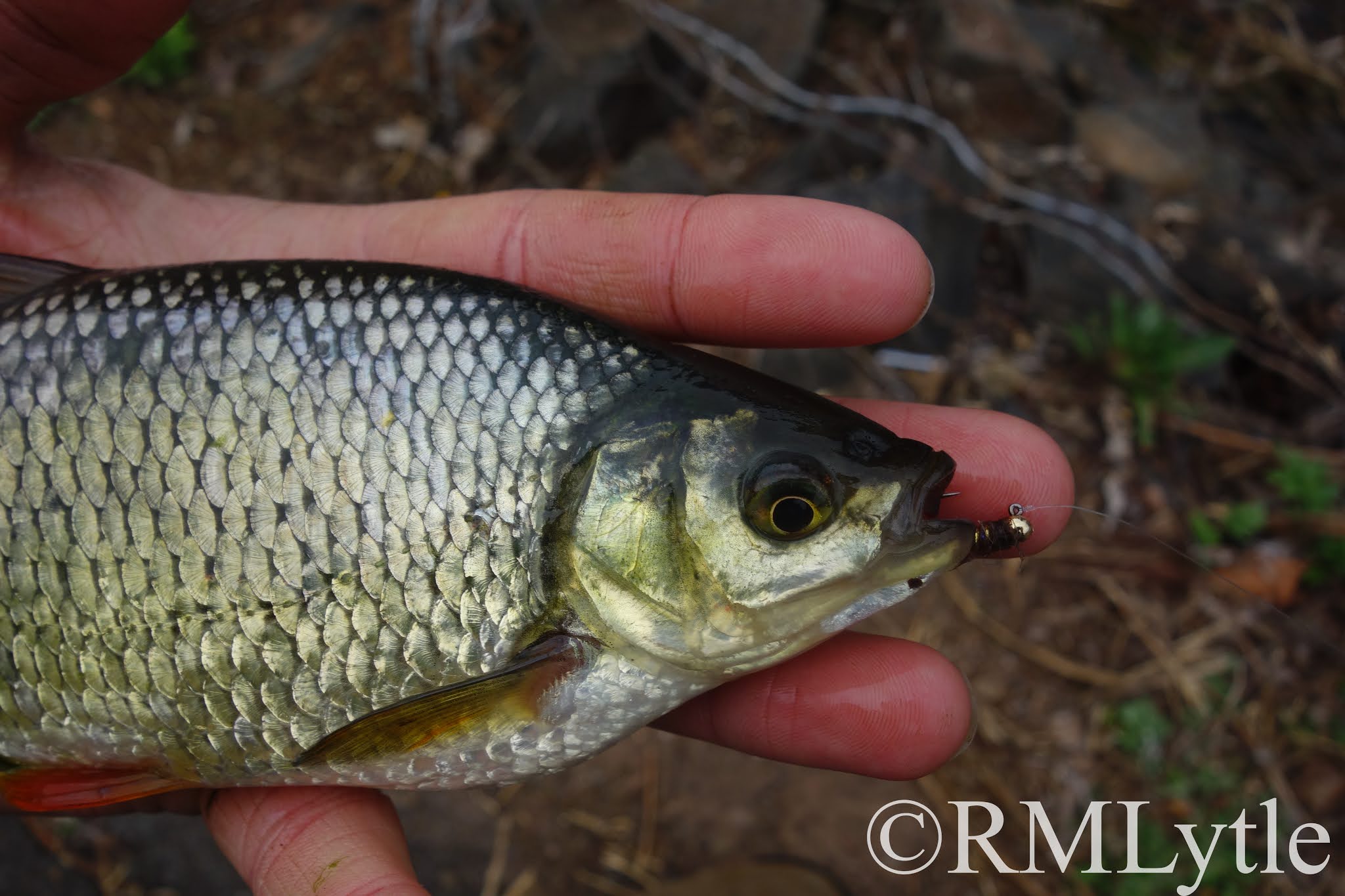
Other than sculpins trout anglers seem to flounder around trying to identify common trout forage. The years of hearing fisherman call fallfish, juvenile suckers, and common shiners "chubs" have made this incredibly clear to me. I believe being able to identify fish is one of the most important skills an angler can have, yet most anglers are shockingly bad at identifying fish. I have my own struggles, but I at least put in an effort. The photo above this paragraph says "Notropis sp." because that's as narrowly as I could identify that fish with the photos I took of it. Notropis are a notoriously difficult genus to identify, and that fish was caught in an area with a few different species. In CT though we have only one species, spottail shiner, and trout do eat them. It is very helpful to know what they are, where they live, and what they look like for some trout fisheries around here.  I consider them a baitfish of notable importance to trout fisherman. In Southern New England there are really not too many species of small stream dwelling fish, so it doesn't take much to learn about each one. 

The species that are of particular importance to trout anglers are the aforementioned slimy sculpin and spottail shiner, as well as tessellated darter, creek chub, fallfish, bluntnose minnow, cutlips minnow, common shiner, white sucker, blacknose dace, longnose dace, alewife, banded killifish, and brook trout. Knowing the range extent, behavior, habitat preference, and what flies imitate these fish will put you a step above the rest. The range and habitat will dictate where you fish their imitations, the behavior will dictate the action and weight of the fly and how your present it. Species like tessellated darter hug the bottom and move along as their name suggests, by darting about with pauses in between. Alewives swim continuously suspended off the bottom in schools and are found in some large lakes or in rivers with access to saltwater. 

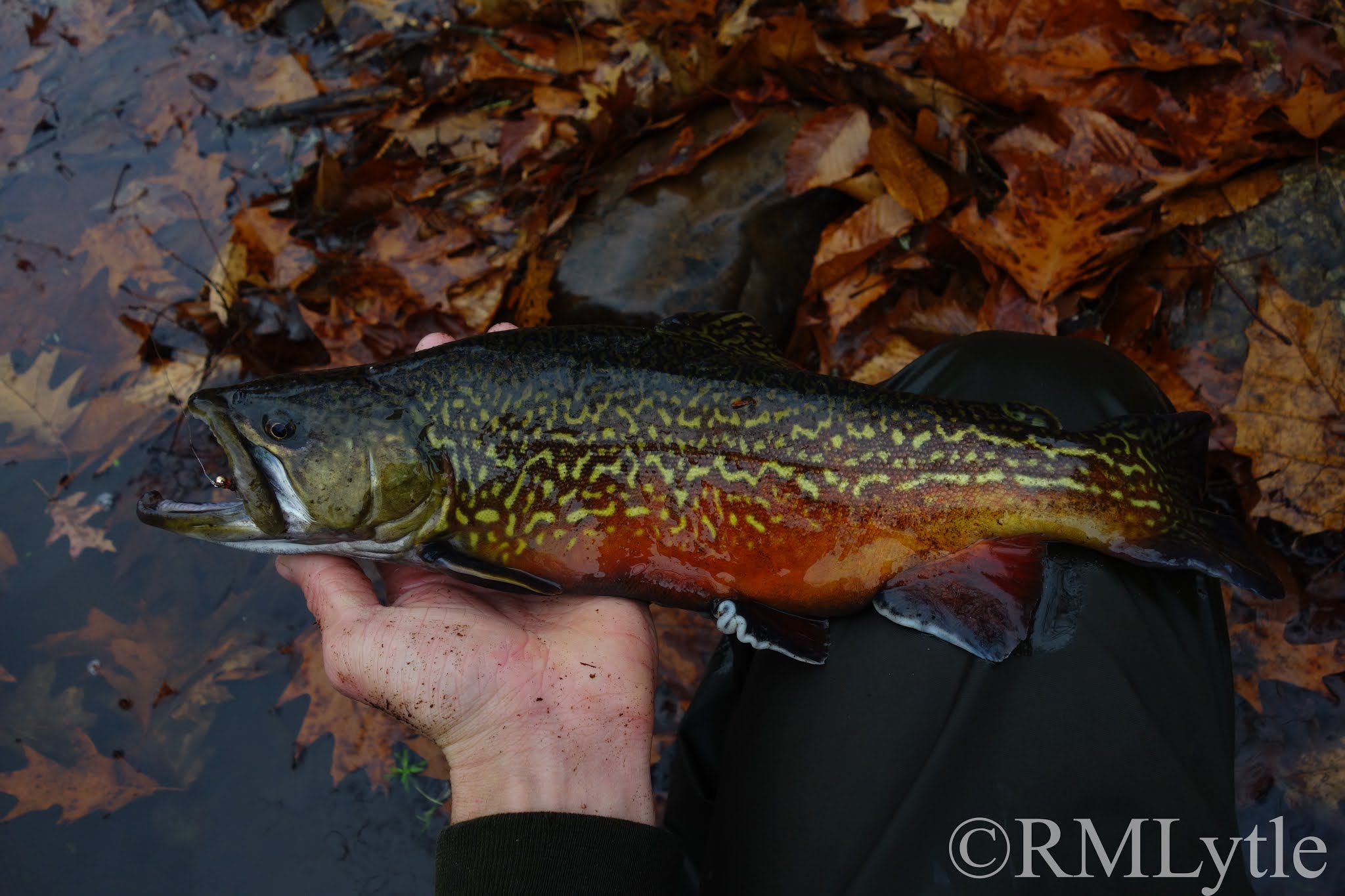
This beautiful winter wild brown took a streamer in a crystal clear, mirror surface run on a bluebird day. If you match the forage, it becomes easier to fool difficult trout in less than ideal streamer conditions.

Unfortunately, streamer fishing seems to draw some amount of thoughtlessness. Perhaps that's because it appeals to a more restless sort of angler than other methodologies; the sort of angler that would rather flog the water all day with a massive fly than sit and look at a piece of water for a while and think about the best approach. There's also a contingency of anglers that throw on a streamer as an after thought. The trout aren't rising, nymphing is slow, I'll just throw on a big woolly bugger. That's no more likely to be successful than the previous example.

There are a lot of very good streamer anglers out there too, pushing the limits of both action and imitation. What inspired me to write this post was a cumulative effect of conversations with other anglers and reading some other writings. This certainly isn't all original thought, though I've tried to add my own twist to it. I can give a huge amount of credit to Joe Goodspeed, Domenick Swentosky, Blane Chocklett and others for making me think about this stuff at all. When I started streamer fishing I was chucking Headbanger sculpins and Zoo Cougars in rivers that, well, don't have any sculpins... and Double Decievers in rivers that don't have any broad-bodied baitfish. When I think about it now I realize just how silly that was. It isn't at all surprising that it rarely produced any notable fish. Over time I started to pay attention to the action of my flies, and that was an important step. It wasn't until more recently that I actually started matching my flies to the forage present in each stream I fish, even though I've been mircofishing and studying small freshwater fishes for quite a few years now and knew full well what was present. 

If you ever want help identifying baitfish, always feel free to send pictures and ask. I'll also be setting up an online class either late in the month of February or in early March about common Connecticut trout stream baitfish. I also happily run on long tangents about this sort of thing in the field with clients, so if you want to learn more book a trip and I can really show it to you in practice. There are also tons of other great resources and guides if you don't live in Connecticut or Rhode Island, all it takes is a little bit of digging. 


Monday, May 3, 2021

A Quest For Golden Shiners

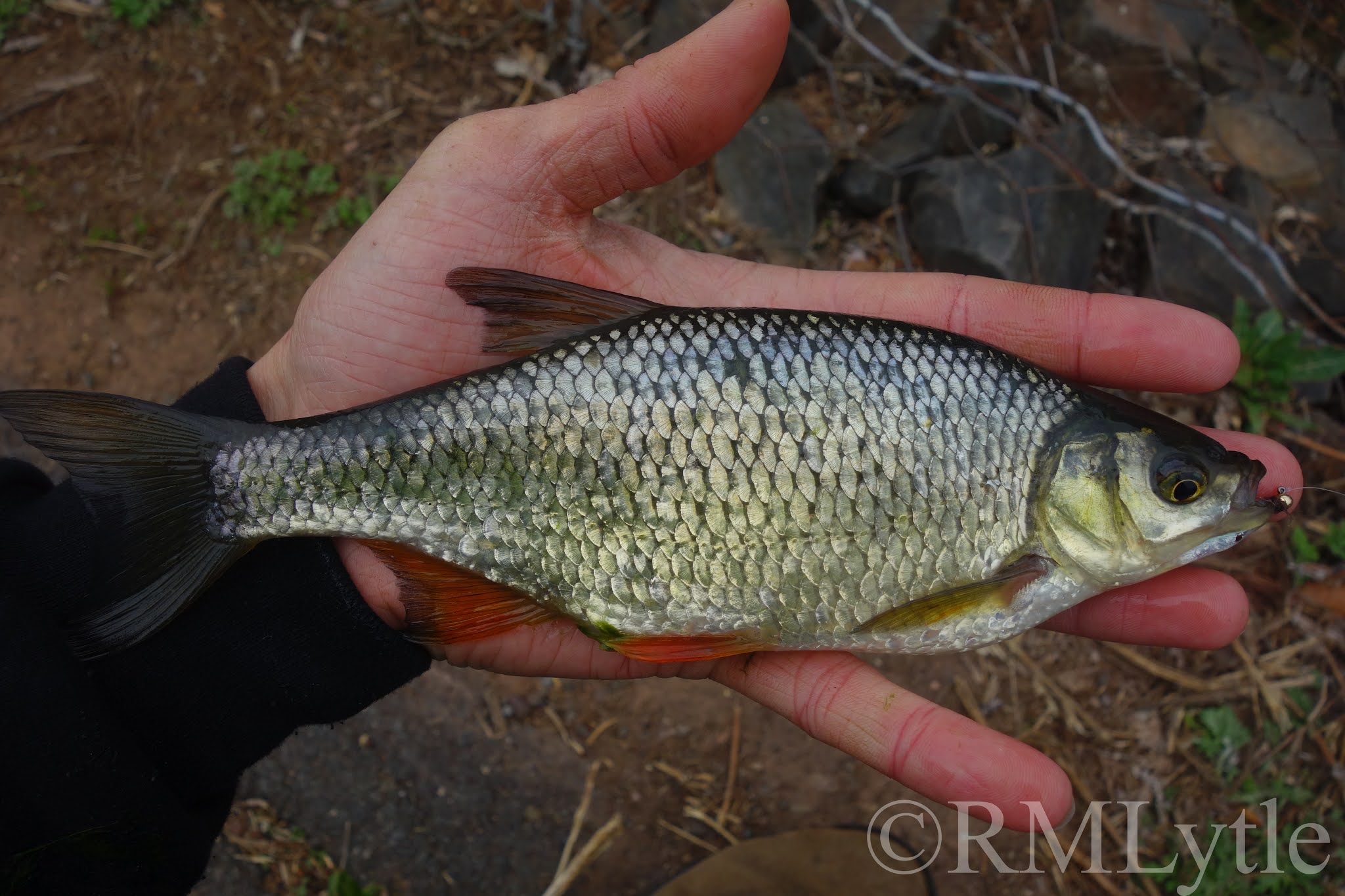
 The humble golden shiner has long been one of my favorite local native fish, in large part because there isn't another species around here that looks anything like it. They're almost panfish like in shape and sometimes size, unlike any other shiner species in the vicinity. The best fish I know to compare them with are European roach and rudd, which are very similar in shape and color. There was a short time during which I was catching a small amount of rudd in a local pond. I'm not sure how they were introduced, but their size and extremely vibrant red fins gave them away. Over time they actually seemed to hybridize out of existence with the golden shiners in that pond, and now I rarely catch anything there that isn't, visually at least, golden shiner through and through. I also rarely catch big golden shiners at all anymore and this spring I sought to change that. It has proven to be far more difficult than I'd anticipated. 

Part of the difficulty of catching big golden shiners is their inability to get big in most waters. Golden shiners are an easy prey target, with no spiny fins and no particularly good evasion strategies. Instead, they are prolific breeders, and in most ponds there are lots of very small ones. Their tiny mouths make gaining size rapidly a challenge, so it takes a special place to grow them big. Dense weeds are a common factor in bodies of water with big golden shiners, but this just makes it more difficult to actually catch them. The popularity of the species as a bait fish, especially for northern pike, also makes big ones harder to come by. Wherever big golden shiners are found, someone is probably keeping a bunch to use under a float or tip-up. Last but not least, I have yet to find a fly that catches golden shiner but wards off the thousands of small bluegills that are usually occupying the same areas. Such a thing almost certainly doesn't exist.

By the time I began targeting these big goldens this spring, the pond I was most interested in had closed to fishing. I had one other small body of water I had confidence in, but decided to try some other ponds in the vicinity as well. One of them is a spot I'm very familiar with but had never caught a golden shiner at. One day, while targeting crappie and big bluegill there, I got lucky and nabbed two decent goldens. 


That was probably a bit of a fluke. I tried there a few more times but failed to get another shiner. The pond I already knew about though was giving me the hardest possible time. Its bluegills were proving to be exceptionally annoying. Catching more than 150 of them each trip was beginning to feel like the definition of insanity. I'd caught a nice golden on my first visit this year, before I had decided to specifically look for them. I couldn't understand why I wasn't able to get any more. Finally, just when I was at wit's end, I got what I was after. 


Goldens don't really fight, even a big one isn't that big, and I have no use for them as bait. I just find them fascinating and beautiful for some reason. I understand why European anglers enjoy targeting big roach and rudd. Catching a large, wild specimen of any fish species is a challenge worth pursuing. It requires a far deeper understanding of a fish's ecology and behavior than does simply going out and catching just any fish.

Until next time, 

Fish for the love of fish.
Fish for the love of places fish live.
Fish for you.
And stay safe and healthy.


Thank you to my Patrons; Erin, David, John, Elizabeth, Brandon, Christopher, Shawn, Mike, Sara, Leo, C, Franky, Geof, Luke, and Noah for making Connecticut Fly Angler possible. If you want to support this blog, look for the Patreon link at the top of the right side-bar in web version. 

Edited by Cheyenne Terrien

Monday, April 26, 2021

Goldfish On The Fly

 Goldfish are a notable and often problematic invasive species found throughout the world. They are native to East Asia, were selectively bred to create the vibrantly colored ornamental variations seen today, and spread around the world for hundreds of years. They are one of the most popular aquarium fish and one of the most widespread domesticated fish. In the wild, goldfish can cause significant problems where they are not native. They reproduce rapidly and despite often being orange and poorly suited to remaining hidden, they quickly overpopulate. Though goldfish are certainly not apex predators, their presence usually disrupts whatever ecosystem they are released in. 

I’ve encountered goldfish sporadically throughout the years in CT waters, but never any big enough to catch on the fly. Then, one day this spring, while looking for water snakes with my friend Bruce, we spotted a school of goldfish in a small public pond. I’ve since returned three times- once on my own and twice with Noah -specifically to fish for those goldfish. On the first visit I didn’t get any goldfish but I was able to determine what species were in the pond. Three that I saw were native fish: golden shiners, brown bullhead, and pumpkinseed sunfish. Two more, other than the goldfish, were invasive species: common carp and mosquitofish (whether they were eastern or western I am not sure, but western is more likely as westerns are the only of the two species so far confirmed in CT). There was only one common carp in the pond, an 18 pound or so fish likely introduced intentionally with the hopes it would do something to control weed growth. 


On the second trip, Noah and I were more strategized. We brought bread to chum in the goldfish. The golden shiners and bullheads got to it first, and we got a couple bullheads each. It took a long time for any goldfish to come around. Eventually some did. I had on a size 16 Walt’s Worm under an indicator, but interesting fish would lose interest in the fly as soon as it sank to depth and suspended. They seemed far more interested in a moving fly. This was interesting to me because I’d seen the same behavior from lake chubsucker, a North American native fish. Lake and creek chubsucker both share a nearly identical niche with goldfish and are visually, anatomically and ecologically similar; a clear example of convergent evolution. 

Eventually, I managed to get one of the two goldfish that were spending time in our baited area to take my little nymph, and after no fight at all I had lifer #178 at hand. It was certainly a pretty fish, ornately colored and lustrous. This fish was also completely unnatural: no undomesticated, uncultured, native goldfish would look anything like this, nor would such a fish be swimming in a pond in Connecticut were it not for human intervention. For some reason I really liked that little fish and felt compelled to catch more. When Noah wasn’t able to get his lifer on the first attempt, it was a good excuse for me to return for more. 

Lifelist fish #178, goldfish, Carassius auratus. Rank: Species.

On attempt two, we brought corn as well as bread. Our justification for that was how disinterested in the floating bits of bread the goldfish were and how hard it was for Noah to keep bread on the hook. Bread still helped draw in the hungry masses, and we had some goldfish come into the swim much sooner than we had the previous trip. This time I focused on golden shiners before the goldfish showed interest. I’ve become increasingly more obsessed with that species lately, as well. Unfortunately this pond seems not to hold any large ones. 


Noah got the first goldfish- a lovely wild-type. That was exactly the color expression I wanted to catch, as it would be a nice contrast with the cultured ornamental version I’d already caught. I ended up getting three goldfish on the fly: a bright orange one, another with orange and black patterning, and an almost wild looking but still fairly colorful individual. They were actually surprisingly willing to eat and even chase a nymph. If it stopped moving, they lost interest. This is of course what we’d already observed on the trip before, but it was nice to know that behavior wasn’t a fluke. 


Eventually I broke down, put on a piece of corn and caught a true wild-type. I’m not sure if these goldfish had simply been present and reproducing long enough for the more natural color genetics to arise or if some wild type individuals had been put in the pond originally. There wasn’t a notable variety of sizes, so I can’t be sure these fish are actually reproducing in that pond. 

Catching those goldfish coincided with a general urge to catch colorful cyprinids. I’ve got this strange, previously non-existent compulsion to fish for ornamental fish. Next on the list, something I’d been after for years: mirror carp. Another genetic variation cultivated for ornamental purposes. 

Until next time, 

Fish for the love of fish.
Fish for the love of places fish live.
Fish for you.
And stay safe and healthy.


Thank you to my Patrons; Erin, David, John, Elizabeth, Brandon, Christopher, Shawn, Mike, Sara, Leo, C, Franky, Geof, Luke, and Noah for making Connecticut Fly Angler possible. If you want to support this blog, look for the Patreon link at the top of the right side-bar in web version. 

Edited by Cheyenne Terrien

Thursday, February 25, 2021

Spottail Shiners and White Perch Through The Ice

I like variety... if that wasn't already clear to those of you that have been reading my musings for a while. Size doesn't matter all that much. Though I love big fish, I love small fish too. I want need to catch both. Winter is generally lacking in species and size diversity in Connecticut, especially compared to spring and late summer into early fall. Mostly I'm catching brook trout, brown trout, bluegills, and yellow perch all winter. Sure, some of those might be trophy sized individuals, but after a time I want something different, even if it's tiny. It was for that reason that I wasn't at all disappointed when my friend Rick and I set up over likely crappie territory but instead started pulling spottail shiners up through the ice.


It was a cloudy day, we had a rising tide, and it seemed like really good conditions to get some large crappies. I don't think we ended up getting even one, but we had steady action from other species. The shiners came in waves. There'd be long lulls interrupted by flurries of constant nibbles. I'd started out with plastics but just wasn't sealing the deal with them so switched to spikes instead. That worked well. 


We tried moving around to see if we could get on top of a school of crappies. Our third pair of holes was the most interesting. Though they were only about two feet apart, I was reaching bottom about a foot before Rick. We were definitely on some sort of structure- what, exactly I wasn't sure. This was, unsurprisingly, the best hole of the day. Though it did produce lots of shiners and a couple bluegills, white perch were the headliners. I'd caught only a couple through the ice prior and I didn't get that many to add to that total. One of them, though, was pretty darn nice. Long, fat, and full of fight, it outclassed every other fish I'd caught that week by a wide margin. Big white perch fight really hard. I have quite the soft spot for them.


So, although this day didn't give up what Rick and I had hoped for it was a respite from what I'd been experiencing. Over the coming week or so I'd get a little bit more variety, and some bigger fish as well. For those of you who aren't that interested in the ice fishing posts, I'll mix in some more recent trout outing for, well, variety.

Until next time, 

Fish for the love of fish.
Fish for the love of places fish live.
Fish for you.
And stay safe and healthy.


Thank you to my Patrons; Erin, David, John, Elizabeth, Brandon, Christopher, Shawn, Mike, Sara, Leo, C, Franky, and Geof for making Connecticut Fly Angler possible. If you want to support this blog, look for the Patreon link at the top of the right side-bar in web version. 

Edited by Cheyenne Terrien

Saturday, February 13, 2021

First Ice 2021

 It had just started to get properly cold in mid January when Garth and I went looking for our first stripers of the year. It was too cold, as it turned out- the spot was frozen over. In a desperate bid to catch something, I suggested we visit a productive winter panfish spot I’d been told about but had never fished. That turned out to be frozen too, so much so a lot of it seemed walkable. We didn’t bother testing it though, this little cove was criss-crossed by docks that allowed us to fish it without actually getting on the ice. We only had fly rods but both of us managed to get yellow perch. 

Two days later, I returned, this time with Noah. We had the right gear and were hopeful that the fish would be on. They were, both of us were promptly catching panfish. I was using a tungsten jig and switching back and forth between the Eurotacke Eurogrub Jr. in white and Gammascud in chartreuse. Bias aside (I worked for Eurotackle and remain friends with the owner), these plastics hammer fish. They’ll go toe-to-toe with spikes a lot of the time and often enough even out-fish them. I fished some small tungsten bead nymphs as well.


Yellow perch dominated, followed in abundance by bluegills, pumpkinseeds, and crappie. I also got a small golden shiner. The native pumpkinseeds were gorgeous specimens. They weren't big but they also weren't tiny. Pumpkinseeds are a stunning and underappreciated fish locally. Their colors often rival those of wild trout. Their patterns and depth of color vary drastically from fish to fish. Unfortunately, overcrowding and hybridization with bluegills keeps pumpkinseed numbers relatively low in waters they would have historically been the dominant sunfish. 


Ice fishing has been very good for me. Not only has it allowed me to stay out on the water on days I wouldn't want to fly fish but it has opened up new learning opportunities. It has allowed me another window into fish behavior. In any case where it is possible to fly fish (or at least closely approximate it), that's what I'll do. If not, I'm still going to fish. I want to learn as much as I can. That's what this is all about for me. 

Until next time, 
Fish for the love of fish.
Fish for the love of places fish live.
Fish for you.
And stay safe and healthy.


Thank you to my Patrons; Erin, David, John, Elizabeth, Brandon, Christopher, Shawn, Mike, Sara, Leo, C, Franky, and Geof for making Connecticut Fly Angler possible. If you want to support this blog, look for the Patreon link at the top of the right side-bar in web version. 

Edited by Cheyenne Terrien

Monday, February 8, 2021

Spillway Multispecies Fishing

 Spillway holes in Connecticut are sporadically productive. It seems that throughout the Midwest, most spillways hold fish well through the winter, but in New England only a small percentage do. It has taken me quite a few years to find some that do hold bass, panfish, suckers, and shiners year round. To make things more complex, some of the spillways only appear to hold fish some years, regardless of conditions. I wish I could say visiting any spillway hole that isn’t frozen is a sure bet for some fish, but that’s definitely not the case in Connecticut. Fortunately I have a couple ringers, and when I’m not in the mood for holdover stripers, trout, or ice fishing, they are there to save my sanity. 


The thought process behind looking for fish in spillway holes in the winter is pretty simple. When the water temperature drops in smaller streams and rivers, the deepest, slowest pools offer the best refuge for warm-water species. Spillway holes are often deep and slow and some have slack or near slack water as well. The thermocline of the lake or pond above also plays a role if the dam isn’t exclusively releasing surface water. In the winter, the water at the bottom of the lake is typically warmer. In essence, the best winter spillways are micro-tailwaters. I know one such micro tailwater in Connecticut and a few top spill dams that hold panfish, bass, and golden shiners at least most winters. 

Noah and I visited one such spillway on a mild day in mid January and found plenty of fish there but didn’t catch much. A few days later I went back on my own. I was in the mood to catch anything that wasn’t a trout, but I was particularly hopeful to get at least one nice golden shiner. I would fish a very small indicator and a size 14 Walt’s Worm. Like a float n’ fly in the late fall or early spring on a pond or the jigging through the ice, an indicator and tiny nymph is subtle enough not to disturb the fish and slow enough they don’t have to move much to eat. The indicator is key, the fly needs to suspend. There is rarely enough current to dead drift a fly in the column without an indicator.

Initially it was sluggish. I could see some very small white suckers flashing but I wasn’t getting takes. It turns out many of the bluegills and crappies were all just jammed into a very small area of less than three square feet. As soon as I began casting to a specific part of the pool, it was a fish almost every cast. Bluegills dominated, though there were a couple very small crappies mixed in. 


I kept going beyond the point where the bite seemed to die hoping for just one golden shiner. I was still getting the occasional take but not many after fish 23. I crept up on number 30 with 7 more bluegills in half an hour. My 30th fish was a golden shiner! It seems 30 is a number of significance when it comes to panfishing in particular. This is something Noah noticed first. If you want to catch something unusual or bigger, one in 30 fish will be something atypical. Sure, it’s not a law, but it seems pretty darn consistent. 

With my golden shiner acquired I decided to head to another dam to see if it was fishing well at all. This one had been sporadic for me but at least usually holds trout. Sure enough, that’s all I caught -stocked trout. One was a tiger. I can’t seem to escape those buggers. A little bummed that there weren’t any wild fish of any kind willing to eat and losing my light anyway, I headed home. My spillway adventures are not done yet this winter though. 


Until next time, 
Fish for the love of fish.
Fish for the love of places fish live.
Fish for you.
And stay safe and healthy.


Thank you to my Patrons; Erin, David, John, Elizabeth, Brandon, Christopher, Shawn, Mike, Sara, Leo, C, Franky, and Geof for making Connecticut Fly Angler possible. If you want to support this blog, look for the Patreon link at the top of the right side-bar in web version. 

Edited by Cheyenne Terrien

Thursday, December 31, 2020

Connecticut Tiger Trout: Hypocrisy

CT DEEP stocked tiger trout this year for the first time in a number of seasons. Tiger trout are a hybrid between brook trout and brown trout, and though they do occur in the wild, they do not occur naturally because nowhere on the planet do native brook trout populations overlap with native brown trout populations. I've caught stream born ("wild") tiger trout in CT twice. I've seen two others caught by friends, and photos of others. But most tiger trout caught by anglers in CT are hatchery fish. DEEP stands for "Department of Energy and Environmental Protection." What is a state agency in charge of environmental protection doing placing non-native, non-natural hybrid salmonids in a large number of bodies of water? It certainly has nothing to do with protecting the environment, though thousands of fisherman haven't the slightest inkling of that and are more than happy to have fish to catch. And tiger trout are prized fish. The state stocks fewer of them, just as they stock fewer 24 inch trout than 10 inch trout, so they aren't as easy to catch as the average rainbow. But that's pretty much the only reason any hatchery trout is harder to catch than any other hatchery trout, because they're all starting from the same baseline when they leave that truck and enter the river... except that tiger trout are a hybrid and their hybrid vigor is expressed by voracious eating. I've had hatchery tigers take more than a dozen whacks at a mouse in daylight, get hooked, come unglued well into the fight, then come back and slap the fly again the very next cast. This is a problem. Not only is the state stocking an unnatural hybrid trout, they are stocking one that is a voracious and indiscriminate feeder into waters with native species, sometimes even at-risk native species. This is extremely hypocritical of an environmental protection agency. But they are payed to do what the people ask. And the people evidently want more tiger trout. 

In mid fall I was fishing on local waters, catching plenty of both non-native hatchery fish and native hatchery fish (brook trout, in this case), including tigers. The tigers were impressive looking fish, and I'd hesitate to call them ugly. Plus they were fun to pull on. I couldn't help but feel there wasn't anything legitimately special about them. It didn't take any special knowledge or skill, they were there and if I put a fly past them they ate it. Really they shouldn't have been there. If I could have snapped my fingers and caught nothing but fallfish this day, I'd gladly have done so. I do understand that many anglers would be thrilled to catch these tigers and would scoff at the idea of catching fallfish instead. But that's the whole problem. And it's a huge problem. 

Male hatchery brook trout

Female hatchery brook trout.


The irony is, though I'd gladly see not only tiger trout but all hatchery trout in CT gone, I still post photos of them, write about fishing for them, tie flies for them, and will even guide for them. I profit off of them. But I can't promote nor support any such stocking program. Am I a hypocrite too? Maybe a little. But I'm a wild native fish advocate first and foremost. It's why I'm now on the board of the new Connecticut Chapter of Native Fish Coalition. I want to see meaningful change, and the recognition of the importance of the fish species that have always been here. Although extremely unlikely, I dream of the day every cent spent on raising and distributing non-native hatchery fish is spent instead on habitat restoration, study, and education for native fish species. 
That would be an incredible thing. I can only hope, and fight. And that I will do. 

Later the same day after I'd caught those stocked tiger trout, Noah and I fished some different streams. We caught nothing that hasn't swam in CT waters since the glaciers receded and fish took their hold on the rivers left behind. These species belong here. They're important. I was far more excited by them than I was those tiger trout.


I hope over the years my passion and reverence for wild fish and especially wild native fish has been clear in these pages, these hours upon hours of writings about fishing and about life. And I hope to continue that as long as I can. In the final hours of 2020, I'd like to thank all my patrons for aiding in the continued existence of this blog. I really could not keep this going without your help. Thank you so, so much. And to everyone who reads and comments, thank you as well. I hope 2021 treats you all gently -we deserve it. Happy New Year everyone. 

 Fish for the love of fish.
Fish for the love of places fish live.
Fish for you.
And stay safe and healthy.


Thank you to my Patrons; Erin, David, John, Elizabeth, Brandon, Christopher, Shawn, Mike, Sara, Leo, C, Franky, and Geof for making Connecticut Fly Angler possible. If you want to support this blog, look for the Patreon link at the top of the right side-bar in web version. 

Edited by Cheyenne Terrien 

Wednesday, November 11, 2020

Puddle Shiners and Rock-flipping Sculpins (Western PA Pt. 7)

 Our finale full day in Pennsylvania was upon us and Noah, Jake and I wanted to end the trip on a high note. With lower pressure, cloud cover, and showers in the morning forecast we hoped our luck with the bigger predators might improve. Add to it, my grandfather would be joining us on the water for the first bit of the day, it seemed nothing could be better. At first we may be in luck, as the redhorse, drum, and carp were much more active. One thing I forgot to count on is how bad I sometimes am at hooking bottom feeding roughfish, especially suckers and carp. I have days where I just whiff take after take and this was one of them. I whiffed a few carp. I whiffed a nice drum. Then I reefed the set on a huge redhorse and my leader snapped with a sickening whip-crack. It's a good thing I can nymph channel catfish, apparently, because I got a few of them. They weren't big but I'll take any cat on the fly any time, and indicator nymphing them was new to me. 


Jake ended up getting himself one smallmouth redhorse on a worm, but as the morning wore on it seemed we might not get the big fish we were hoping to. We all aught fish at least, and for my money, Some of Noah's were the funniest. There was a puddle on the walkway above the tunnel, where fisherman stand and soak bait in the deep, roiling dam discharge below. They'd clearly been discarding their minnows in that puddle as it was full of them. 


He got one golden shiner, and I think a spottail shiner too. That these fish were surviving effectively in the puddle demonstrates the problems with discarding live bait. A heavy rain could so easily provide these fish a way into the river, and these weren't all native species. Fisherman are not conscious enough about such things, a tiny cyprinid species could wreck havoc on some important native species and the habitat they need.  


As it began to seem our options at this spot were exhausted, we decided to move along. My grandfather headed out and Noah, Jake and I went to the next spot. It was a small freestone stream suggested to us by my grandfather, where we stood a reasonable shot at Jake getting his lifer rainbow trout, as well as catching good catfish bait for that night in the form of big creek chubs. We filled the bait quota but found no trout, but the odd bass instead.


As we were fishing downstream, a family hopped in just below us and continued on down. Not wanting to fish water that had just been fished, we turned back upstream and headed back towards the cars. Noah rushed ahead as Jake and I lollygagged and fished our way up. We ended up finding a pool with some good darter and sculpin habitat, and started micro fishing it. I flipped some rocks and found that some large mottled sculpins were residing under them. It didn't take long for both Jake and I to catch one, and when Noah wondered where the hell we were and came back down he had little trouble getting them to eat either. At the time, this was a lifer for me, but sine then I'e learned that the tiny sculpin I got further up in the Allegheny watershed was a mottled too. 

Lifelist fish #176, Mottled sculpin, Cottus bairdii. Rank: Species

Sculpins are awesome, I really do adore them. They are beautiful little fish and very charismatic. And honestly, any fish that has the gall to still eat after you've essentially lifted up the roof of his house in order to find him is pretty cool. 

Jake then diverted attention to darters and it payed off, he got a lovely fan tail, a lifer for him.

Fantail darter, Etheostoma flabellare

Then we all caught bluntnose minnows, which were lifers for Noah and I.

Lifelist fish #177. Bluntnose minnow, Pimephales notatus. Rank: species.

With lifers now under our belts, at least we felt some goals had been met and we decided to change spots again and seek bigger fish yet again. 
Until next time,

Fish for the love of fish.
Fish for the love of places fish live.
Fish for you.
And stay safe and healthy.


Thank you to my Patrons; Erin, David, John, Elizabeth, Brandon, Christopher, Shawn, Mike, Sara, Leo, and Franky for supporting this blog on Patreon.