Showing posts with label Perch. Show all posts

Wednesday, February 3, 2021

The Annual Perch Mega-School

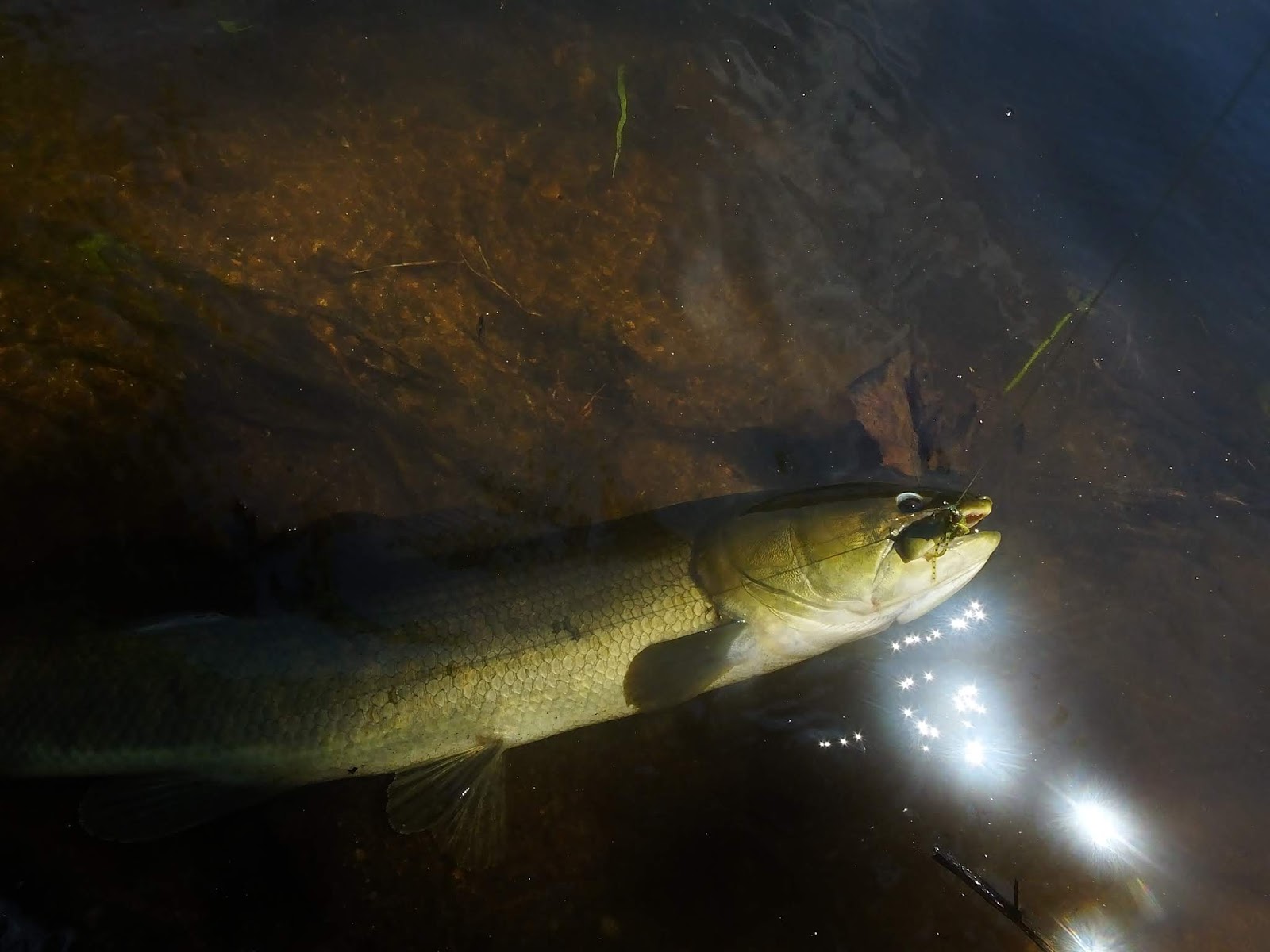
 Every year in my home lake, hundreds if not thousands of perch congregate in the only two major feeder streams- right inside the mouths. Both white perch and yellow perch are represented, though this behavior seems to have a few different causes. First and foremost is the urge for fish to seek warmer and more oxygen rich water in the winter, especially in an oxygen deficient lake like this one. Secondly, this appears to be some sort of pre-spawn behavior. A lot of the male white perch I’ve caught during this schooling behavior expel milt. What it certainly isn’t is a feeding behavior; in fact most of the fish in the school largely ignore anything offered to them. Though the percentage of willing eaters is typically low, there are so many fish it doesn’t matter. It isn’t hard some days to catch more than 100 perch.

Massive perch schools aren’t uncommon in the Northeast in the winter, nor is catching loads of them in a short outing. But what makes this mega-school so unusual is its presence in an enclosed, shallow creek. You can see the perch schooled -sometimes certainly numbered in the thousands. The fish are packed as tightly as any menhaden school I’ve ever seen. Though certainly not natural, as the body of water isn’t natural and the white perch weren’t in the system even before it was dammed, it is pretty wild to observe.

It has also resulted in some interesting animal observations. I’ve seen mink taking advantage of the easy meal on a number of occasions. More unusually, Noah, his dad, and now I have seen mallard ducks eating, with some difficulty, smaller, live perch that they somehow manage to catch out of the school. Though mallards seem fairly benign and unlikely to predate animals any larger than aquatic insects, they’ve actually been documented hunting, killing, and eating small birds. This is something I’d never have known had observing mallards eating live perch not piqued my curiosity. This is one of the reasons I love fishing so much. Done with a curious eye, it is a path to many unusual and surprising truths. 


Another unusual phenomenon spurred on by these dense schools is mid-winter topwater bites. The perch schools are so densely packed that many of the fish are pushed to the surface. With just inches from the fish’s eyes to the surface of the water, they can’t help but notice a twitched dry fly. I catch some of these fish every year on dry flies. It makes for a fun little anomalous winter bite. 


Noah and I spent a lot of time over the years watching these winter perch mega-schools. Most other winter fish gatherings happen on a scale too big for easy observation. Having this small water situation right by our houses was like Noah and I being able to experiment with winter fish behavior in a lab. It’s been a very cool experience.


Until next time, 

Fish for the love of fish.
Fish for the love of places fish live.
Fish for you.
And stay safe and healthy.


Thank you to my Patrons; Erin, David, John, Elizabeth, Brandon, Christopher, Shawn, Mike, Sara, Leo, C, Franky, and Geof for making Connecticut Fly Angler possible. If you want to support this blog, look for the Patreon link at the top of the right side-bar in web version. 

Edited by Cheyenne Terrien

Saturday, June 6, 2020

The Value of the Hand-twist & Figure Eight

There are a lot of ways to retrieve a fly and every retrieve has it place: a fast and erratic two-hand, a slow strip with pauses, full arm swing strips, the jerk-strip,  rod-tip lead... the list goes on and on. But one retrieve I use a lot and don't see as utilized as much by fly fishers in the northeast is the figure eight retrieve. It did not take me long after I started fishing still waters to figure out that a lot of fish were more likely to eat a fly retrieved at a continues pace with no substantial pauses, and though this can be achieved by lifting the rod at a steady pace when a short cast is made and by doing a slow rolling two hand retrieve on a long cast, but my choice retrieve when fish want a fly that never stops completely is the figure eight or hand twist. I rarely ever do a proper figure eight though, I just make a loop. With the line through a loose loop made by the pointer and thumb of my rod hand, I hold my hands close together, then pinch the line between the thumb and pointer finder, wrapping it around my pointer, then pull a loop into my palm with my other three digits. I then drop that loop while repeating the motion to make another. And over and over and over.... if that's hard to visualize, just try to do it anyway. If you can't figure it out, just keep trying... I did. I did until I found what worked for me and sometimes I did it for so long my hand would cramp severely from so much repetition. But I'm glad I figured it out because I've stood right next to other fly fisherman doing a different retrieve and caught fish consistently while they struggled to get any.

One scenario in which I'd be pretty much lost without this retrieve is early spring walleyes. The slow steady retrieve not only produces strikes but the constant contact with the fly makes it difficult to miss the extremely subtle bites. Often, all I feel is a vague sense of tension. I'll accelerate the retrieve then lift the rod and only then get a true sense of the fish's weight. These big predators eat tiny streamers with a subtlety akin to a brown trout eating an emerger.


To the point that these takes are subtle... walleye fights are all too frequently regarded as boring. That isn't typically my experience. The take does not match what follows. Do they hold up pound for pound compared to many other species? I have to say, some species, no, but you can't just skate them in on the surface either. They're big sweeping headshakes and short dogging runs never fail to get my heart pounding. So don't take what people who have only ever trolled walleyes say as gospel, they can indeed pull pretty hard.


Given their genetic closeness to walleye it shouldn't be surprising that yellow perch are duped by the hand-twist retrieve too. Actually, though in a different family entirely, it was white perch on which I perfected this methodology. And today, for my money, it remains the way to catch them. But I would be so lost without it fishing for trout in stillwaters, stripers feeding on small shrimp, crappies, bluegills, smallmouth... the list goes on for a while. This is a necessary tool in my arsenal and I infrequently see it utilized by other fly fishers in this part of the world. I never understood why.


Until next time,
Fish for the love of fish.
Fish for the love of places fish live.
Fish for you.
And stay safe and healthy.


Thank you to my Patrons; Erin, David, John, Elizabeth, Brandon, Christopher, Shawn, Mike, Sara, Leo, and Franky for supporting this blog on Patreon. 

Tuesday, December 17, 2019

A Traditional Swamp Fly & The Act of Killing for Food

Perch might be the most reliable fish in the winter in CT. I really enjoy fishing for big fat yellow perch an abundant white perch where they stack up to overwinter. The biomass can be truly spectacular, with fish at times stacked from top to bottom of the water column. There are a variety of reasons why perch will stack up in certain areas in the winter ranging from escaping dirty water to staging to spawn, but whatever the reason, when you find one perch anytime between early December and late March, it is safe to assume there are hundreds more there. But as fun as it is to catch hundreds of perch and as pretty as they are, perhaps the best thing about finding where perch are stacked up in the winter is that they taste really really good. Eating fish is, in my opinion, an important part of fishing. There is no way to avoid killing fish, even if you are completely catch and release, barbless hooks only, never handling fish for a significant length of time... killing is an unavoidable result of the act of fishing. As such, I believe it is important for every angler to hold a beautiful, living fish in their hand and then take its life. Nobody should completely enjoy the act of killing, as being at least a little uncomfortable with it will make a more ethical angler. Killing shouldn't be glorified, the animal should be glorified, in my opinion. But if you just can't bring yourself to kill a fish, you may want to reconsider ever sticking a hook in one again. A lot of my fishing this winter is going to involve killing fish, and though I don't enjoy the process, I'm very proud of the fact that I'm able to provide meat by my own means. There is little better meat in southern New England freshwater than perch.


The fly that has been providing the meat lately is a very interesting pattern that originated in the backwaters of Southern Georgia. That isn't something that can be said of many flies, but it is true of the Okefenokee Swamp Sally. My friend Mark Alpert gave me one after he took a trip down there this fall and I finally put it to use this weekend. It proved very productive. About 70 fish came to hand, four of which met their demise and provided my lunch.

The fly itself is very simple, with a small butt of red chenille, a yellow chenille body, and yellow  hackle wrapped behind the eye then puled back and tied down to form a head of sorts. The Swamp Sally is traditionally fished with a cane pool for warmouth, redear, and fliers, all collectively often called "bream" in the south. They're finding use now here in CT for panfish, and I'm sure would be deadly for brook trout as well.  


Until next time.
Fish for the love of fish.
Fish for the love of places fish live.
Fish for you.


Thank you to my Patrons; Erin, David, John, Elizabeth, Brandon, Christopher, and Shawn for supporting this blog on Patreon.

Tuesday, July 16, 2019

An Incredible Multispecies Day


After revenge on the bowfin lost two days before, I returned to the scene of the crime. I'd told myself I wasn't going to target pike this time and that I'd focus on bowfin. But I just couldn't help myself. I've not caught a lot of pike. I rigged up the Christmas Ornament and ripped it allong the weed lines. It didn't take long. I was two hand retrieving when the first fish waked up on the fly then blew up. It was a nice clean little fish and fought hard.


The next fish blew up much harder, and turned my attention away from trying to spot a bowfin while working the fly. I jammeed it and immediately felt that it was solid fish. Not a monster but my new personal best, the second in two days (the previous day is written up in a patrons only post on Patreon).


I got right back to it after that watching that fish motor off and sight fished a third pike. 


This was now my best pike day it CT, but I wanted to see what else I could squeeze out of the morning. I wasn't seeing bowfin here, so I changed spots.


Musk turtle
Not long after switching locations, I stuck a fish I really didn't expect; a beautiful little walleye.


I followed up the walleye with two decent bass, one 18 incher and one 16 incher. Both took fairly small flies off the bottom. I find that when sight fiahing for largemouth I can best get an uncertain and picky fish to commit by letting the fly settle on the bottom for as long as 30 seconds, then giving it a series of quick hops. Both of these fish slammed the fly as soon as it came off the bottom. The first and bigger of the two had a unique two-tone face and hyperpigmentation melanosis. I've named hime Harvey Dent.


I've caught a lot of bass though so these fish weren't really getting my that excited. When I saw a channel cat nosing through the rocks looking for food though, that got my heart rate up. I dropped the fly in front of it and it took. A few minutes later I missed a take fron another. Now this was turning into something of an interesting day.


Still seeing no bowfin, I moved again. I worked my way up a bank where Noah and I had found a number of bowfin eating a sucker carcass last year. For most of it there were no signs of bowfin but plenty of bass and yellow perch. I hooked one largemouth on a laydown that was no question north of 20 inches. Would have like to have touched that one.


12 inch perch

Then I found bowfin. They were a real pain in the ass for about an hour though. I lead one in circles for five minutes straight and it just would not commit. Eventually though the tide turned, literally, and fish that would not commit suddenly were everywhere and very willing. I stuck six bowfin total. Now I was on my best bowfin day ever too!


With more black bass, some big bluegills, rockbass, amd redbreast sunfish in the mix, I ended the trip far later than I'd intended and with way more fish to hand, including a lot of trophies. I had seen some pretty wicked things too. I had a huge largemouth come out from a laydown and t-bone a perch I'd hooked. If I carried a net I'd have caught that fish. It would have been a personal best for me I'm certain, though degraded by not bei g a fair catch.


In a nutshell, that morning was lunacy. I haven't come close to covering it all in detail, but this is what you get when I have to write up a post on my phone in a coffee shop in Rangeley. I hope you can fill in some of the gaps. 

If you enjoy what I'm doing here, please share and comment. It is increasingly difficult to maintain this blog under dwindling readership. What best keeps me going so is knowing that I am engaging people and getting them interested in different aspects of fly fishing, the natural world, and art. Follow, like on Facebook, share wherever, comment wherever. Also, consider supporting me on Patreon (link at the top of the bar to the right of your screen, on web version). Every little bit is appreciated! Thank you to my Patrons; Erin, David, john, and Christopher, for supporting this blog.

Tuesday, March 5, 2019

Panicked Perch

Every winter, on a big, polluted, perch filled CT lake, perch run away from hypoxic waters in the main lake and try to survive near the mouths of tributaries. The result is impressive schools of fish in small water really not doing a whole lot of anything except slowly wasting away. I found that these fish could be caught, and that as things slowly warmed up in the spring they could be caught on dry flies at times, and at other times bigger yellow perch were present. It's kind of fun, mostly just to see so many fish packed into one place. Fishing for them has gotten less fun because it's just too predictable. I still go do it sometimes because in late winter I'm basically just waiting for those days when I can go out and catch a whole bunch of different fish again, and those perch provide a quick and briefly satisfying fix. This winter I haven't needed that kind of fix, right up until the other day. It had been an awfully long while since I'd caught something other than a salmonid and I knew the snow was coming. So I went and messed with the perch.


I can't lie, this snow has got me down. I was loving it hiking around until 2:00 a.m. during the storm, tracking fox, deer, grouse, coyote, and bobcat, but now that it's all on the ground and it's really could again... I want it gone. This is going to be a slow week in terms of fishing and brutal in terms of work, but the weekend should improve things. I hope.

If you enjoy what I'm doing here, please share and comment. It is increasingly difficult to maintain this blog under dwindling readership. What best keeps me going so is knowing that I am engaging people and getting them interested in different aspects of fly fishing, the natural world, and art. Follow, like on Facebook, share wherever, comment wherever. Also, consider supporting me on Patreon (link at the top of the bar to the right of your screen, on web version). Every little bit is appreciated! Thank you to my only Patron, Erin, for supporting this blog. 

Saturday, February 16, 2019

Ice Season

This was a better ice year than some here in central CT, but I didn't get out quite as much as last year. We've still got safe ice down here, but the amount of open water and rotted ice is increasing. How much more I'll get out on the ice I don't know, maybe a time or two. But the more open water there is the more I prefer to just fish the open water. So now is as good a time as any to summarize my ice season. 

I wanted to get walleye. 
That didn't happen.

I wanted to get carp. 
That didn't happen.

I wanted big perch. 
Well, I got one. I got a fair number of perch this year but the majority were quite small with the exception of this mighty yellow chunker that ate my jig right in the hole. 


Bluegills remained the place holders. I may not be the most adept ice fisherman, but I can catch bluegills and small largemouth bass consistently.


I endured some harsh conditions on the water this winter. One day, Rick and I went out hunting crappies with the cold wind making 14 degrees feel about 5. His shanty kept us comfortable but we just couldn't find the fish.

On another night I got walloped by a crazy snow squall, and things went from very comfortable to a little dangerous in seconds. By the time I got home, the snow and wind had already subsided.


That may very well be that. I don't know. I'm more in the mood to get some large late winter brown trout and target strange saltwater species than I am to go ice fishing a bunch more. But the weather may dictate those moves.