Showing posts with label Pollock. Show all posts

Thursday, September 30, 2021

Multispecies Fishing in an Old Maine Harbor

Maine's old harbors can hold an abundance of fish, though in my experience they at time hide themselves very well. Despite absurdly clear water, bergalls, pollock, sculpins and mackerel often hide themselves quite well. Sometimes it takes dropping down a bait, lure, or fly to determine if there are in fact fish present. Then the shapes materialize from them depths and the excitement begins... sometimes. Noah and I struggled the first time we went to Maine. Finding fish turned out more trick than we'd anticipated. A few trips down the line though I've learned a bit and have started to get a bit better at consistently finding something to catch in Maine harbors.

A couple weeks ago I went to Maine with my field herping friend, Bruce, to look for snakes. We found plenty, enough so that by the end of the last day we were satisfied enough to spend hour last hour or so at the ferry dock seeing what swam these water in mid September. We'd already seen some mackerel surface feeds earlier that morning, and there were some on the surface just opposite the dock. What was present at the dock in abundance was large bergalls. It didn't take me long to catch a few of these. 


These were moody bergalls though, and after a little while they became much more shy to the fly. Not being a snob has its perk and I had no qualms chunking up the next bergall I caught and using it as both chum and bait. This, unsurprisingly, resulted in a feeding frenzy that not only got the bergalls fired up but drew in some pollock and mackerel too. Soon I had what one might call a Maine Harbor slam, a few of each species on both bait and fly. I was using the 1wt, of course, and the fights were tremendous. It was a great way to round out a successful trip. 


Until next time, 

Fish for the love of fish.
Fish for the love of places fish live.
Fish for you.
And stay safe and healthy.


Thank you to my Patrons; Erin, David, John, Elizabeth, Brandon, Christopher, Shawn, Mike, Sara, Leo, C, Franky, Geof, Luke, Streamer Swinger, and Noah for making Connecticut Fly Angler possible. If you want to support this blog, look for the Patreon link at the top of the right side-bar in web version.

Monday, January 13, 2020

Extreme Rhody Fishing


If you recognize the guy in the photo above, it's probably because you've seen him say "WHAT'S UP YOUTUBE!" at least a time or two. Leo Sheng is currently a full time fishing youtuber. More than that, he is a life-listing, multispecies fishing youtuber. That is his job right now. That's how he keeps the lights on and the refrigerator stocked. He has been putting out quality content on his channel, Extreme Philly Fishing, for long enough to build quite the following, especially considering the type of fishing he is doing. Multispecies and life-list fishing, though it is growing, isn't the largest demographic. But within that group, Leo is a recognizable figure and an important voice. So how did Noah and I end up on a cliff in Rhode Island, looking out over a piece of water we though might hold some interesting saltwater species even in the dead of winter, with Leo Sheng talking to his audience about the fish we were there to seek via GoPro next to us?
That's a long story. 
Suffice to say, Noah and I had both been watching Leo's videos for years, somehow or another he found some of my social media stuff, and eventually we were messaging each other on a pretty regular basis. Ultimately, Leo, Noah and I fish for pretty much the same reasons. This text, ripped right from the Extreme Philly Fishing channel description, says it all: "Ultimately, this Channel is all about pursuing and collecting DIFFERENT SPECIES OF FISH! Recall, folks: every fish is unique, and every Species has its own role in nature! There is no such thing as 'trash fish.'"
We were going to get along just fine.
Leo wanted to do something unusual and mysterious this winter, and Noah an I had just the thing. The shoreline of CT and RI historically has had many winter fisheries. From whiting and tomcod to cod and pollack, there were productive fisheries in the surf and inshore zones of our states. Human activity has taken its toll though, and these fisheries are basically non existent now. Whiting, or more accurately hake, are almost completely gone from our shores. Beaches where whiting would wash up in such large numbers that locals would only need to walk the shoreline with a basket to get enough for dinner now appear totally lifeless. Bridges that were once tomcod hot spots may not see a single angler all winter. The beaches where surfcasters once sat by a fire at night, watching for rods with salted clams to bend under the weight of a cod, may see dog walkers and surfers in the winter, but rarely a fisherman. We only have ourselves to blame for this. Humans lead to the decline of these fisheries, and humans are now the ones forgetting they were there at all instead of demanding we get what was taken from us by the draggers, long liners, and polluters back.
But there are still whispering of some of these fish being around. Every once in a while some brave soul searching for their last beach front striper of the season will catch a cod, or some tomcod will show up in a net somewhere. They can't  all be gone. So, while other saltwater fisherman were either at home lamenting the fact that there is nothing to catch out on the beach or sucking it up and paying for a trip on a cod boat, Leo, Noah and I ventured to the space between to see if we couldn't find some sort of fish in the cold January surf.


We chose to start in Jamestown Rhode Island. In the winter most fish push into deep water, and the cliffs of Jamestown would give us access to that, with holes as deep as 164 feet deep not far off the shoreline. Diving videos Noah found showed abundances of sculpins, most likely shorthorn sculpins.  These are cold water species. Lumpfish, little sculpin, and rock gunnels are also possible wintertime visitors to these waters. The cliffs make for a dramatic landscape and good fishing at times, but are also dangerous. People have lost their lives fishing in this area. Caution is mandatory.

Visually the place looked desolate, though a few species of diving ducks and a lobster boat working pot to pot told us there was life. Putting bait in the water hammered that point home. Our offerings were getting messed with, almost certainly mostly by crabs, but there were some incidences that had us wondering. We can say with near certainty our bit never got in front of a sculpin, for they are not shy, and being like saltwater frogs (a big mouth and stomach with appendages) they would have taken our baits with little hesitation and a lot of rod tip fanfare.


After a few hours we decided it was time to move. After a stop for salted clams we were soon walking out onto the West Wall. I'd been out here on colder days, in fact the latest I'd ever caught a little tunny was on the wall on November 7th, 2017, and that was a much colder, windier day. But I'd never been in January. Rumors of cod brought us here. One of the historically productive cod beeches, Matunuck, was just down the road, and every now and then a cod does get caught still from this mile long strip of rock. Funny enough, we weren't the only nut cases out there, just on the other side of the inlet another fisherman was leaving as we arrived. We fished out there on the long wall until sunset, and it wasn't without its brief moments of excitement. Noah and I both had definite takes, he on the salted clams, me on the fly. It was a little disorienting, being out there in that famous tunny and bonito spot, fishing my 10wt with a fast sinking line, and getting multiple blatant takes an one brief hookup on a half and half. What it was I will never know. Another mystery fish.


We skunked there, but I left feeling excited that we had clearly found some sort of fish out there. These winter fisheries are mostly gone, but not completely. Every now and then a pollack swims into casting range or some tomcod venture up a creek. I would like to be there to meet them.
But if they were coming in the next two days we'd be fishing with Leo, we weren't going to be in the right place. The weather really threw us a curve ball.
Until next time.
Fish for the love of fish.
Fish for the love of places fish live.
Fish for you.


Thank you to my Patrons; Erin, David, John, Elizabeth, Brandon, Christopher, Shawn, Mike, Sara, an Leo for supporting this blog on Patreon.

Monday, August 12, 2019

Haddock, Cod, and (almost) Hake on the Fly

After tooling around southwest Maine somewhat aimlessly for a day and a half, Noah and I found ourselves in the quaint little town of Ogunquit among a very un-quaint, very annoying crowd of tourists. I'm not a fan of tourists. Noah and I technically fit the definition of tourists but we don't look or act like them, to the extent that wherever we go we at some point end up being mistaken for locals. As such we believe we've earned the right to bass the kind of tourists that walk slowly down the middle of the road or poke a Portuguese man of war while taking a photo of it with their phone... Noah and I are idiots but I'd like to think we never look that dumb. We also try to avoid tourist traps as much ass possible, it was part of the reason we didn't spend much time in Acadia.
But there we were in Ogunquit during tourist season, getting annoyed by all the other people that were there. We didn't have a choice though, that's the town out of which the Bunny Clark runs. Noah and I had been talking for a while about booking a headboat trip in Maine. We knee it would be a good way to knock out some new species that we just wouldn't be able to catch by our own means. I was fully prepared to use conventional gear if need me, but I'd fished for tautog and seabass with a fly rod and artificial flies in 60 feet of water. With a very heavy lead and modifications to my bottom fishing rig, I figured I could potentially fish up to 200ft. The problem would be fly line... Fly line is thick and get pushed by current. It would be the biggest issue in presentation, because I refuse to count fish caught on a rig that doesn't utilize fly line as a key part of the equation. I opted for a long length of braid ahead of the fly line, allowing enough of the full sink fly line in the water that it would impact my presentation. In fact, every inch of mu fly line would be in the water, and it would prove to let me bounce my rig around in a very effective way.
The big question was, would the crew actually let me use a fly rod?

We'd booked the afternoon four hour trip. It didn't seem to be quite full but there were enough of us to take up most of the fishing space on the deck. After the first mate and captain, Anthony and Ian, had given a quick talk about what we were going to do and Ian had distributed gear and teasers and whatnot, I made my proposal. Unsurprisingly, it took them both a little by surprise. But I was given the green light as long as I got up on the bow. Braid tangles easily, being further from everyone else made sense regardless of what kind of rod I was using. When we got about 16 miles off shore, Noah and I took our place on the bow and got ready to fish.


I let my two fly rig, weighed down with an awful lot of lead, plummet to the bottom. It felt like it sank forever, but eventually my weight clunked onto the sea floor, 160 feet down. My fly line caused the line to bow, so when I lifted and dropped, my rig moved probably 4 feet laterally. That was great, my fly line was allowing me to actually cover water a bit. Unfortunately that also limited me, because after a few lifts and drops, or just a little while letting the rig sit, I lost all sense of contact with my rig. And cranking it back up, with or without a fish on, was hell.
It didn't take long at all for me to get hits though, and in no time I was pulling up something. Unfortunately, it turned out to be less than a whole red hake, so I can't really count it as a new species. It did give me confidence though... I could do this with a fly rod.

1/3 of a red hake, Urophycis chuss

Noah caught the first whole fish, a really cool looking cusk.

Cusk, Brosme brosme

In a short time I felt a take, slammed it, and cranked from the depths a new species.

Lifelist fish #139, haddock, Melanogrammus aeglefinus. Rank: species


A short time later Ian moved the vessel to the next spot. My first drop went without a take, but as I brought it back up I felt something take and start to fight. It ended up being a much larger pollock than any of the little harbor sized schoolies we'd caught in Acadia.


A few drops later I really got rattled, and after some serious cranking, brought up a cod pollock double! I was very pleased with the cod, it was quite a handsome fish.


Lifelist fish #140, Atlantic cod, Gadus morhua. Rank: species
Although it felt like barely any time had passed, it wasn't much longer before it was time to head back to shore. Noah and I were already discussing plans to return. Though we each only got a small number of new species, we'd seen a number of things caught by others that were strange to us, and one sea robin that was nothing like anything listed from the Gulf of Maine at all.


We'd already known the potential to catch a ton of new species, but now we had some understanding of how we could better get that done. Besides that, the crew was great, the boat itself was great, and the price was great. I'd go back just for the fun of it. Noah and I both plan to make the trip again just to fish on the Bunny Clark. 


That evening we fried up the cusk Noah had caught. It was one of the best eating fish I've ever had, no question. Just delicious. The next morning, after an unproductive stop in Kittery hoping to find some winter flounder, we were on our way home at last. Maine is amazing. Just an incredible place. I can't wait to go back.
Until next time.
Fish for the love of fish.
Fish for the love of places fish live.
Fish for you.


 If you enjoy what I'm doing here, please share and comment. It is increasingly difficult to maintain this blog under dwindling readership. What best keeps me going so is knowing that I am engaging people and getting them interested in different aspects of fly fishing, the natural world, and art. Follow, like on Facebook, share wherever, comment wherever. Also, consider supporting me on Patreon (link at the top of the bar to the right of your screen, on web version). Every little bit is appreciated! Thank you to my Patrons; Erin, David, john, and Christopher, for supporting this blog.

Thursday, July 25, 2019

Acadia Pollock on the Fly From Shore

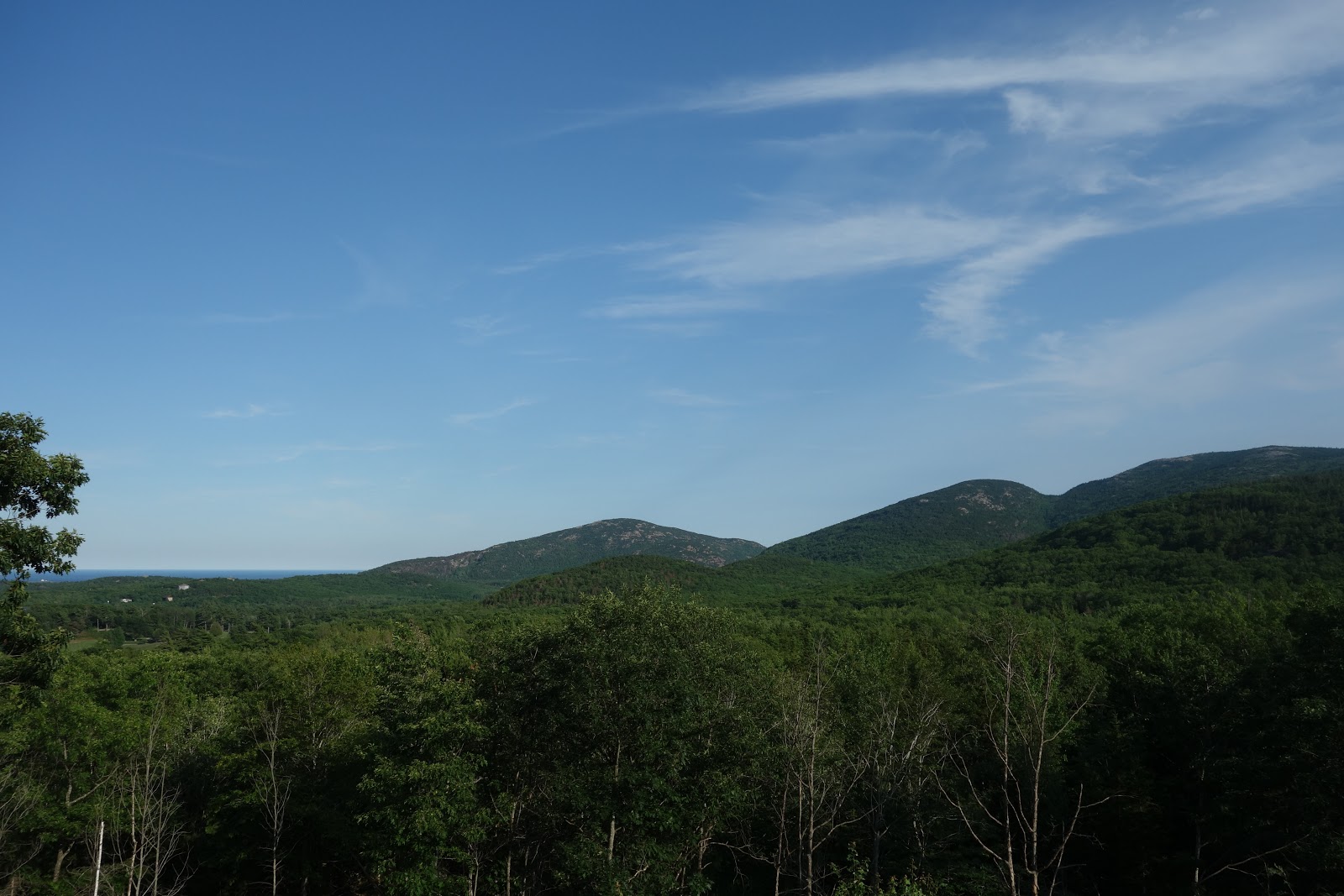
As Noah and I came around a corner and caught our first glimpse of Mt. Desert Island, my brain told me I couldn't possibly be looking at an island. That was an easy leap to make, we couldn't see the ocean yet. But we could see the hills. Hills that big, covered in mixed forest, with big rocks painted in colorful lichens, small mountain brook trout streams, and massive talus slopes, well... to my less than well traveled mind, those hills didn't belong right next to the Atlantic Ocean. But there there it all was.


Acadia is one of, if not the most grand place I have ever been. Those old hills still stand proud after ages of tectonic activity, glaciation, and gradual weather, even as the monstrous ocean mercilessly pounds at their feet. In the place where the island and the sea battle each other nearly constantly, at the foot of the cliffs, Atlantic pollock and mackerel swim.

Noah and I had spent time seeking pollock in Cape Cod, Gloucester, and Maine already without luck. We hadn't been after adult pollock because they were pretty much out of our range of capabilities on foot and on kayaks most of the time. The surf fishing for pollock in Montauk, Rhode Island, the Cape, and even in Maine just isn't what it once was. Giant pollock from shore is a thing of the past. Human greed is to blame. But there are still pollock to be caught in the surf. Harbor pollock are basically their species' equivalent of snapper blues. Small, abundant, and aggressive, they provide some fun surf fishing wherever the structure is right and the water cold enough. That's what Noah and I were after. And this time, we found them.

Lifelist fish #134, Atlantic pollock, Pollachius virens. Rank: species
It turned out that a big part of the deal was going further north to colder water. Though there are still pollock inshore in the summer in a lot of parts of Massachusetts and Maine (NH doesn't have enough shoreline to count. NH is just Maine extra. You'd think it would be easier to just include New Hampshire than go on this little rant. That is true. And yet, here we are.) the further you go, the colder the water, the rockier the shoreline, the more there are around in July. And Acadia was just loaded. Within our first hour in the park we'd both caught our lifer pollock.


Oh, and it wasn't just pollock. Atlantic mackerel also joined the party. I was pretty pleased to get some of them, seeing as I haven't caught all that many mackerel. Actually, by the time we left the Maine shoreline for the north woods, I'd tallied up a larger lifetime number of pollock than mackerel, including both Atlantic and Atlantic chub mackerel.


Scomber scombrus

The first evening was pretty good. I caught a bunch of pollock and a few mackerel on a simple white jighead streamer. Noah caught a ton of mackerel and a few pollock on a sabiki rig. The next morning was all pollock. We got thing a bit more down to a science, and frankly it was all too obvious.


It seemed that wherever there was both submerged ledge and white water there were pollock, and they were all too willing to take a white streamer fished on floating line with the 5wt. That gear for those fish was just perfect. It was a blast.


Aside from just being fun, these were beautiful little fish. Their copper and bronze colored flanks really shone in a way that photography couldn't quite capture. The subtle blue of their lateral line was unexpected, to me at least. Beyond that, they were the easiest fish to handle. No spines, no big teeth, no sharp gill plate. Nothing to cut, puncture or abrade you at all. Pollock taste really good too. Seriously, what's not to love. I left Acadia with a few things and one of them was a whole new appreciation for this species.


 Our time on Mt. Desert Island was short, but I know I have to go back there. It is an undeniably beautiful place, and Noah and I just barely scratched the surface of it. But we were both getting a bit sick of the driving and tourists there. It was time to go north; about as far north as we could go without crossing into Canada.
Until next time.
Fish for the love of fish.
Fish for the love of places fish live.
Fish for you.

 If you enjoy what I'm doing here, please share and comment. It is increasingly difficult to maintain this blog under dwindling readership. What best keeps me going so is knowing that I am engaging people and getting them interested in different aspects of fly fishing, the natural world, and art. Follow, like on Facebook, share wherever, comment wherever. Also, consider supporting me on Patreon (link at the top of the bar to the right of your screen, on web version). Every little bit is appreciated! Thank you to my Patrons; Erin, David, john, and Christopher, for supporting this blog.