Thursday, August 8, 2019

Rangeley

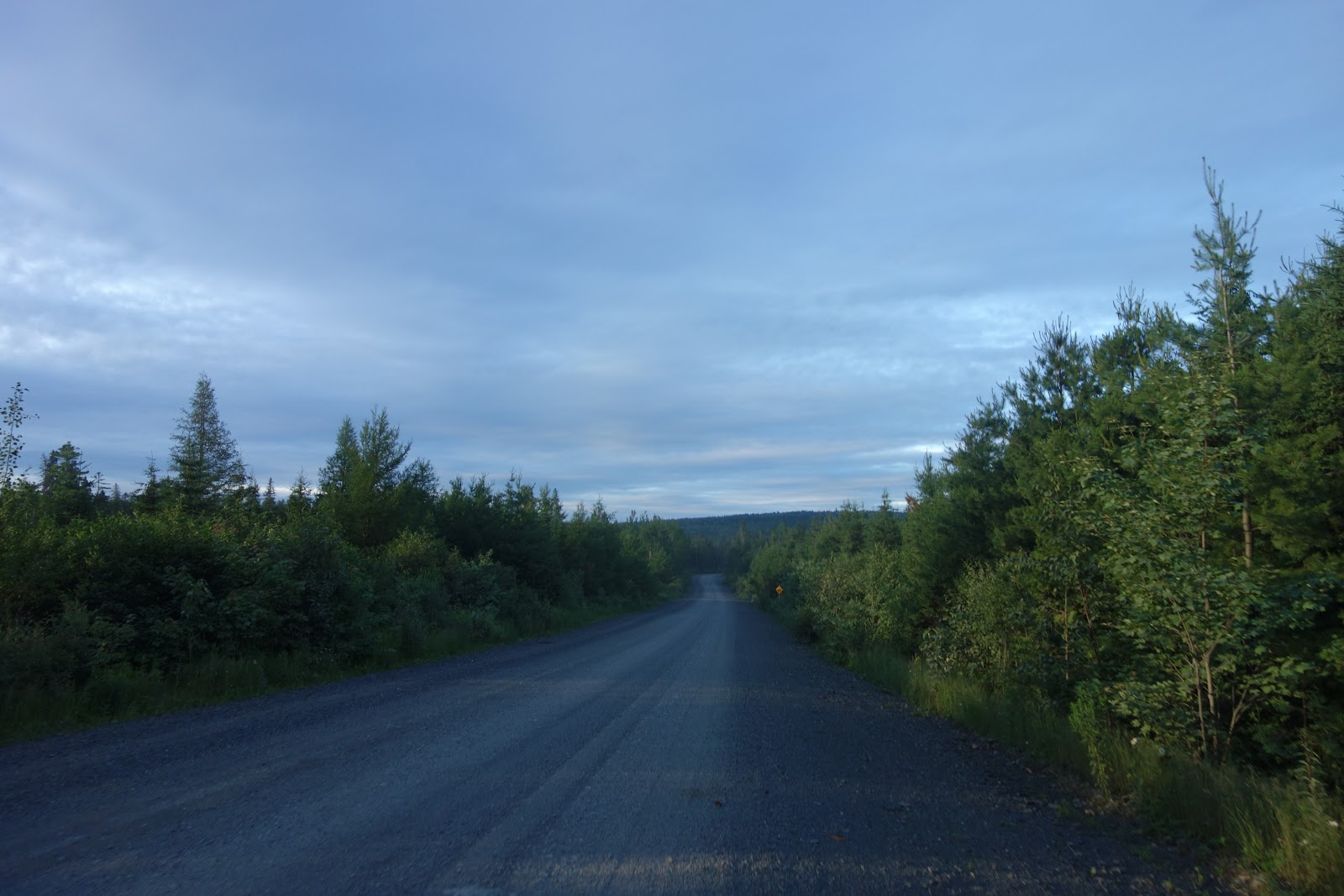
Noah and I woke up on our finale morning in Deboullie exhausted, beaten up, hungry, and bug bitten. We packed up and headed back down the same dusty roads we came in on. I was a little sad to be leaving the most remote place I had ever been, but I was also excited to see what the next days would bring. 


We stopped in Portage for food, coffee, and cell service. Having been days without a shower or shave, covered in grime and bug bites, we probably looked and smelled like feral humans. But we had to do what we had to do.... 

Morning necessities after coming out of the woods... coffee and Hook Shots

And apple fritters
We basically back tracked, leaving the way we came, until Bangor.

Katahdin
At Bangor, we made a hard turn west.

We were headed to Rangeley.

It had been a while since I'd been to the brook trout mecca of the Northeast. The last time I'd been here I'd broken my personal best wild brook trout twice, but those weren't big fish, really. What I wanted from Rangeley this time were some proper huge brook trout. Brook trout that weren't just big brook trout big big fish. Brook trout that you couldn't aptly call "brookies". This wasn't the ideal time of year, a lot of waters that I'd have liked to have fished had warmed up substantially, but I knew if we did the legwork we'd likely find what we were looking for.


After stopping in at Rangeley Region Sport Shop to get some intel, we spent the first afternoon touring around places I was already familiar with, just to get a handle on things early and decide what moves to make. I didn't expect to get much of size and didn't get much of size. We did, however, get a good idea of water levels and temperatures in a few places and found a place to camp. We also caught a metric crap load of 5-8 inch brook trout, some perch, some fallfish, and a couple small landlocked salmon.


A dry dropper provided most of the action on the larger water, producing a near equal amount of fish on both the dry and the nymph. When a dry dropper is producing like that it is worth keeping on in spite of worsened tangles and increased fly and tippet losses to trees. I was fully expecting to double at some point, and more than once I had a pair of fish hooked only to have one or both free themselves.


In the smaller water, all that was needed was a dry fly and fast feet. I covered a lot of water on one of my favorite Rangeley streams, hopping from boulder to boulder and plying the plunge pools. So many fish came to hand this day that I may well have been a little into the triple digits.


This dark specimen is definitely one of the most unique looking brookies I've ever seen.
 I caught so many small brook trout on the first day in Rangeley that I was pretty well ready to focus on big fish on the second day. We headed out early in the morning to fish a river I'd heard some good things about but had never been to. My friend Mike Andrews, in particular, had been talking it up for a while. I was excited, because I knew the big fish potential this river held, but I was also a bit intimidated. I had never fished a brook trout stream this large, and had also never fished any trout stream that was so high gradient, with serious whitewater all over.


 I had been told to nymph it... it just wasn't the kind of situation I excel at nymphing... put me on a riffle loaded, relatively shallow river with wild brown trout, or a small stream with deep buckets and plunge pools, and I'll pound fish tightline nymphing. But this river... I wasn't geared for it, I wasn't confident, and I didn't think it would work. I seriously regret the amount of time I spent trying to nymph that river because it just flat out wasn't working for me. I caught one brook trout on a nymph.

I started to see a rise hear and there though, and that coaxed me to fish a dry. I don't know why, but for some reason I thought the wild brook trout in this water would for some reason act differently from brook trout anywhere else. Mere casts after putting a Parmachenee Wulff on and I was proven wrong. These fish were still brook trout. They were still perfectly willing to come up and slam a skated dry fly. After a bit I changed to a Hornberg, hoping I'd get better hookups and could fish it subsurface as well as skated. That did the trick. Numerous fish exploded on that Hornburg and many more got pinned than on the Wulff. But I was still struggling to catch anything of personal best smashing caliber. 


Then, after making the daring wade out to reach over a wicked fast current tongue into the seem on the other side, just as the fly started to drag downstream I felt the line come tight. I set, and the deep bow in my line forced by the current tongue made the massive weight on the other end deceptive. But when the fish started marching upstream confidently, working against that bow, I knew this was the largest brook trout I'd ever set a hook into. I looked around me, wondering where I could possibly safely land this fish. Downstream from me on my side of the river was a calm, shallow bit of grassy bank. If I could get there that would be perfect. I slowly shuffled back, pulling against the massive char. I barely budged, despite being in the fasted part of the run. I shuffled back and down a little more and put on side pressure. Now the fish started to slide slowly out of the run and downstream. then, abruptly, it made a hard turn and charged off down river. No shuffling now, I had to get back in front of this best before it dumped into the next set of rapids. I booked it down and across, almost falling repeatedly and trying to make for the bank where I hoped to land the fish. I had almost made it there when the fish stopped in stalemate and just wouldn't yield me any ground. I could see it now, it was a proper monster, looking almost bronze as it flashed in the sunlight. Then, slack. I swore loudly. that was the one I had wanted. 

Feeling I had at least started to get a hang of things, I continued upstream, catching a bunch of fish but nothing really substantially. I did hook a number of foot long landlocked salmon which put up a hell of a tussle, including one that jumped right up onto a patch of grass just after I set the hook. But I didn't encounter another large brookie that morning.

We left there and spent the rest of the day tooling around, not really finding a good pattern. We caught fish and saw some really great places, but I was antsy. 


A fallfish mound.


I was eager to go back to that river the next morning, having come to believe, given the aggression of the fish that I had encountered, that I could probably get a giant to take a mouse in daylight.
Until next time.
Fish for the love of fish.
Fish for the love of places fish live.
Fish for you.


 If you enjoy what I'm doing here, please share and comment. It is increasingly difficult to maintain this blog under dwindling readership. What best keeps me going so is knowing that I am engaging people and getting them interested in different aspects of fly fishing, the natural world, and art. Follow, like on Facebook, share wherever, comment wherever. Also, consider supporting me on Patreon (link at the top of the bar to the right of your screen, on web version). Every little bit is appreciated! Thank you to my Patrons; Erin, David, john, and Christopher, for supporting this blog.

Sunday, August 4, 2019

Everything Else in Deboullie (PT. 2)

Ever wonder what a hailstorm is like in the mountains? Ever wonder what one sounds like? I'd heard hail roar from a long tracked hail and tornado producing supercell thunderstorm way back in 2009. But even that monster didn't prepare me for what a smaller storm in a big, echo making, anthropogenic noise free landscape would be like.

On our last day in the Deboullie area, Noah and I left our little base camp area to fish some new areas. I knew Togue Pond and the surrounding bodies of water had species neither of us had caught. Though lake trout would have been the ideal catch, the weather wasn't good for being out on the open water trying to vertical jig lakers. In the swampy, shallow ponds nearby though there were supposedly threespine stickleback and fathead minnows. I was particularly pumped to try to get a stickleback.


I found one loner almost right away, but I struggled to both get past the northern redbelly dace and to get that stupid little stickleback to eat. It wasn't working. After finding a couple more very finicky targets and almost intentionally dooming my super fine tenago lead on a tailing bullhead in inches of water, I happened into a fathead minnow. It was a female, pretty typical looking, but very cool to get a fourth lifer from this area.

Lifelist fish #138, fathead minnow, Pimephales promelas. Rank: species
As I photographed that fish, thunder echoed off the mountain behind me. A couple small thundershowers had rolled through and put a brief pause on things, but with a quick look, this one looked mean. Not only did it look like dangerous storm, it sounded like one. Not just thunder... from miles out I could hear the sound of heavy precipitation pummeling trees. I walked down to the lake to get a better look.


The roaring, waterfall like sound got louder and louder, and in a short time....


That wasn't a massive storm, really. It didn't even impact our camp just over the ridge. But it was mean. Not all that much in the way of wind, but violent bright positive CG strikes, torrential rain, and pea sized hail all made it feel bigger than it was. In a short time, it was gone.

And I was back to the futile exercise that was trying to get a nesting threespine stickleback to eat a tiny little fly. Unfortunately, the photo below is all I've got to show for it.


My bitter consolation was a much more distinctly colored fathead of the male persuasion. The males go through a crazy transformation to spawn, like many fish do.


Noah got his lifer a short time later, and it was even more crazy looking than mine!


I set out on my own to check out another pond. It didn't really have what I was looking for, but it sure was a pretty hike. Actually, I could have caught at least another dozen fatheads in there. Every boulder had at least one male guarding a nest. I just didn't feel like messing with them any more. I wanted a stickleback. But I wasn't getting a stickleback.


The last long sunset at our camp in Deboullie was beautiful, but it was bittersweet. There are a number of things I'd wanted to accomplish, and it had been a testing experience. We hadn't even gotten to see a good, clear night sky. It clouded over every night. We didn't catch a laker. We didn't find any longnose sucker.
But I had caught a blueback. There was no way I could complain about anything after that moment.
I wouldn't trade experiences like this for anything. Rare trout. Big scenery. Loons singing every morning and evening. Hailstorms. Cool new cyprinid species. Bear tracks in the mud.
At those times, I'm the richest man in the world.

Until next time.
Fish for the love of fish.
Fish for the love of places fish live.
Fish for you.


 If you enjoy what I'm doing here, please share and comment. It is increasingly difficult to maintain this blog under dwindling readership. What best keeps me going so is knowing that I am engaging people and getting them interested in different aspects of fly fishing, the natural world, and art. Follow, like on Facebook, share wherever, comment wherever. Also, consider supporting me on Patreon (link at the top of the bar to the right of your screen, on web version). Every little bit is appreciated! Thank you to my Patrons; Erin, David, john, and Christopher, for supporting this blog.

Friday, August 2, 2019

Everything Else in Deboullie (PT. 1)

Though blueback trout were the main reason Noah and I had gone to Deboullie, they weren't the only species in the area we hadn't caught before. Lake trout, burbot, longnose sucker, threespine stickleback, lake chub, northern pearl dace, northern redbelly dace, and fathead minnows all existed in close proximity. Even if we didn't get an Arctic char, we were very unlikely to leave empty handed. 

Right by our camp was the outlet of Pushineer, and it was loaded with micros. I had no doubt that some of them were new species. Of course, as is so often the case, we had to dig through things we've caught plenty of to get something new. In this case it was creek chubs and common shiners. 

Creek chub, Semotilus atromaculatus
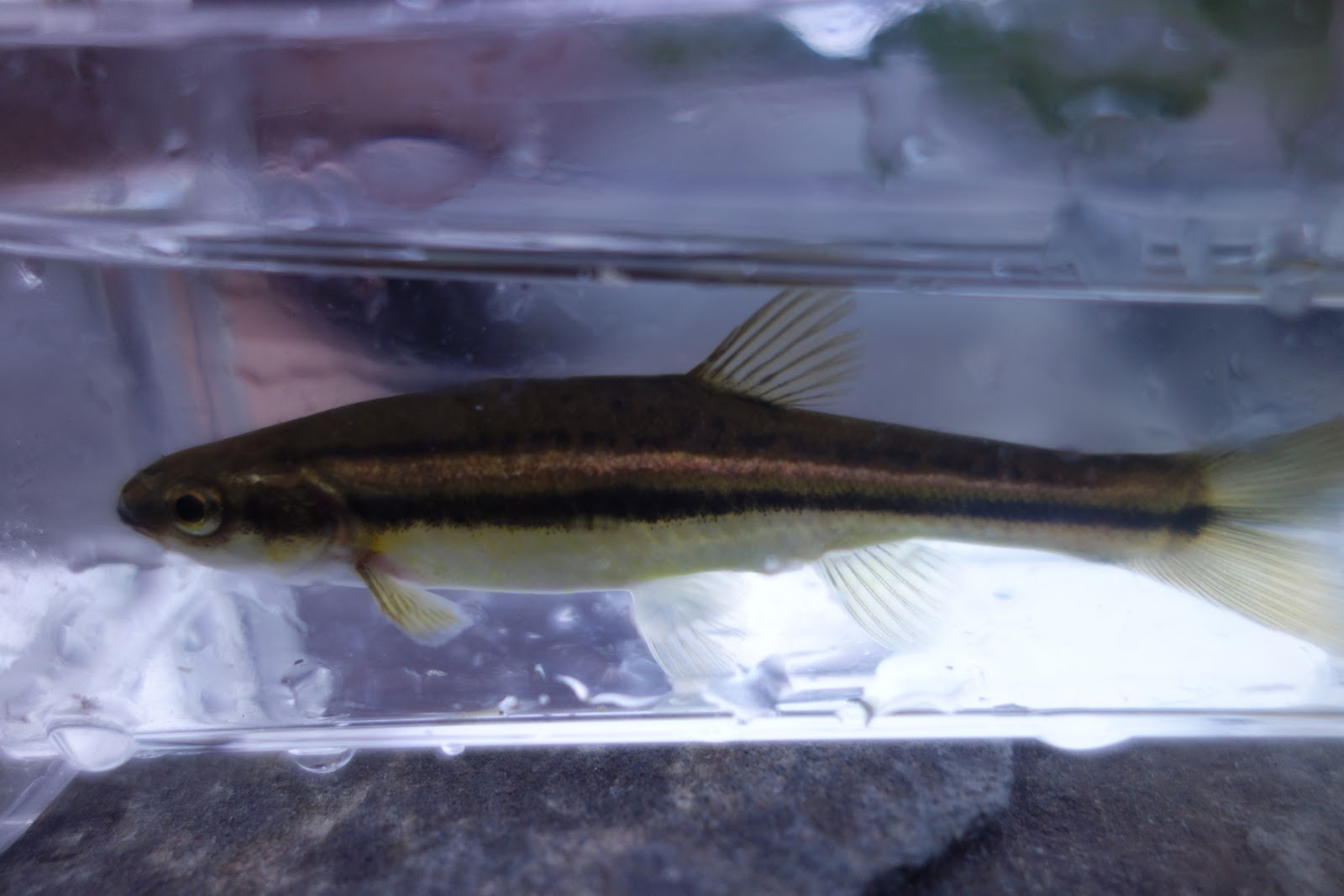
The first new species Noah and I got was a dace. They kind of threw us for a loop. I knew there were, as of 2001, only Northern redbelly dace and pearl dace in this lake. These clearly were not pearl dace, but they didn't really look like the classic redbelly dace either. Mainly the ones that appeared to be males lacked the classic red belly altogether. They had the double lateral line and the spotted lines on the back though. Eventually we both caught a female in classic yellow coloration and I was confident to call the rest Northern redbellies too.

Lifelist fish #135, Northern redbelly dace, Phoxinus eos. Rank: species


Sanity had long sine been left behind.

Below is the picture perfect female Northern redbelly dace. Isn't she a beauty?


The next lifer came through luck. I happened to look at the dorsal of one fish I'd have just as soon assumed was a creek chub and noticed it lacked the spot that creek chubs have I immediately put it in the photo tank and got as many shots of it as I could in the waning light. It had a more pointed snout than creek chubs. It didn't fit the profile of a fathead minnow. The best candidate seems to be pearl dace. Some of the taxonomic drawings and photos I've found of the species match it almost perfectly, some look significantly different. But really there is little else there that it could have been.

Lifer #136: pearl dace, Margariscus margarita.  Rank: species


Throughout the first two days, I was occasionally seeing schools of maybe 3-30 fish that looked like some sort of killifish. Being that nothing of the sort had been documented in these ponds, at least to my knowledge, I had to catch one. Unfortunately they turned out to be something I'd already caught many of. banded killifish.

banded killifish, Fundulus diaphanus
Within the first three days we'd each knocked out some new species right by camp and handled plenty of fish we'd already caught hundreds of. Days of microfishing, paddling around windy lakes, and long portages can build an appetite. Catch some yellow perch though, fry them up, and those stomach pains go away. There is nothing more satisfying than obtaining your own food. Thank you perch, for being so easy and so damn delicious. 


Until next time.
Fish for the love of fish.
Fish for the love of places fish live.
Fish for you.

 If you enjoy what I'm doing here, please share and comment. It is increasingly difficult to maintain this blog under dwindling readership. What best keeps me going so is knowing that I am engaging people and getting them interested in different aspects of fly fishing, the natural world, and art. Follow, like on Facebook, share wherever, comment wherever. Also, consider supporting me on Patreon (link at the top of the bar to the right of your screen, on web version). Every little bit is appreciated! Thank you to my Patrons; Erin, David, john, and Christopher, for supporting this blog.