Tuesday, December 15, 2020

Big Bait, Big Flies, Small Stripers

 This November and December have been highlighted by the largest biomass of adult menhaden I've ever seen locally. They were everywhere: tidal creeks were packed bank to bank, flats had roving schools, and there seemed to be a continuous unbroken line of menhaden from the Connecticut River to City Island. 

One would think that with so much big bait around there'd be loads of predator fish on it.               Nope.                                                                                                                                                       We don't have big stripers and big bluefish anymore, not enough to make something spectacular happen with so much adult bunker. There is definitely such a thing as too much bunkah. Now, if there'd been an equivalent mass of juvenile bunker around that long, there'd have never been no end to the schoolie blitzes. Those bunker are still here, actually, at least those the cold snaps haven't yet killed. I was out this Sunday and had thousands in front of me. There were also many that were dead and dying. It's unfortunate that so many menhaden seem to have gotten stuck in many of the warmer backwaters to die as it just gets colder and colder. The repetitive record breaking warm spells encouraged so many of them to overstay, the ocean temperatures are now colder than the mud flats so there is no escape. 


Oh how I wish those were bluefish tails.

On only two days was I so lucky as to find anything eating the bunker. One day, they were out of range, bass and maybe blues pushing them. I stopped and parked just to watch, I'd seen the blitz from the road. Little did I know I was missing a better show to my East: a couple humpback whales had found a school of bunker and were getting their fill. 

A few days later I returned to the same area and this time found nervous bunker in tighter to the shore. I ran back to the car to gear up, heart pounding. Menhaden are huge baitfish and and usually if bass are on them, they aren't little schoolies. I tied on a long Slammer, but even that wasn't as at all as large as many of these menhaden. 


With the bait so nervous, I was sure I'd soon see some large splashes or boils. Indeed I did, and there were clearly a number of large stripers visibly working the school.


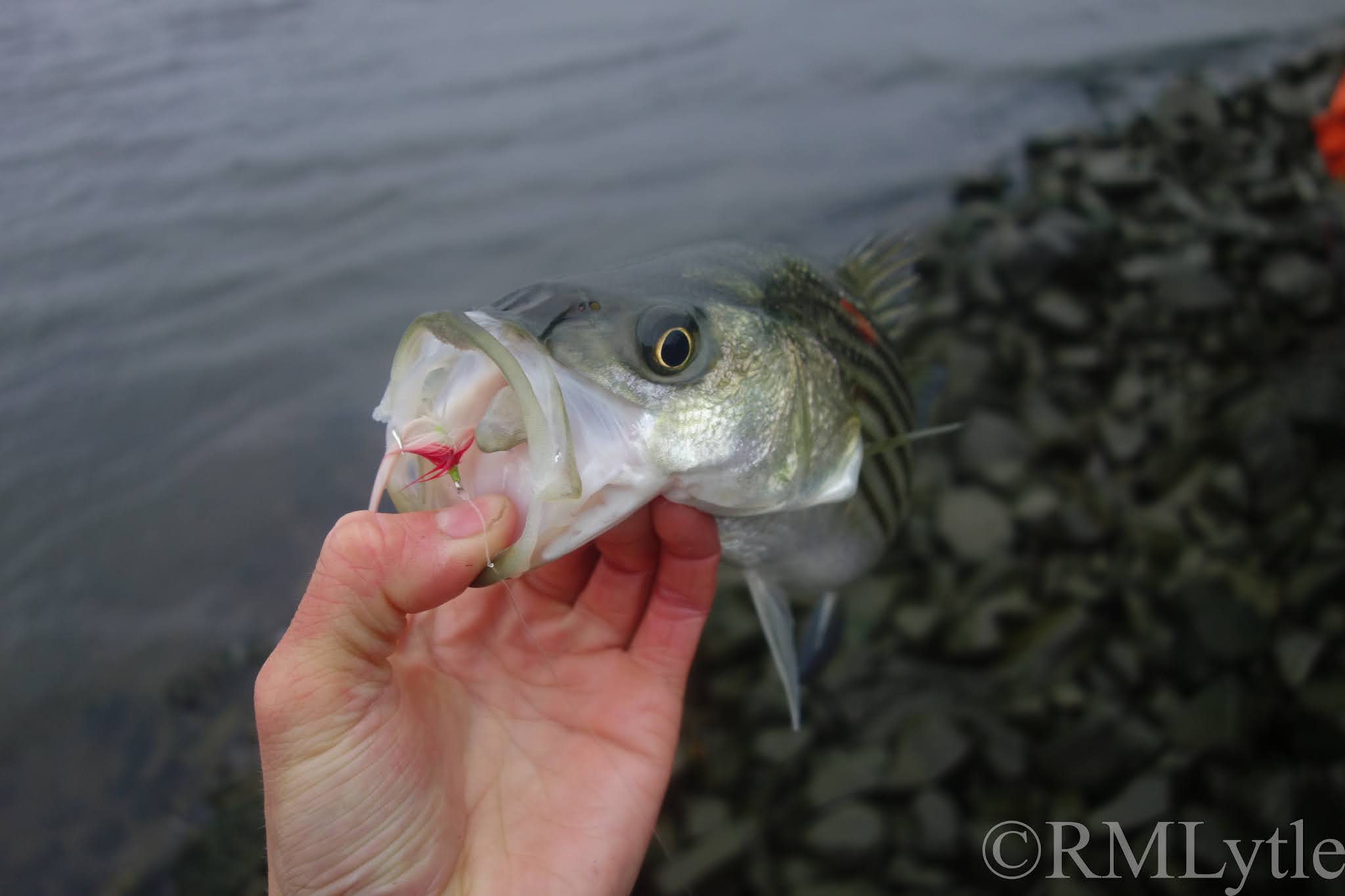
I wanted my fly to stand out and look easy to catch, so I worked it with a very slow steady two hand retrieve and the occasional quick short burst. This drew strikes, but not from the 45 inch bunker filled cows I was hoping for. How sub-20 inch striper thinks a 10 inch long Slammer is small enough to snack on I do not know. I caught a number of them. It was certainly better than nothing, but my hopes for just on big surf bass in the 2020 season were crushed as they had already been many times. 


Regardless, it was very nice to see some stripers on the adult bunker even though it should have been happening much more often this season. Big bait and big predators is a very exciting dynamic for obvious reasons. Hopefully the fishery will return to it's former glory so more anglers can experience such things, myself included. It's up to us to be good stewards of the species as well as the habitat and food sources they require. Stop eating stripers if you still do, don't use fish oil products mad from menhaden oil, and limit your impact by using barbless single hooks and intentionally catching fewer fish than you could.


 Fish for the love of fish.
Fish for the love of places fish live.
Fish for you.
And stay safe and healthy.


Thank you to my Patrons; Erin, David, John, Elizabeth, Brandon, Christopher, Shawn, Mike, Sara, Leo, C, Franky, and Geof for making Connecticut Fly Angler possible. 

Monday, December 14, 2020

The Great Hickory Shad Blitz of 2020

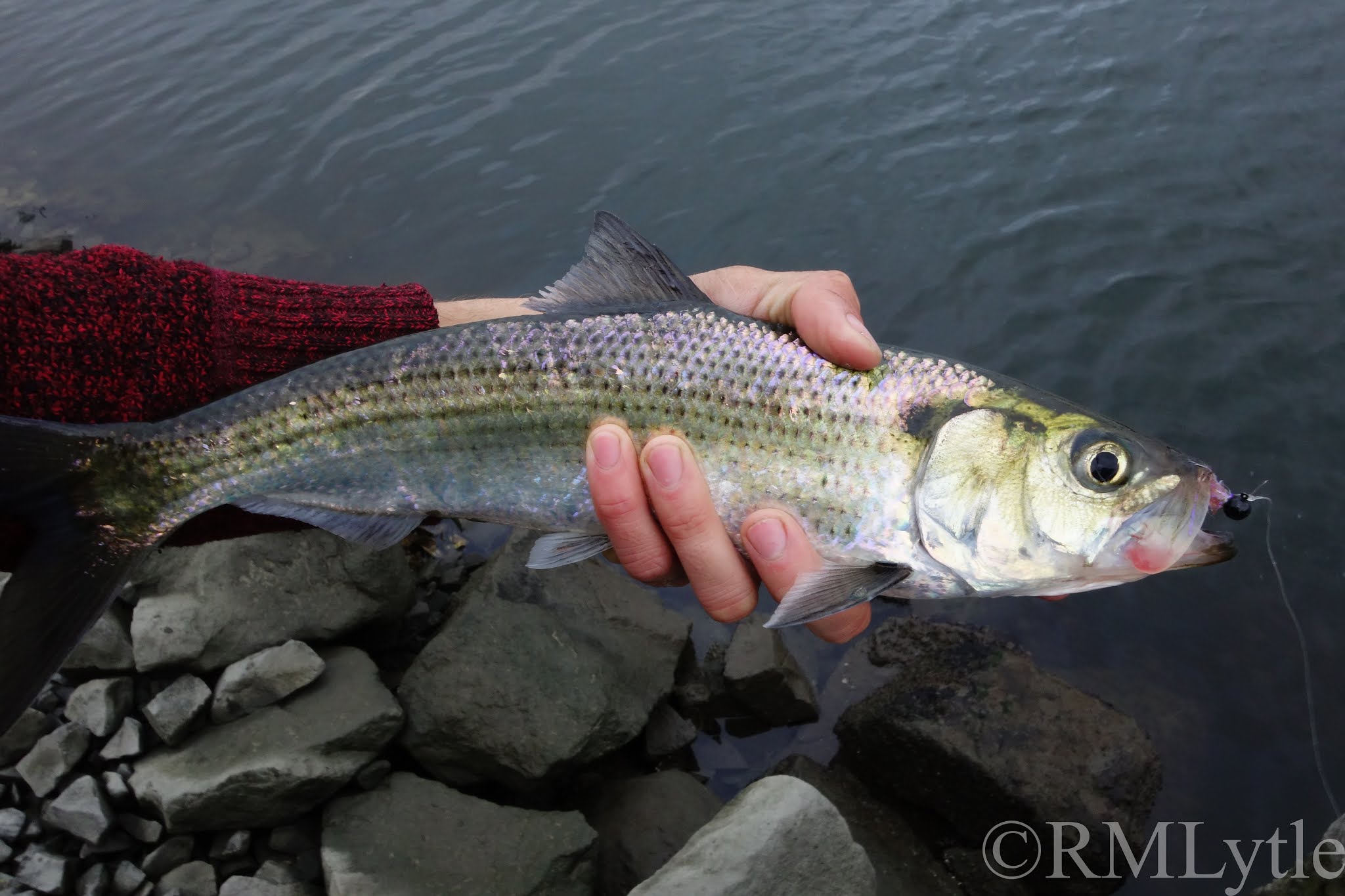
 There are many things the year 2020 could be known for. Many, many things. But in my mind, 2020 will forever be the year of the greatest hickory shad blitz in the history of Southern New England. If you are a surfcaster or saltwater fly angler and fished in the fall season of this year, you probably didn't miss it. It wasn't a one location blitz, or a single day event, but a near coast-wide event that has spanned weeks. From what I'm hearing it may still be in progress down south in New Jersey and even as far as South Carolina. It isn't really a singular event, but this year without question gave up the most stellar hickory shad fishing I've ever experienced. 

I intercepted the blitz in the final days of October on my home turf. I was fishing water I knew well, water I'd seen so much action in over the years -plenty of hickory blitzes included- but nothing like this. On the 28th I was on my own, and hickories were my first priority. That said, I started out taking quick looks at a few places that used to routinely hold big stripers in the fall. They are no longer as productive and I subsequently found little in the way of fish. I was then fully focused on shad. 

It was slow at first, not a notable blitz at all, but I was picking off some fish. Hickories battle magnificently, often being compared to baby tarpon because of their acrobatics. I've caught both, that's really not as accurate a comparison as one might think. Frankly I think fisherman are far too caught up in the idea of comparing species ("poor man's tarpon," "poor man's bonefish," "poor man's salmon") instead of just taking a fish species with it's own merits. Hickories are awesome fish and a hell of a lot of fun, that's all that matters. And though I definitely wasn't hammering them, I'd gotten 10 of them before the sun set and was pretty pleased with that.


With the sky now darkening and the little school under the bridge I'd been fishing pretty disturbed because I was catching them, I decided to make a move. I didn't go far but oftentimes a mile or two makes a huge difference. My first five casts at this new spot made it clear that something special was going on as each got at least one take and resulted in a large hickory shad to hand. That didn't change for the next hour and a half. I was catching fish continuously for the rest of my time fishing that night. It just never stopped. A swung grizzly Homer Rhode Seaducer was my the best method, though I'd started out with a Dave Bitters Baymen Clouser which was just a bit too big.


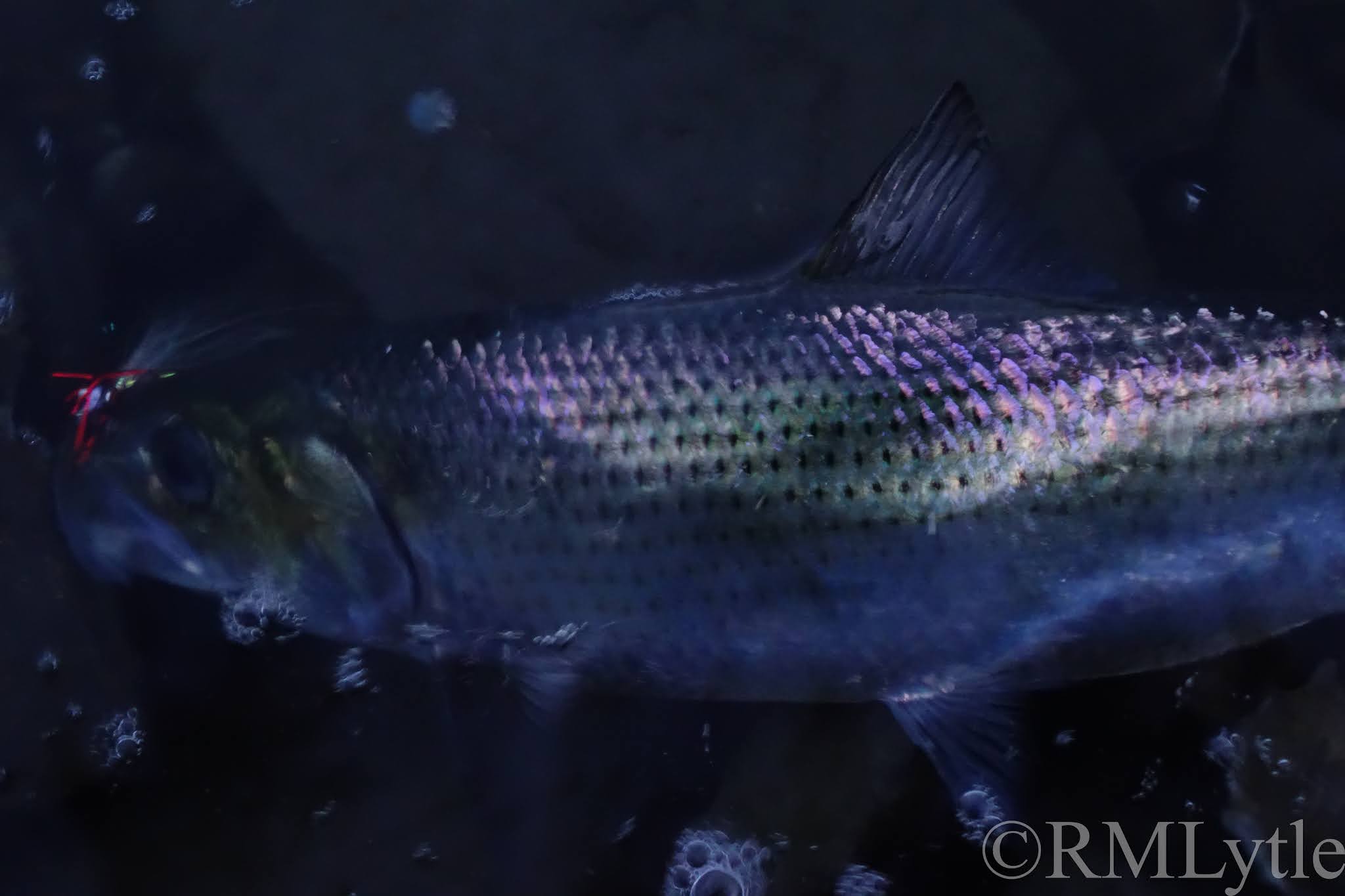
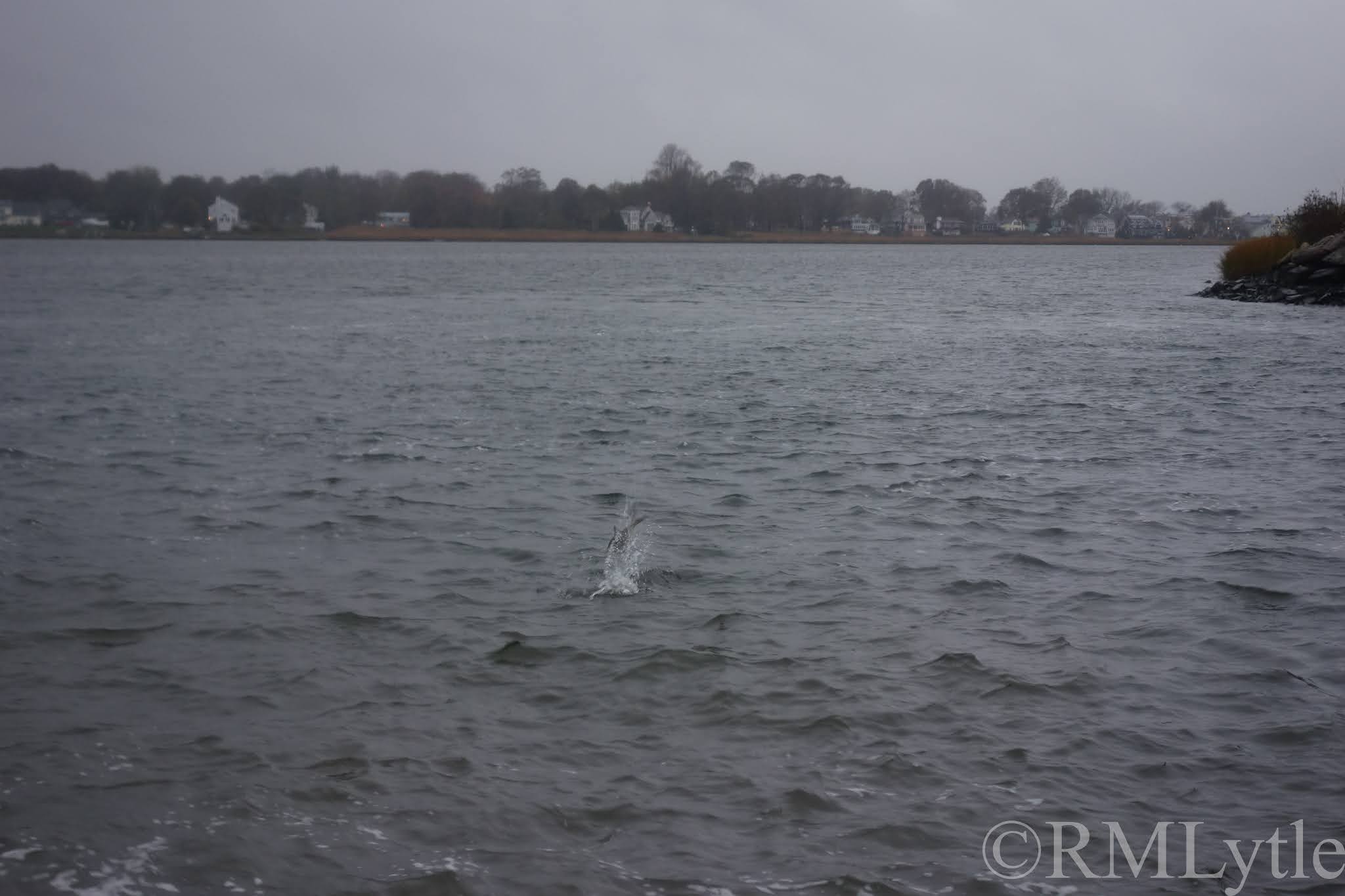
I left with the front of my waders slime and scale caked, but I wasn't satisfied. I wanted to see what I could feel and hear occurring in the darkness. The next day the conditions were different, it was warm but very rainy and windy. This time it was Noah and I. We went straight to the spot, and it was immediately clear that chaos was underway. There were hickories, there were stripers, there was bait spraying and predators swirling in the wind disturbed muddy water. We were into fish right away. The hickories were often leaping on the take, which lead to plenty of missed strikes but was so spectacular it was hard to care. They were doing this to the natural bait too, and at times you could look out over the channel and see dozens of iridescent fish leaping into the air. This was without a doubt one of the coolest things I'd seen all season. 


The stripers were mostly working in a pocket where wind was blowing white bait into shallow water and along a rip rap bank where some schoolies of peanut bunker were. At times they drew my attention away from the shad, and I did catch plenty of bass as well.

Seaducer in traditional colors. This simple old saltwater fly has become such a key fly in my arsenal.


I often break into my stash of black and purple redfish flies when fishing for stripers in murky water, the same sorts of flies I'd fish somewhere like Mosquito Lagoon.

Though the stripers blowing up the in the pocket were exiting, the shad were still the headliners. I had never seen so many of them. 


I rarely seek anything resembling peace in fishing but saltwater fishing especially. Even in the long, quiet nights of spring that sooth my soul after an icy winter, my greatest hope is to have a large striped bass shatter the peace completely and give me an adrenaline rush that will last days. It's days like the second of this great shad blitz that stand out. Wind and rain made simply being outside for an extended period of time uncomfortable and there was so much going on it was almost overstimulating. Noah and I were riding high on the phenomenal fishing. It was gloriously exciting chaos. Peace isn't what I seek when I'm fishing, and though I do often find it, it's the chaos that keeps me wanting more. Because damn, was that ever fun. We caught dozens of big hickories that hit and jumped like madmen and we were the only ones there experiencing that mayhem. I'd like to do that again some day. 

Fish for the love of fish.
Fish for the love of places fish live.
Fish for you.
And stay safe and healthy.


Thank you to my Patrons; Erin, David, John, Elizabeth, Brandon, Christopher, Shawn, Mike, Sara, Leo, C, Franky, and Geof for making Connecticut Fly Angler possible. 

Friday, December 11, 2020

Small Flies and Double-Handing for CT Broodstock Salmon

 The early season for CT broodstock Atlantic salmon the last few years has come with very low warm water. These conditions are less than enjoyable and prevent me from fishing for these salmon the way I really want to: traditional flies, swinging, spey casting. Though this isn't a real salmon fishery, I like to fish it like it is. About the only upside of the early season low water and warmth is the opportunity to get the fish to take a dry fly or riffle hitched wet, witch of course still falls in the bounds of classic Atlantic salmon tactics and is also very exciting. This year I was finally able to actually put time into this fishery and go at it on my own, and I badly wanted to get one on a dry. That said I also wanted to catch fish. So when I moved a small salmon twice with a Bomber, then couldn't get it to rise again even after a ten minute rest, I did what I knew would work and two hand retrieved a tiny Mickey Finn over it and the fish quickly obliged. 

Pinkie out for Salmo salar


 The fish was small but a firecracker. It spent a lot of time in the air and tried to make some runs, though it wasn't even close to heavy enough that I couldn't turn it without any fear of my 8lb tippet failing. The take was the highlight, I love when an Atlantic wakes up on a fly that on or just under the surface, and it always feels nice to come tight when two hand retrieving saltwater style. This is an underutilized method on freshwater rivers. I'd picked it's use up for broodstock salmon from my friend and experienced salmon fisherman Ben Bilello (actually my use of basically every tactic in the post should be credited to Ben) some year back and have applied it effectively on both salmon and trout since. Sometimes keeping the fly moving more or less continuously is very important. In this sort of fishing, down and across swinging for fish willing to move for the fly, it means the angler isn't relying on the pace of the current to set the speed of the swing. I can get the fly swinging fast in water it would otherwise be moving uncomfortably sluggish.

The next run down yielded no moved fish to a hitched wet, so I made another pass at it with the same little Mickey Finn. I sent another small salmon airborne there that didn't stay pinned. Later on, I moved another with the bomber before it went silent until, again, a two handed Mickey got it up and stuck. Once more it was a fantastic fighter though not at all a big fish. 


Always pinkie out.

My confidence with fine wire hook size 10-14 Mickey Finns for early season broodstock salmon is three fold. First off, red and yellow can do no wrong with these fish for the first month and a half of the short season. Second, small fine hooks are much easier to bury in a fish's mouth. Third, once they're in the fish they're more inclined to stay there. Perhaps some of this confidence originates in the first adult salmon I caught, my only true sea-run Atlantic, which was taken on a size 14 Sedgehammer. In low water the salmon are more inclined to notice and strike such a small fly, so it is a good move to take advantage of this and set your presentation apart from the crowd of big flies, spoons, and spinners these fish are being bombarded with as well as something more likely to get a good solid hookup. 

Fish for the love of fish.
Fish for the love of places fish live.
Fish for you.
And stay safe and healthy.


Thank you to my Patrons; Erin, David, John, Elizabeth, Brandon, Christopher, Shawn, Mike, Sara, Leo, C, Franky, and Geof for making Connecticut Fly Angler possible. 

Monday, December 7, 2020

Catching Ladyfish and Jacks in Connecticut

 Over the last few years I've encountered a number of generally considered southern species that find their way into Connecticut waters in late summer and early fall as ocean temperatures peak. I've caught blue runners, banded rudderfish, and Spanish mackerel, and seen cobia and mangrove snappers. This year was an exceptional one for such vagrants locally: abundant cownose rays and Spanish macks in the western sound, frigate mackerel in RI and and even Eastern CT, and plenty of other anomalies. I lucked out with one frigate mackerel and saw some banded rudderfish but didn't really get in on the action until October, when the cooling temperatures lead the less tolerant fish to either leave or seek what warm water they could find. It was a day like many other October days, except instead of finding stripers blitzing Noah and I found jacks and ladyfish along with uncountable Atlantic needlefish and the odd Spanish mackerel.

At first it was all needlefish. There were hundreds if not thousands of them. Any cast got followed by a squadron of these odd shaped monsters, all snapping at any lure or fly we ripped past them. They'd even blast a spook. It was nuts.

Strongylura marina


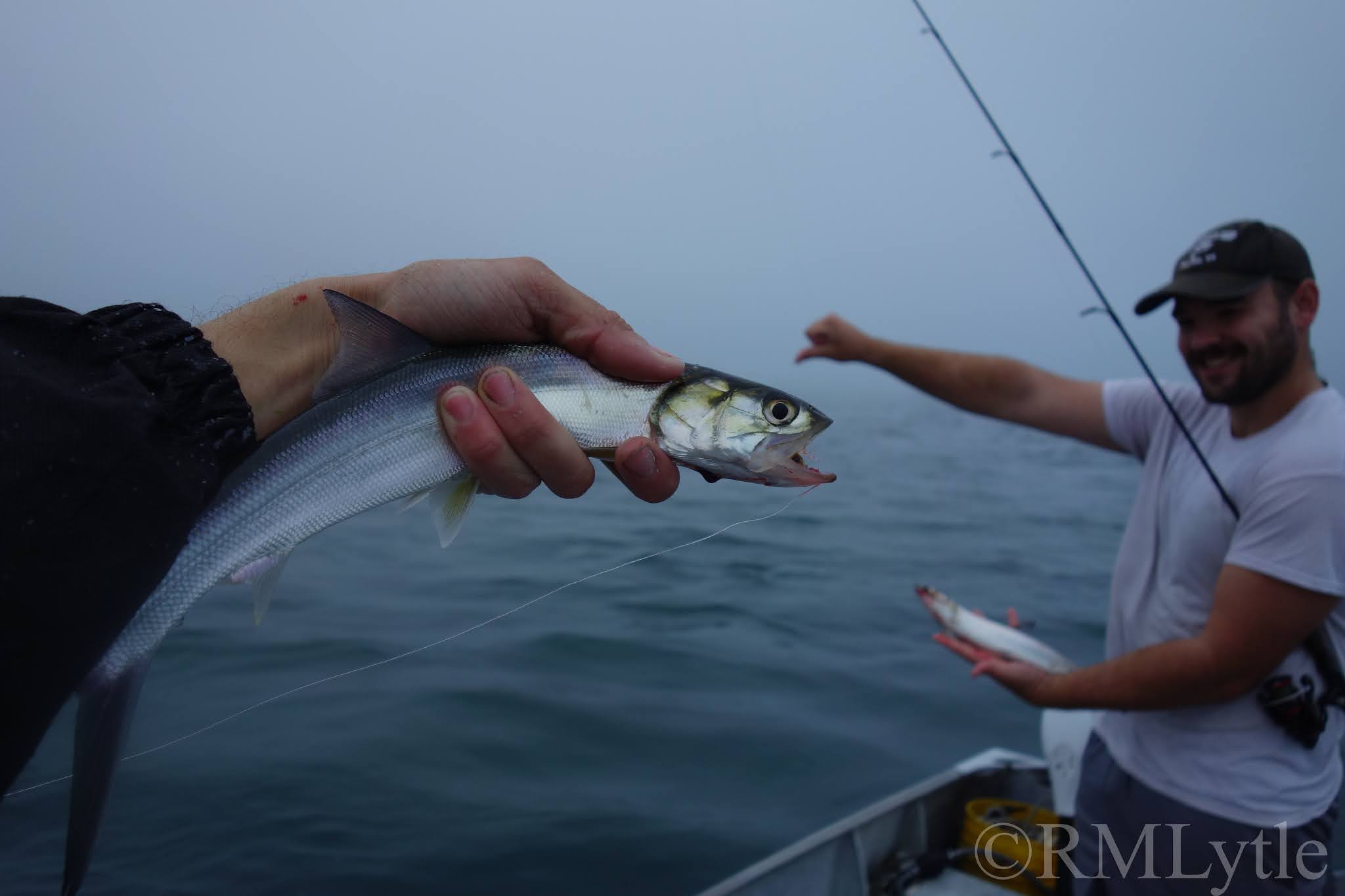
Then came the ladyfish. I'd caught my first ladyfish a few years ago in Florida, where they are a year-round resident and often considered irritating, sometimes even trash fish. Of course I quickly fell in love with these acrobatic silvery fish. Catching them locally is something I've long known was possible and has been a goal of mine, I was very pleased to see it come to fruition. Soon ladyfish were making their way into the little Lone Star Skiff with regularity, including at least one that jumped into the boat still green. Noah and I were having a hysterical time catching these high flying fish, in greater numbers than we ever got in Florida. We'd never really gotten to savor the experience there, so it was exceptionally unique to catch enough locally to really get a good feel for it... and these fish are seriously fun. There's nothing in New England waters that fights quite the same. Bluefish and hickory shad don't jump as much or as high, and landlocked salmon don't zip away quite so fast, though they're probably the closest in fighting style.


Noah with the first large one.

If you look at the tail on a ladyfish, it's not dissimilar from that of some of the fastest running saltwater species like bonefish and milkfish. It's not surprising that they fight as hard as they do. It is a little surprising that people don't enjoy catching them more. Sure, they are aggressive and easily duped; and yes their maxillary has a sandpaper texture and can snarl too light a leader, but damn is it a riot when they take off. 


It wasn't long before we became aware of another southerner in our midst when the aquatic equivalent of a swarm of bees followed my fly in... a school of tiny crevalle jacks, and one of them did find steel.

Caranx hippos. On a Woolly Bugger. In CT. 

Yet another member of the Caranx genus turned up just a few casts later, the blue runner. Unlike ladyfish and crevalle jacks this is a species I'd caught locally, and New England is actually where I got my lifer. 

Caranx crysos, blue runner, this one took a gurgler.

The slay fest continued as fish suddenly began to blitz. There were clearly bluefish and ladyfish there but I also saw some scombrid like slashes and jumps. Though I managed to maintain my season long skunking of  larger scombridae and only piked up a few bluefish, Noah managed a nice Spanish mackerel. By now it really felt like we were actually fishing in Florida.


When the blitzes subsided we resumed the ladyfish and jack beat-down along the rocky shoreline. For someone who likes variety, getting these species mixed in with more locally and seasonally ubiquitous ones like needlefish and bluefish was awesome. We were doubling up on ladyfish constantly and laughing hysterically for hours. It was just visually spectacular uncomplicated fun. 


I've been playing around a lot with flies tied on lead and tungsten jigs this year. Their applications for trout, bass and panfish were already well explored but they definitely have application in the salt too.


As darkness fell we weren't sure what would happen, whether the bite would slow or stop, or change at all. It actually improved because the needlefish seemed to stop feeding, and because they are so difficult to hook we were getting a higher percentage of fish hooked and boated once the needlefish stopped biting. They were still so balled up though that I was regularly foul hooking them. I received a few bites from needlefish, they are unpleasant to say the least. I'll lump needlefish in with bluefish, mangrove snapper, and skates as fish that seem to very intentionally try to bite you, and needlefish are very good at it. 

As darkness fell I hooked the biggest of the ladyfish I'd gotten. The initial run was so hard and fast I thought it must be a Spanish mackerel, but when it came up that silver slender form was a nice surprise. This was one of my favorite fish fights this year, actually. And there have been some memorable ones.


The night proceeded with loads more ladyfish and one especially memorable visitation from a huge predator. We left genuinely shaken, but so excited we came back the next day for more.


Those two evenings will surely remain some of my most memorable saltwater days in the northeast. 
I love what I get to do.  
Fish for the love of fish.
Fish for the love of places fish live.
Fish for you.
And stay safe and healthy.


Thank you to my Patrons; Erin, David, John, Elizabeth, Brandon, Christopher, Shawn, Mike, Sara, Leo, C, and Franky for supporting this blog on Patreon

Thursday, December 3, 2020

Catch The Lake

 I am not a "numbers guy" particularly, when it comes to fishing. I routinely seek quality over quantity, be it in my trout fishing; often head hunting or streamer fishing rather than nymphing or fishing a dry dropper; or my striper fishing which especially in the spring revolves around forgoing the massive amounts of schoolies in favor of a shot at 35 inch fish or bigger. I'm ate up with Atlantic salmon and sea run brown trout... if that isn't a quality over quantity game I don't know what is. But that doesn't mean I don't also love to catch an excessive amount of fish sometimes. Conveniently, quantity is also occasionally the avenue to quality. One such occasion sets up on my home lake in the fall. It can still be very possible to catch big bass on the reefs, ledges, and points in the fall, but sometimes the best move is just to go where the biomass is. On this lake, finding the biomass means finding the white perch.


One day this fall Noah and I were having a hell of a bad time on our typical bass spots. After a bit we opted to start hitting areas we knew would be loaded with perch. It was a consolation option, we thought, forgetting that both of us have often caught larger fish; be it bass, walleye, or pickerel while on top of the white perch biomass. 


The first spot we fished didn't produce anything but white perch. After the first few we decided to start keeping. White perch are both delicious and, in CT's landlocked waters, a destructive invasive. While our native tidal anadromous populations are in sorry shape, our landlocked introduced white perch are excessively overpopulated. As such we had no qualms about killing a whole bunch, and soon decided to fill the boat. There is no limit on white perch in non-tidal water in CT, since they are introduced fish, easily overpopulate, and not considered a game species. So we were going to fill the boat. It wouldn't even put notable dent in this lake's numbers, as much as we wish we could. 

After running dry at the first location we wandered a bit before deciding to head over to a spot where Noah had found another pile of perch a week prior. They were still there and we started really hammering them. We were both fishing pretty simple, light presentations. I was running simple streamers tied on 1/32oz Eurotackle tungsten jigs, on two rods: one with an indicator, which I set down and dead sticked, and one that I actively cast and figure eight retrieved. Sometimes I was doubling up and fighting fish on both rods simultaneously. Noah was fishing jigs with strait tail soft plastics. We were really putting a beat down on these fish. It was a lot of fun. 

Then, suddenly, I hooked something that felt different and bigger. From the dark green water a monster black crappie rose up into view. Moments later, Noah hooked one of his own. Finding the biomass had just proven it's worth in locating trophy fish.


We continued the perch slay fest but it wasn't all that longer before I was into another quality fish, this time a smallmouth which put up a hell of a nail biting battle before we got it in the net. This was exactly the sort of fish we'd been hoping for this day. 


As the sun began to near the horizon, we made way to the boat ramp with a literal boat load of white perch, a few yellows, and two trophy crappies and one smallmouth released. In not long we'd be doing the dirty work of cleaning more than 100 white perch so they were freezer-ready. 


Sometimes finding big fish means forgoing small ones, but sometimes it pays to catch the lake looking for big fish... even if most of the lake is 8 inch white perch. There are often big fish wherever the biggest biomass is. 
Until next time,

Fish for the love of fish.
Fish for the love of places fish live.
Fish for you.
And stay safe and healthy.


Thank you to my Patrons; Erin, David, John, Elizabeth, Brandon, Christopher, Shawn, Mike, Sara, Leo, C, and Franky for supporting this blog on Patreon