Tuesday, October 5, 2021

False Albacore Fly Woes: Lizardfish

 My third day targeting tunny I had limited time. I had a short window to fish before I needed to go to work. Fish were present- both bonito and tunny -right upon my arrival. The were feeding in very slick water, often a recipe for picky eaters. I felt I got a few shots the should have been seen but I'm not sure. 

I was fishing with a gartside gurgler. This often isn't pegged as a tunny or bonito fly but these fish love lures that skitter on the surface, so a fly that skitters on top is a logical choice. I've had days where a gurgler really saved me from skunking. Notably, back in 2017 when the tunny were actually numerous and widespread, one of my best days saw numerous tunny in slicked out conditions very willing to eat gurglers but not much else. 


Unfortunately this time my tricks didn't work, at leas not for tunny. What I did get, interestingly enough, was a new species. On one retrieve my fly came in with what initially seemed like weeds on it. Upon closer inspection it was actually a fish! Specifically, and inshore lizardfish. This is a species I've expected in Florida for years now, where they are abundant and at times considered a pest. Instead I'd caught my lifer on a gurgler in 10 feet of water in Connecticut... very strange. 

Lifelist fish #184, Inshore lizardfish, Synodus foetens. Rank: Species

Lizardfish aren't completely unfamiliar fish in the Northeast. They're known to occur in the same are I was fishing most years, though 2021 has certainly seen a relative abundance. Though aggressive lizardfish hunt from the bottom of the water column, as evidenced by their head structure and eye position. They are ambush predators that attack prey from below, concealed against a mud or sand bottom. Adults reach lengths over a foot, with females generally being larger than males. A lizardfish's mouth is full of small teeth, and I imagine being bitten by one would be a little unpleasant. They are  very cool little fish honestly and I wouldn't mind catching more of them.

I've ended up encountering lizardfish repeatedly this season, and that has been quite interesting. But for the third day I had to be content with a couple of them and simply watching the tunny and bonito slip by, unwilling to eat what I was presenting. It was starting to feel like I'd forgotten how to catch these fish, though it was still only the beginning. 


Until next time, 

Fish for the love of fish.
Fish for the love of places fish live.
Fish for you.
And stay safe and healthy.


Thank you to my Patrons; Erin, David, John, Elizabeth, Brandon, Christopher, Shawn, Mike, Sara, Leo, C, Franky, Geof, Luke, Streamer Swinger, and Noah for making Connecticut Fly Angler possible. If you want to support this blog, look for the Patreon link at the top of the right side-bar in web version.

Saturday, October 2, 2021

The Blitz Is On

 The cold north wind really got things going. The bait is flushing out of the estuaries, the bass and tunny are on the move, and there a few bonito and bluefish around too. This is the season of chaos, fast action and visually spectacular feeds. I you'd like to fish the fall run with me, book soon! I'm running trips along the Rhode Island beaches until the end of November. Day and night, weekdays and weekends. Email me at brwntroutangler@gmail.com if you're interested!

Thursday, September 30, 2021

Multispecies Fishing in an Old Maine Harbor

Maine's old harbors can hold an abundance of fish, though in my experience they at time hide themselves very well. Despite absurdly clear water, bergalls, pollock, sculpins and mackerel often hide themselves quite well. Sometimes it takes dropping down a bait, lure, or fly to determine if there are in fact fish present. Then the shapes materialize from them depths and the excitement begins... sometimes. Noah and I struggled the first time we went to Maine. Finding fish turned out more trick than we'd anticipated. A few trips down the line though I've learned a bit and have started to get a bit better at consistently finding something to catch in Maine harbors.

A couple weeks ago I went to Maine with my field herping friend, Bruce, to look for snakes. We found plenty, enough so that by the end of the last day we were satisfied enough to spend hour last hour or so at the ferry dock seeing what swam these water in mid September. We'd already seen some mackerel surface feeds earlier that morning, and there were some on the surface just opposite the dock. What was present at the dock in abundance was large bergalls. It didn't take me long to catch a few of these. 


These were moody bergalls though, and after a little while they became much more shy to the fly. Not being a snob has its perk and I had no qualms chunking up the next bergall I caught and using it as both chum and bait. This, unsurprisingly, resulted in a feeding frenzy that not only got the bergalls fired up but drew in some pollock and mackerel too. Soon I had what one might call a Maine Harbor slam, a few of each species on both bait and fly. I was using the 1wt, of course, and the fights were tremendous. It was a great way to round out a successful trip. 


Until next time, 

Fish for the love of fish.
Fish for the love of places fish live.
Fish for you.
And stay safe and healthy.


Thank you to my Patrons; Erin, David, John, Elizabeth, Brandon, Christopher, Shawn, Mike, Sara, Leo, C, Franky, Geof, Luke, Streamer Swinger, and Noah for making Connecticut Fly Angler possible. If you want to support this blog, look for the Patreon link at the top of the right side-bar in web version.

Monday, September 27, 2021

False Albacore Fly Woes: Day 1

 Little tunny- more commonly but less correctly called false albacore -are one of the most coveted species for light tackle saltwater anglers in the northeast. They are as hard fighting a fish as you can tie into with your feet on dry ground. The're also very pretty. I caught my first tunny in 2016. Then I really hammered them with consistency in 2017. 2018 wasn't bad either. Then I didn't target them much at all through two very poor seasons in 2019 and 2020. I decided that 2021 would be different and have chose to target hardtails at ever opportunity. Welllll... it has not been good. Despite and early showing and quite a few days with good numbers of fish around, I've struggled to catch any. Some of it was poor timing, some of it was bad luck, some of it was me having m head up m own ass when fish actually showed in range. Whatever the story the first month of my tunny targeting went down painfully. This post is about the day it started. 

On August 27th I set out hopeful but uncertain of what to expect, Henri had hit Rhode Island just days prior and I knew there had been some albies caught near Fallmouth just prior to the storm. I hoped the storm had pushed them further west. When I started out, nothing was showing on the surface. I dragged the fly along the bottom hoping to pick up something not so fast while I waited to see some life. I did pick up some fish: small seabass and fluke. 


It went on like that for quite a while. Then, suddenly, at the bottom of the tide, there they were. The shining forms arcing into the air, the violent surface slashes... they were unmistakable. The tunny were here. With my heart beating out of my chest I set off in pursuit. 


Why running and gunning isn't effective


And that's where it all went south for me. The fish were cycling predictably and were feeding on good sized silversides. It was a good setup for success. I, however, had been forced to cast back handed most of the day and had developed some wicked line twist. Once you have severe line twist it's all over. Tangles just keep coming and they will happen the most right when you need them not to. I missed opportunity after opportunity due to the gobs of looped up fly line that constantly formed in my stripping basket. I tried to clean the line (I missed two schools that cam by during that) but it was hopeless. The first day of tunny time had been ruined. 

That turned out to be the beginning not only of the tunny season but many days of agonizing fishing for yours truly. 


Until next time, 

Fish for the love of fish.
Fish for the love of places fish live.
Fish for you.
And stay safe and healthy.


Thank you to my Patrons; Erin, David, John, Elizabeth, Brandon, Christopher, Shawn, Mike, Sara, Leo, C, Franky, Geof, Luke, Streamer Swinger, and Noah for making Connecticut Fly Angler possible. If you want to support this blog, look for the Patreon link at the top of the right side-bar in web version.

Saturday, September 25, 2021

Sea Robin Appreciation Day

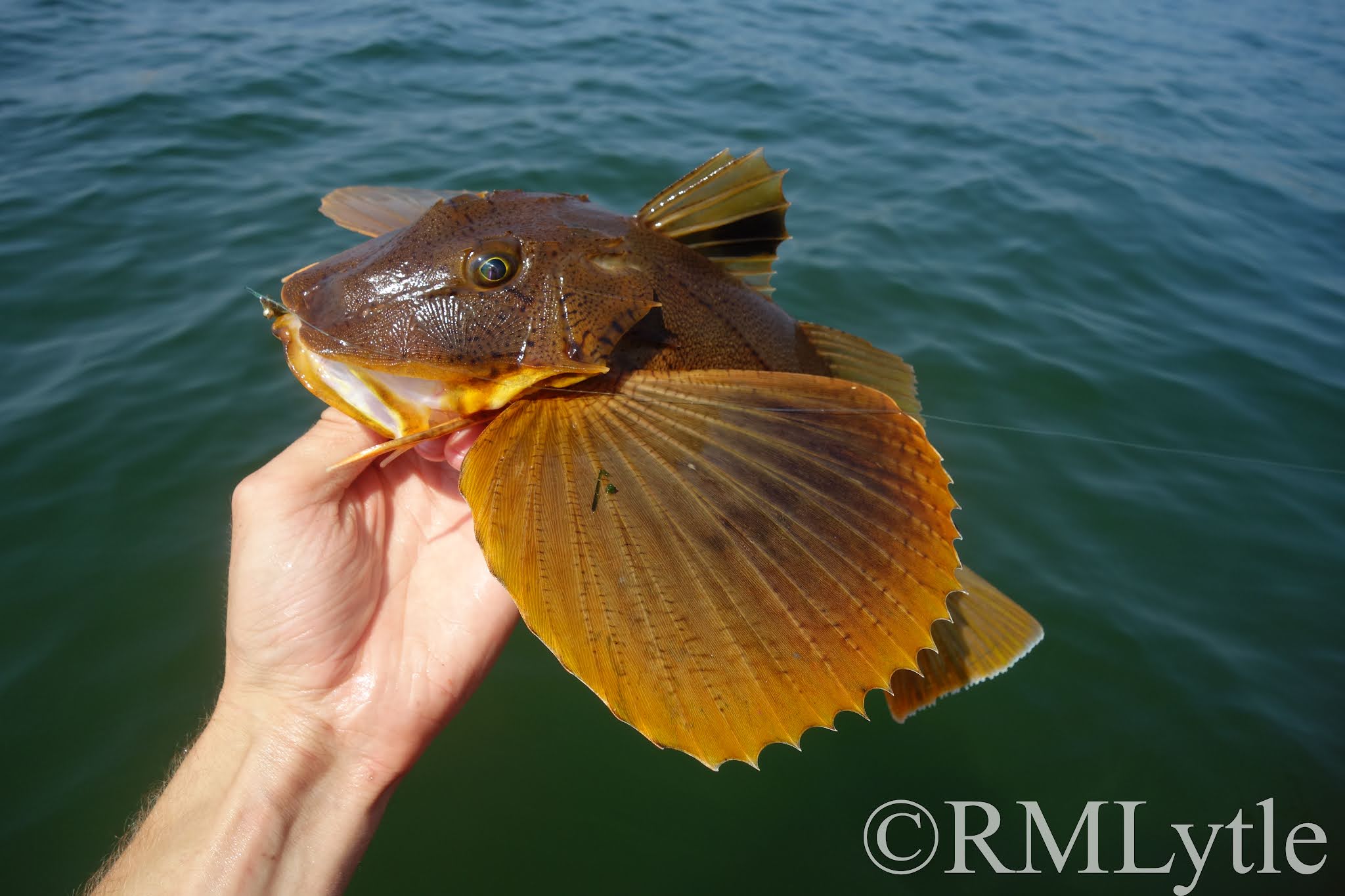
 I'm back folks, and now wellll behind. For the next week or two this blog will still be stuck in summer. And one of my favorite things about summer is goofy orange fish with wings. I didn't spend as much time this summer getting rods bent by casting at sea robs as I sometimes do, but I did have a couple crazy bites. 

Sea robins get a lot of dislike, and frankly I am sick of it. More and more anglers are coming around, but I still find dead striped sea robins left on jetties and dumped on the side of the road regularly. It's disgusting and unacceptable, and as with any fish that meets a similar fate the reasons many anglers treat sea robins in such a manor are based in ignorance and silly entrenched misconceptions. Fluke anglers often hate sea robins as they are frequently the fish they catch most. Perhaps they have no idea that the fish they are releasing is every bit as good eating as the fluke they are after, and a far more sustainable fish to utilize?

Cleaning sea robins is intimidating, I can certainly confirm that. Filleting them is difficult, but well executed it does utilize enough of the meat. Perhaps a better way to do it is to basically turn the fish into a drumstick. This is the video, put out my "The Fisherman" magazine, that I used to learn how to clean sea robins: HOW TO: FILLET A SEA ROBIN.

If you like keeping and eating saltwater species and don't already eat sea robins perhaps you should! Diversifying our take and easing pressure off of over-harvested species like winter flounder, fluke, stripers, bluefish, and tautog can only benefit things. I've found that fresh sea robin bled and kept on ice tastes every bit as good as fluke, and there are certainly a lot more sea robins around. The species spawn repeatedly throughout the season, leading to their high abundance. However, responsible and conscious angler should release the very fat, large individuals. These are almost always egg filled females, and they'll bear no more meat than a male of the same length but lesser weight anyway. As with an fish holding onto a strong spawning stock is important; I'm promoting harvest not depletion. 

Another critique I hear about sea robins is that the are ugly. And, frankly, what!? That's just dumb. Look at these things. Look at the colors, look at their wings! Look at those cool little legs! I'll never understand the beauty standards anglers hold for fish. I think sea robins are one of the wildest, prettiest, coolest looking fish we have around here!

We should all learn to be a bit more appreciative of the fish species that aren't popular. Man of them fight hard, some of them taste good, some of them are just really really cool. All fish are important both as species and as individuals when present within their native range, and it's about time more anglers learned to know and respect ALL of the species the catch. 

Until next time, 

Fish for the love of fish.
Fish for the love of places fish live.
Fish for you.
And stay safe and healthy.


Thank you to my Patrons; Erin, David, John, Elizabeth, Brandon, Christopher, Shawn, Mike, Sara, Leo, C, Franky, Geof, Luke, Streamer Swinger, and Noah for making Connecticut Fly Angler possible. If you want to support this blog, look for the Patreon link at the top of the right side-bar in web version.