Tuesday, February 14, 2023

Drug

One of many spell in the fall of 2022 that I spent living out of my vehicle started with eating tortilla chips and queso in a park and ride. The tide wasn't what I wanted just yet for the one spot I'd intended to fish in the dark that night, so time needed to be killed. I threw on a podcast, got comfortable, and put calories in my body. The inside of my 4Runner probably didn't smell especially savory that night; with multiple saltwater soaked items of clothing drying in the back and my own sweaty, haggered self in the driver's seat. My overall mental state at the time reflected that of a fish obsessed hippy. I was nominally single, still occasionally hooking up with my ex but not bound into a time consuming relationship. I was guiding sporadically. My rig was finally behaving itself after half a year of mechanical problems. This was subsequently be my first fall run with my own vehicle, no partner, and no job. This was the first fall run during which I could do what I'd always wanted to do for years- live at the whims of the fish, tide, and wind alone. The conditions controlled what I did, not anything else. I had grown a tight little network of other anglers of the same mind and similar situational freedom. Our focus was honed on one of the most spectacular natural events on the east coast. The mass migration of baitfish was already underway and the predatory fish and birds were snapping at their heals. Those of us who simply couldn't resist the call of such spectacular biological occurrences came from all corners of the northeast and convened at our chosen churches, a fishing pilgrimage, if you will. Some worshipped on the sand beaches and long jetties of Rhode Island. Others boarded boats to pray from within the melee. I myself would be headed to my place of prayer in a short time, a rocky bit of shoreline in Eastern Connecticut where an estuary emptied into the sound. As I polished off my bag of chips, I saw that it was around midnight- almost time for the mass to begin -and dawned my ceremonial garb. I slipped neoprene socks onto my feet, and a beaten pair of sneakers over them. I tightened the belt of my khaki shorts and threw on a salt stained navy blue hoody. Into a sling pack went a few wallets of flies and some spools of heavy tippet. 

I parked a fair distance from the spot and outside of an open gate. Despite the fact that it was already late, I knew there was a fair chance this gate would be closed by the time I got back to the parking lot. A police officer had already had already warned me of this likelihood a few weeks prior when the tide timing was similar. I didn't at all mind adding to the walk anyway. The darkness enveloped me as the street lights began to disappear behind the trees and a sense of calm arose. In time, the pavement under my feet gave way to sand, then the sand to rock, then the rock to slat water. Wading into the inlet, I could hear the occasional pop and swirl of schoolie striped bass feeding on silversides. Affixed to the tippet at that time was a white Tabory Snake fly, a scraggly looking offering that I'd swing in hopes of drawing attention from a larger, more opportunistic predator. Bypassing the shallow feeding schoolies, I maneuvered the edge of the rocks out to the very mouth of the inlet. There, the estuary emptied out over a sandy delta into a deep area. Behind my lay a large bar on which stripers often roamed. In theory, the outgoing tide and baitfish in the estuary mouth might draw bass either from deep water of the rock bar to feed in the current plume. My second cast was greeted by a jarring strike. Not a bass though. The fish went airborne shortly after the hook-set. It jumped repeatedly and made spastic, energetic runs. This was certainly a bluefish. That poor Tabory snake fly stood no chance. 

After encountering that toothy critter, the destroyed Snake Fly was replaced by something more durable and I was treated to a pick of modestly sized bluefish for the rest of the tide. Though the bite was nothing to write home about, a few fish got the Tibor to sing nicely and the rod stayed bent for an hour or so. Who could complain about that? I made my way back to the parking spot exhausted and satisfied. Sleep would be minimal, though, as the sun still rises early in September and I had no intention of missing what would likely be a fiery false albacore feed right after dawn. 

I caught a couple hours right there in the parking lot, moderately comfortable in my fully reclined car seat with a pillow supporting my back and a blanket hiding my face from the one glaring streetlight. I moved an hour before sunrise just to be close to where I'd fish and got one more hour of rest before the light of the new day filtered through the fogged up windshield. Cracking a can of peanuts, I stretched and yawned. Almost reluctantly I climbed out into the morning air, binoculars in one hand and breakfast in the other. From the roof of my truck I'd eat my "meal" and watch for the first signs of fast fish. Before the first rays of sun even graced the Sound's lightly choppy surface the tunny were sending spray and piercing the waves out in the deeper water. I hurried my pace and called my friend Alex. There's a stretch in there that my tired mind did not commit to memory, but I cannot possibly forget the highlight of the morning. I know Alex had caught a rather nice striped bass on an Albie Snax and I'd lost one of his creative popper flies to a substantial blue, the I looked a point over and saw birds working in tight. Reluctant to make immediate moves, I let the situation fold out a bit longer. In time though it seemed there was no reason to stay where I was. I waved to Alex, who was further way and likely couldn't see the action from his position and began scampering across the rocks towards the unfolding blitz. I got out in front of the mayhem, tunny still blasting through the silversides just off the rocks, and fired a gurgler out into the fray. A mere few casts later I was treated to the sight of a tunny, shimmering like something carved out of a block of chrome with blue and green reflecting off of it's surface, blasted through the surface and engulfed the skittering fly. I was tight, and soon Alex was too. Any sense of exhaustion or lingering effects of car sleep melted away as though it were the backing leaving the reel as the tunny ran, taking every other problem in my life with it. There are a lot of different kinds of drugs out there and this, well this is mine. It's cliche, it's overused. But some of us sleep in parking lots, ruin relationships, and risk mental and physical health to pull on fish. Our brains crave the chemical stimulation enforced by evolving to predate, to acquire sustenance, and we take advantage of it to feel good, to get high for a moment in time. Some of us get addicted to it. It's not as dangerous as some other drugs, but it can still effect our well being. I must say, sometimes I just don't care. I'd rather look for that next high, and I feel I get so much enrichment through the process of hunting it. Moderation is good though. Sometimes you have to go home and sleep in a real bed.. Eat real meals. Foster healthy relationships. Like many drugs, you can have a moderately healthy balance if you try. Do I?


Nope.


Thank you to my Patrons; Erin, David, John, Elizabeth, Brandon, Christopher, Shawn, Mike, Sara, Franky, Geof, Luke, Noah, Justin, Sean, Tom, Mark, Jake, Chris, Oliver, and oddity on Display for making Connecticut Fly Angler possible. If you want to support this blog, look for the Patreon link at the top of the right side-bar in web version.

Wednesday, February 8, 2023

Leeches on Trout

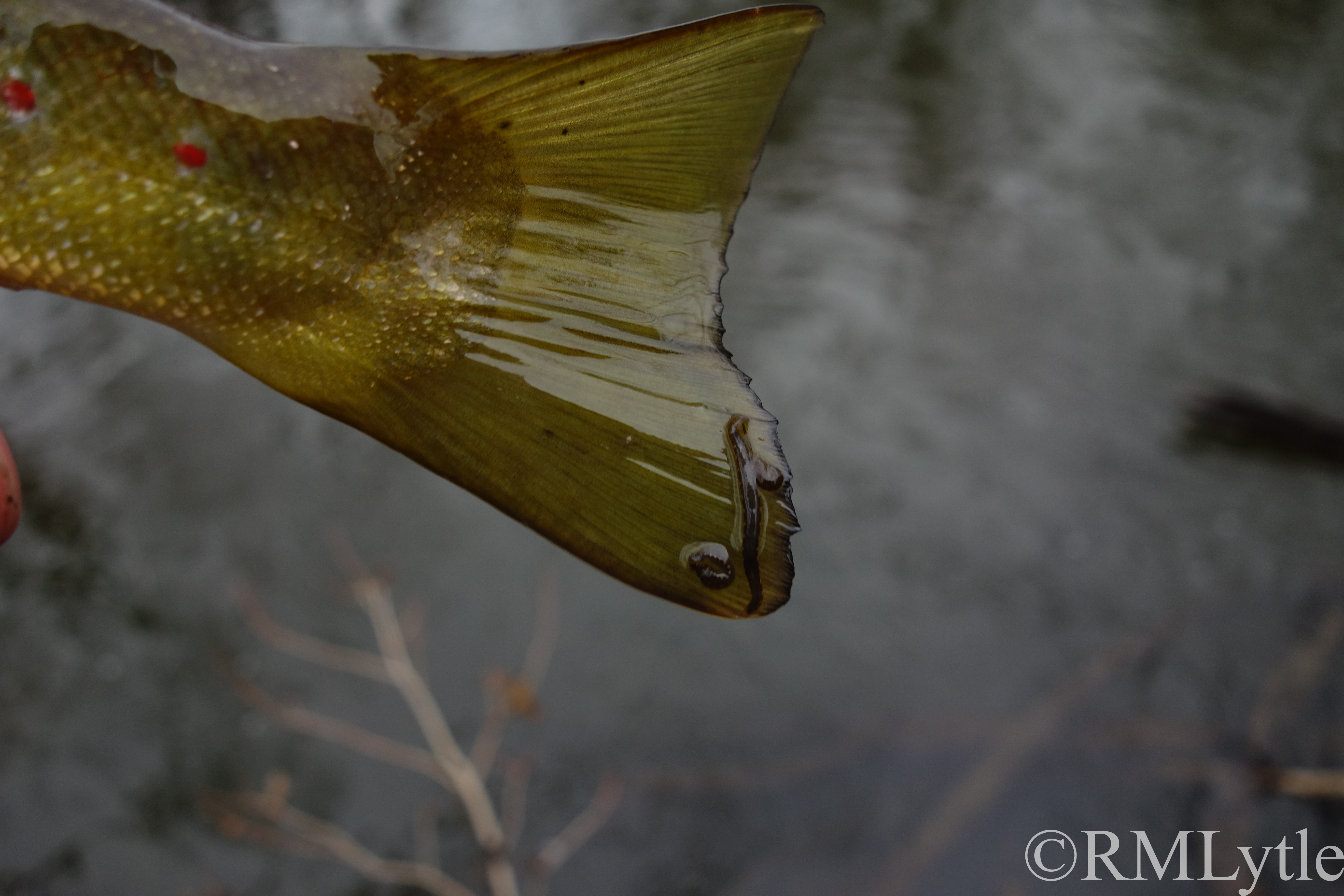
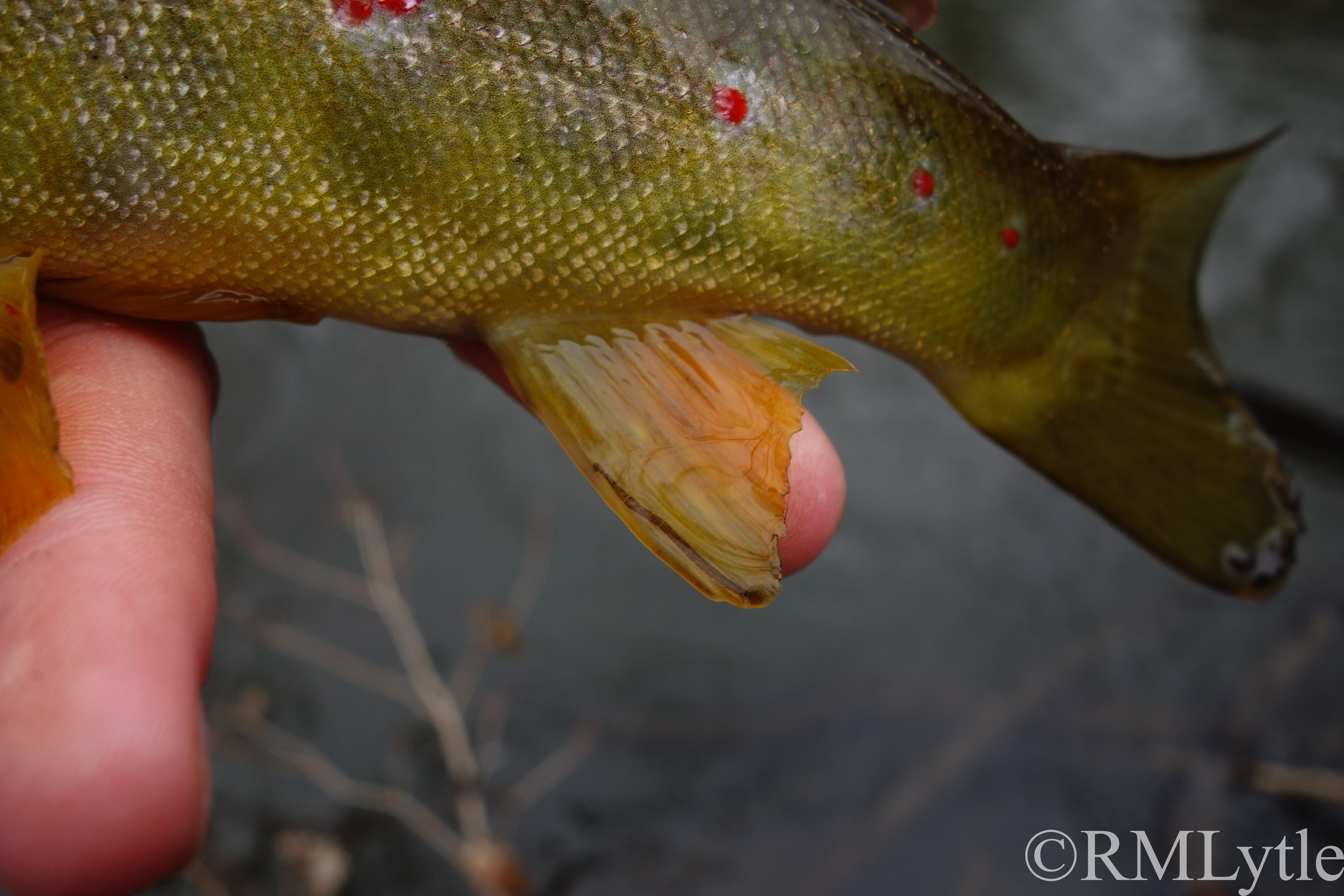
 Have you ever caught trout with leeches on them? It doesn't seem to be a common occurrence for one reason or another, and one wouldn't expect it to be frankly. Most environments salmonidae occupy aren't particularly leech filled, nor do trout and salmon make themselves easy targets for mud and leaf-litter dwelling leeches even when they do exist in the same water in large numbers. I can remember one brook trout, caught in a far eastern Maine beaver pond, that had a couple leeches at the base of its ventral fin. The beaver pond factor made that less than shocking. In fact, when I was done fishing there I picked a few leeches off my legs, and later at the hotel more still that had made it into my boots and through my socks. Leeches are perhaps more expected in beaver ponds than even brook trout, so the two in tandem isn't exactly a shock. But I'd never caught a trout in CT with a leech on it. That is, until a few weeks ago. 

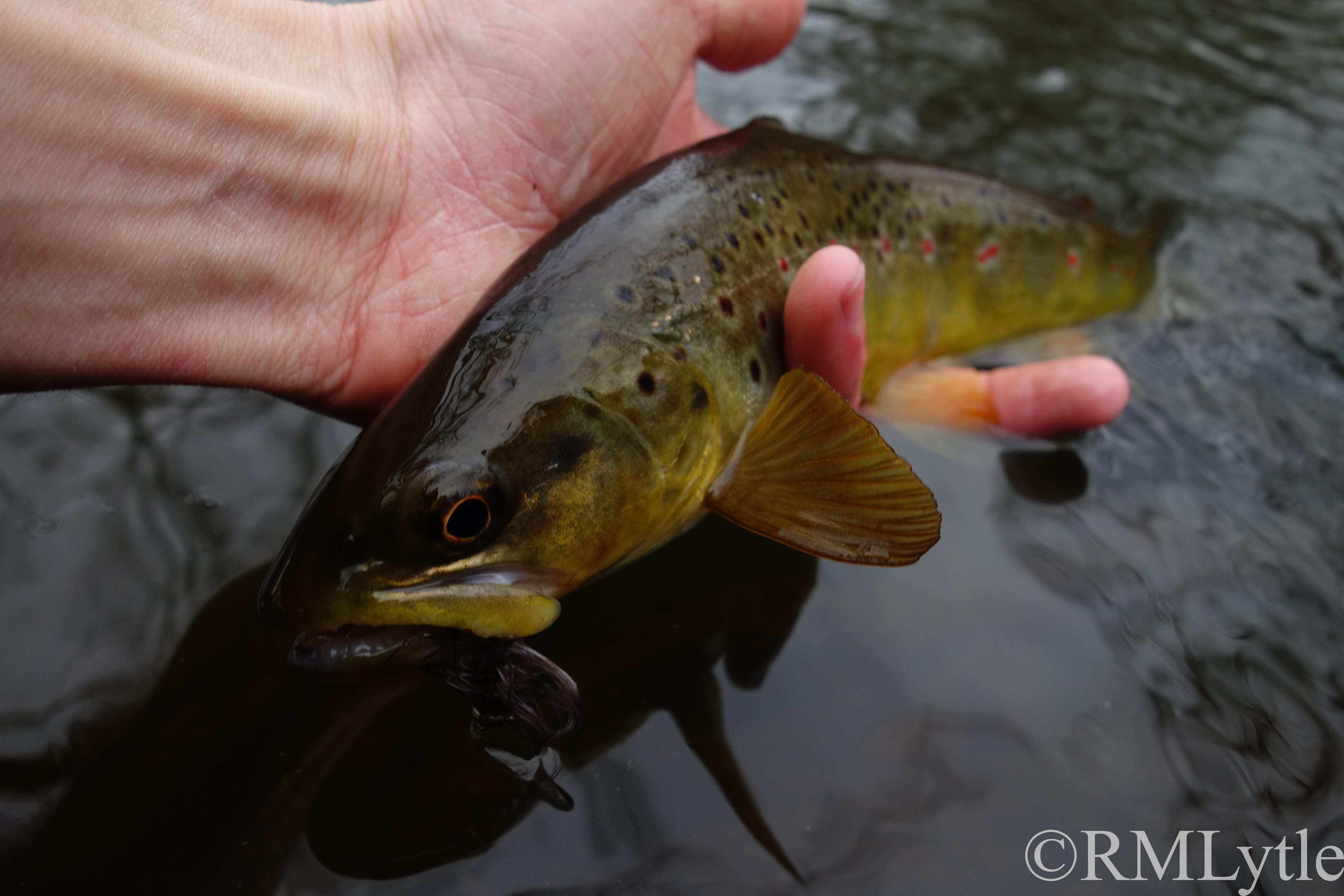
I've been paying semi-regular visits to a classic small CT brown trout stream that I know has the potential to kick out some high quality fish. It's a tricky stream to negotiate, at least the stretch I've come to prefer. Tangles of felled trees make fantastic and necessary habitat. They're also great at keeping anglers out of a lot of water, doubly excellent. I love crawling under, climbing over and clambering through fallen trees and thick brush to explore streams. It destroys waders and other clothes and does a little damage to the skin sometimes too, but I feel it's worthwhile. After negotiating my way through the maze one morning in mid January, I worked the water for a little while before a brown took my streamer. When I got it to hand, I could see that it had some small leeches on its tail and ventral fin. This was the first of three trout I'd catch that day that had leeches on them. One other fish didn't have any. Given the notable absence of leeches on trout anywhere else I'd fished in CT, I found that noteworthy. 


So what does it mean? Well, I don't know. It likely speaks to the nutrient levels of the stream, and certainly to the substrate. A lot of the stream bed there is fine sediments and mud, goods habitat for some leech species. Whether the leeches are having any notable impact on the trout themselves, I'm not sure. The easy leap is that parasite=bad; but that isn't completely accurate. The trout these leeches were on were no worse for wear. If there are more leeches in this stream than is typical they may in fact make up a substantial portion of their diet. But really, I'm not sure. All I can say is I don't generally find leeches on trout so to see so many on a high percentage of the fish I caught in one day seemed interesting. What do you think?


Thank you to my Patrons; Erin, David, John, Elizabeth, Brandon, Christopher, Shawn, Mike, Sara, Franky, Geof, Luke, Noah, Justin, Sean, Tom, Mark, Jake, Chris, Oliver, and oddity on Display for making Connecticut Fly Angler possible. If you want to support this blog, look for the Patreon link at the top of the right side-bar in web version.

Thursday, February 2, 2023

Belly Crawlers

 The drone of late summer cicadas and crickets pierced the hot summer air as I crept around the periphery of a grimy looking pond in Rhode Island. This was the sort of water that might make many fly anglers cringe or scoff. It was trash filled, murky, and heavily impacted by a couple centuries of human encroachment, industry, and neglect. In fact the fish I was after in this pond, Cyprinus carpio, had been introduced by Europeans and hadn't exactly helped the natural landscape. Lightly put, this place was a mess. But it was a mess among which I'd found very enjoyable sport. The carp in this pond varied from wonderfully ornate mirrors with a variety of scale patterns to large, chestnut colored commons. When the conditions were right these carp came into the shallows to feed and there I could stalk and cast to them with light fly tackle. Along one particular stretch of this pond, the fish would regularly come up so shallow that their backs would be out of the water as they fed. Belly crawlers, I call them, borrowed from the redfish world. These fish would be keenly aware of disturbances in their periphery. Carp seem to know how vulnerable they are in extremely shallow water, as most fish do. Though their field of vision outside the water is restricted to a tiny window because their eyes are so near the water's surface, sounds and vibrations could quickly send them scurrying into the safety of deep water. 

I slowly approached point around which I could expect to encounter belly crawlers. It was actually just a shallow gravel bar that emerged as a dry, vegetated point during low water conditions. Its gradual slope created a flat of sorts on either side. Though I could never figure out why, the fish favored the eastern side. It was about a 5/1 ratio; fish I'd see on the east side to fish I'd see on the west side. Even from 40 yards away, now, I could see three carp on the east side of the point. Two small ones, one sizable. Each wallowed in the muddy, weedy flat rooting for macro invertebrates, dead things, anything they might be able to eat. This was the picture perfect scenario, a fly-carper's dream. Though none of the fish, even the largest, was a particularly large individual, this was the ideal set-up to get fantastic visuals and present a fly to a carp in water just inches deep. I crept into position, careful not to step on anything that might make a loud crack. I used the low brush of the island to conceal my own silhouette, rather than standing plainly visible against open sky. I knew this would be a one fish deal, so I focused on the largest while trying not to spook the other two. I knew I could get very close to these fish without spooking them as long as I was slow and extremely quiet. I remained low and edged closer bit by bit as the fish continued to feed. Once in a good position, I watched and waited for a clear shot. almost like a hunter waiting for a buck to make its way out of thick brush, I needed my target common to move out of the weeds and into an open spot. It would eventually, and a clear shot could be had. Cast too soon and I'd risk hanging the fly up in the weeds and potentially spooking the fish. So I waited, patient but slightly on edge, for the fish to move into a gap in the weeds. Eventually it did. I raised the rod and made a short and gentle cast, landing the fly a few feet beyond the fish. I then lifted the rod and drew the fly to the fish before letting it fall just inches in front of the carp's mouth- a drag and drop presentation. The carp confidently moved forward and flared its rubbery lips, taking in my hybrid fly. I set the hook sharply and the battle was on. The fish never preformed a long run but dogged hard in the weeds, thrashing at the surface than diving down and into the brownish vegetation. It was a relatively short battle, but the belly crawler soon came to net. 


That was far from the only carp I cast at that day, nor was it the only one I caught. Each presented its own challenges and was a memorable catch in its own right. That's one of the wonderful things about sight fishing. You take in so much information, so many visuals, and it can really cement an experience in an angler's memory. Even in a dirty, trash filled New England pond. 

Thank you to my Patrons; Erin, David, John, Elizabeth, Brandon, Christopher, Shawn, Mike, Sara, Franky, Geof, Luke, Noah, Justin, Sean, Tom, Mark, Jake, Chris, Oliver, and oddity on Display for making Connecticut Fly Angler possible. If you want to support this blog, look for the Patreon link at the top of the right side-bar in web version.

Thursday, January 26, 2023

Overpressured

It's a warm spring day on a famed New England trout river. There's little wind and between clouds the sun warms the bottom of the river. In a gentle ripple no more than two feed deep sits a wild trout. She is an old fish with a couple of spawns under her belt and a decade of surviving the changes, both natural and unnatural, that has taken place on the river of her birth. She carries battle scars from some of the trauma she had survived. Notably, her maxillary are both in varying states of damage. As any trout does, she eats without complete understanding of what she's ingesting and many times throughout her life she has eaten things that weren't food. Some of these things were sharp and attached to a barely discernible line, and though the odd large animals that pulled in that line always let her go, the repetitive catching had completely destroyed the trout's jaws. The maxillary was an important part of the trout's anatomy for feeding and the damage had made not-insignificant difficulty for her ability to obtain nutrients. In fact, those large animals regularly effected the trout's feeding. She'd learned to be more discerning in what she chose to eat because each time she'd made the error of eating one of those artificial items she was forced to struggle and exert a lot of energy. To avoid that the trout had become extremely careful, to the point that she'd sometimes even reject real food items. At this very moment a Hendrickson hatch was in progress. Duns like tiny sailboats rode the turbulence of the riffle but the trout stayed down near the bottom. The consistent disturbance of the large animals had forced her into feeding different feeding habits. She didn't feed from the surface as much, she picked different lies, and she fed less during the day than she otherwise would. Much like the need to be more picky about what she mouthed this also had a small but present effect on how much nutrients she could obtain. Though she was doing okay- she was at least alive -she was less healthy than she would otherwise be were it not for those intrusive and ever-present animals. 

Of course, she wasn't the only trout those animals were effecting. Just a few feet away there was a dead fish, slowly decaying and being consumed by caddis larvae. This trout had been hooked poorly by one of the fake food items and even though the angler let the fish go he was bleeding horribly. A few hours later he settled to the bottom a few hundred yards below where he'd been released, completely lifeless.  This trout wasn't the only one to die such a death. It didn't happen every day, but it did happen. Some fish were handled poorly, some just happened to be hooked in critical places, and some were caught and released at times when they were already under extreme stress. Though the trout's little pea brain couldn't comprehend the concept, her life and that of every other fish in the river were negatively effected by every interaction with those big animals. This was life for this trout, though thousands of years of evolution had given her traits to avoid the sort of predators that would always eat a trout if they caught it, she was having to adjust to avoiding a predator that would likely just put her back in worse shape than she was before. It was a strange and foreign sort of pressure for a fish to accommodate. 

The trout's brain also couldn't comprehend the other ways by which these animals impacted her life. The hatch of mayflies drifting over her head was a strong one, but these hatches had become more and more sparse as years progressed. The animals would trod across that bottom day in and day out, crushing nymphs and disturbing habitat. The things they put in their lawns and on their roads would drain into the river with each runnoff and kill yet more bugs. Over time what had been blizzard emergances became more sparse, and the nymphs in the drift became harder to come by as well. This effected fish smaller than the trout as well, and blacknose dace and common shiners had less to forage on. The trout relied on these small fish as forage as well and they at some times critical for her to obtain energy. As the forage base got smaller, the large animals stole the river's water as well. They used it to make their lawns greener and their cars shinier, and to relax and clean themselves after a hard day of trying to fool the trout. When the water made it back into the river, if it did at all, it was warm and often richly nutrified. When the hot, dry summers came this killed more forage and more trout as well. But the animals continued to come to the river in droves doing everything the could to catch more and more trout. some days the trout had to leave her lie again and again as the animals came along and spooked her one after the other. She could hardly catch a break. Of course, she kept trucking along. A trout doesn't really understand the implications of what goes on around it, it just does what it's biological imperatives tell it to so that it can stay alive. It eats, it tries to avoid being eaten, and it makes more trout. It responds to stimuli to better survive. 

The big animals, us, are impactful on trout, and unless we're doing (keyword: proven and effective) habitat projects, re-introducing extirpated forage sources, or introducing healthy nutrient sources (I believe is was Ernie Schweibert that said sometimes the best thing that can happen to a trout stream is for a trout to take a s*** in it, and this does bear out with population densities and average size in many cases), our impact is always negative. The more of us fish, and the more often, the higher that impact is and the more fish we will unintentionally kill... the more stream bed our wading boots degrade... the more redds get trampled... the more trout's behavior gets altered. 


There is a limit to how much fishing pressure a river can take before both the health of the fishery take a hit. Those of us who pay attention are keenly aware of how fishing pressure changes a stream and it always makes it worse. We anglers need to be mindful of this, and in the current world of chasing clout and everyone wanting to look like they slam fish all the time, with anglers wanting to fit into the top of the social hierarchy, its all too easy to lose sight of the impact intense pressure has on any fishery. Either we can accept it and continue to watch the fishing quality and perhaps more importantly the experience quality decline, or we can take personal responsibility for our own personal pressure. And don't do it to be holier than though. Don't do it to brag. Do it because the fishing will be better for the next guy and better for the fish if you only pull one nice trout out of the wintering hole, or leave a few of the heads coming up along the bank alone after you've already had a great evening of dry fly fishing. There are ways to spread out your fishing pressure and still stay out on the water all day and catch a fulfilling number of fish. It's up to each of us to find that way of fishing that both full fills and excites us and reduces our personal impact on the fishery. And I know I could do better, that's my biggest goal this year both personally and as a guide. I hope I can diminish my own personal damage to the resource we all rely on. 

Thank you to my Patrons; Erin, David, John, Elizabeth, Brandon, Christopher, Shawn, Mike, Sara, Franky, Geof, Luke, Noah, Justin, Sean, Tom, Mark, Jake, Chris, Oliver, and oddity on Display for making Connecticut Fly Angler possible. If you want to support this blog, look for the Patreon link at the top of the right side-bar in web version.

Friday, January 20, 2023

Spectacular Vermont Brown Trout

 "Want to give it a shot?" Drew Price called to me from the other side of the creek, knee deep along a great looking pool. He'd just hung his fly in a limb on the near side after covering the pool fairly thoroughly. I figured I had no shot but said "sure" anyway and crossed to his side. The clear, cold flow of this lowland river squeezed the air out of my waders as I made my way over on a gravel bar. This was a stream I'm never fished before, one Drew told me had been really intriguing him as it refused to give up the caliber fish he knew were residing there. Of course this intrigued me greatly. That's the sort of trout stream that grabs and maintains my interest, the sort that I know has large fish but is impenetrable and hard to crack. So of course when Drew asked if I'd like to make the ride up and fish it with him I obliged. 

The initial fishing enforced the idea that this was going to be a tough nut to crack. Access wasn't easy, the water was very clear, and the narrowness and sweeping bends formed complex current breaks that were hard to read. There were also lots of places for a lethargic trout to bury themselves into during the cold- deep cut banks and log jams -that they likely won't come out of all that willingly.  We didn't catch fish through a bunch of juicy looking water. I'd opted to fish a mono rig and a sparkle minnow. I have confidence in Coffey's Sparkle Minnow for wild brown trout just about everywhere, and the mono rig would allow my to flip and sling the streamer in the abundant places where I'd have no back cast room. I moved two smaller trout as we made our way down, both made their attacks the moment after I completely flipped the direction the fly was swimming. But those fish really weren't all that confidence inducing for me, they were small fish and we were covering a lot of water that felt as though it should be producing that just wasn't. Drew wasn't kidding about this place. 

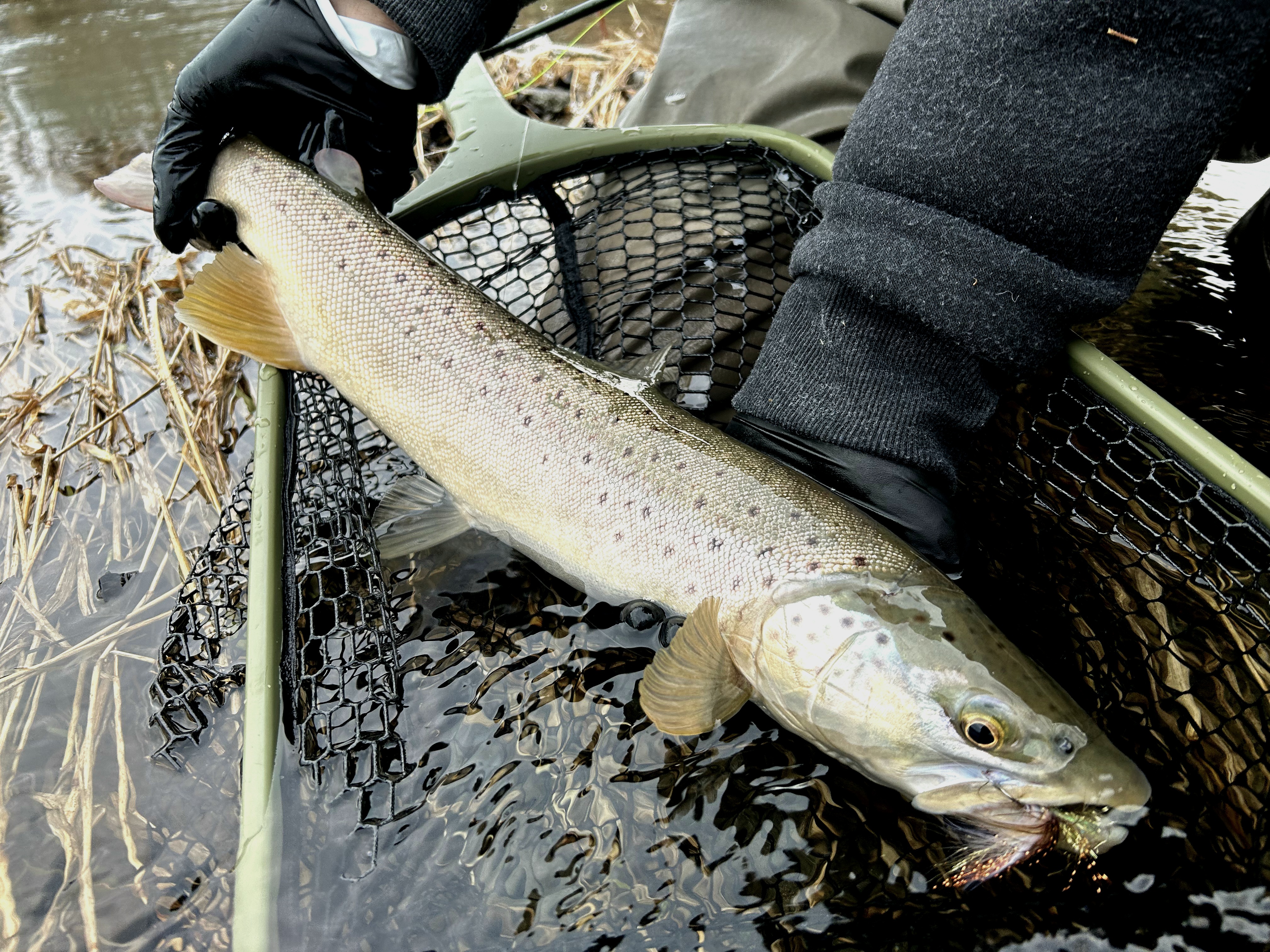
That was what lead us to that deep pool. In that time, the river had gotten under my skin, just as Drew had expected it would. This was my sort of trout stream. And it was about to get a lot more interesting. I eased up the side of the pool where drew had fished and began casting my sparkle minnow toward the head of the pool. I made a few fairly typical retrieves before I decided to switch it up and two hand retrieve as fast as I could. I don't remember how many casts it was before a nice trout made a visually spectacular swipe at the fly just about right under Drew's rod tip. "Shit, I just had about a 22 inch fish take a swipe" I said. It never touched the fly, but I really didn't expect it to come back. I made three more casts before feeling that telltale tension and with urgency stated "there she is!". I made quick work of the fight and Drew got the net under it. We went crazy, both of us- almost incoherent. It was indeed 22 inches, and an absolutely gorgeous and unusual looking trout. It didn't look like any trout I'd ever caught before. It was very pale overall with spectacular light blue cheeks. It was a lovely brown trout and my first over the 20 inch mark this year. A good start to the new trout year if I do say so myself!


Photo Courtesy Drew Price

Photo Courtesy Drew Price

That could have been a start of a roll, but it wasn't really. Drew caught another fish a short time later but other than that I don't know that either of us actually moved another the rest of the day. The water looked great though and I was beginning to formulate methods and approaches. Suffice to say, I'll be back. Likely more than once. Probably many many times. Though that fish was a clincher, there's just something about covering as much water as we did, as much killer looking water, without catching numbers of trout that intrigues me. We know there are fish there. Obviously there are fish there. The question is, how do we catch them consistently? It'll take some time to figure it out I'm sure. 

Thank you to my Patrons; Erin, David, John, Elizabeth, Brandon, Christopher, Shawn, Mike, Sara, Franky, Geof, Luke, Noah, Justin, Sean, Tom, Mark, Jake, Chris, Oliver, and oddity on Display for making Connecticut Fly Angler possible. If you want to support this blog, look for the Patreon link at the top of the right side-bar in web version.