Friday, September 18, 2020

Frigates and Falling Off Boats

 The day started as a simple mission to get a frigate tuna by any means necessary. There was an exceptional abundance of the species in Buzzards Bay, Block Island Sound, and into Eastern Long Island Sound this year, far more than normal. Auxis thazard is a very small tuna species, rarely exceeding a few pounds, and nearly identical to another small scombrid, the bullet tuna, Auxis rochei. Every specimen I saw clear enough photos of caught in New England this year were A. thazard, determined by the height of the corselet under the second dorsal fin. In A. rochei, the corselet is never less than 6 scales. I was with new Noah, here on out to be known as Garth so as to mitigate confusion. There's few people I'm willing to share scombrid rocks with, as they come at a premium in CT, and knowing the times and tides takes time. But Garth had proven to be trustworthy and conservation minded, and I knew he'd appreciate the fish for their rather astounding beauty. I'd already gotten to see him hooked up to a few chub mackerel from the boat, but from shore any scombrid is a different animal and there's nothing quite like your first. Mine was a tunny, so there wasn't much buildup. It was maxed out from the start. But Garth would get to practice on some smaller fish first. It wasn't a chaotic bite from the rocks. I got one chub mackerel and lost others, Garth hooked and lost a couple. A couple hours in I watched my friend Liam hook, fight, and land a frigate. That was the first I'd seen in person. It was a beautiful fish. 

The whole time, Garth was telling Noah that the bite was crazy and that he should get don there. This was absolutely an exaggeration, and we mostly thought it would be funny if he dropped everything and hurried down to meet us. Which he did, with the boat. By that time he arrived the wind machine had cranked up a bit and I was pretty convinced that it would be smarter to stay on the rocks, but I'd also encouraged this so I wasn't just going to leave Noah hanging. That said, when, a big school of frigates began busting in the boat ramp pocket and we were drifting against the rocks, I said "f it" and got up on the bow and started casting, leaving it to the inexperienced Garth to resolve the situation. He did so y grabbing one of the oars and shoving off the rocks as hard as he could. This wasn't the right move, it pivoted the bow out hard and left the stern against the rock. This quick action sent me swiftly into the water. I scrambled back into the boat fly rod first, now thoroughly irritated as well as soaked and fishing I'd just stayed on the rocks. But what was done was done, I suggested we get ourselves in a line of travel of the blitzing frigates, anchor up, and let them come to us. Eventually this did work and I hooked and boated my first frigate tuna. This was my first new fish species in a very long time, and I'd almost forgotten what it feels like. 

Pure joy.

Lifelist fish #165, frigate tuna, Auxis thazard. Rank: species.

That little fish started doing rapid tail beats shortly after I took the first photo of it, basically becoming an extremely powerful little vibrating machine, shaking my whole arm. This is something scombrids do sometimes when removed from the water, but it was the first time I'd seen it. I found it hysterical. The fish didn't stop until I put it back in the water. The release was hilarious, as I decided to simply put the fish back in while it was tail beating. I let go and it made two quick circles before straitening out and rocketing away.

As the tide progressed the number of frigate blitzes diminished and we began bottom fishing, which wasn't easy given the wind. We did get sea robins but not much else. After a while Noah and I began brainstorming and thought about the possibilities of the fishing in some marshy backwater areas we'd found lots of hickory shad in that time of year in years past. We decided to pick up and move, just to see. The same areas had held big stripers and bluefish as well, and numbers of smaller fluke. So there had to be something. What we ended up doing, oddly enough, was something new... crabbing. Just to see if we could do so effectively. With the heads and organs of the sea robins we'd kept as bait, we went after blue crabs because we never had before. And it as fun. We did get a few legal crabs but not enough to justify keeping them. It's good to know though that, if we decided to we could.


As we sped back through narrow creeks towards the launch on our way out, I sat on the bow and dangled my feet, realizing how lucky I was. I've got such good friends, I live in a fantastically diverse part of the country, and I've been afforded the freedom to explore it. Not everyone can say that. Fishing itself has dulled in it's luster for me some recently, partly because I'm just tired of some people and some notable negative aspects of "the fishing community", and more and more I just want to go do whatever I feel like. That's meant I've fished much less recently. But I'm happy. I'm exploring. I finding wildlife. I'm looking for undocumented snake populations, catching crabs, chasing storms, and falling off boats. And it's all great. I put "fish for you" in the footer of every blog post, but the biggest thing I've learned this year is that I haven't really been doing that, even when I thought I was. So this time, really think about what the following means to you, if you haven't already:

Until next time,
Fish for the love of fish.
Fish for the love of places fish live.
Fish for you.
And stay safe and healthy.


Thank you to my Patrons; Erin, David, John, Elizabeth, Brandon, Christopher, Shawn, Mike, Sara, Leo, and Franky for supporting this blog on Patreon.

Saturday, September 12, 2020

Cape Cod Observations (PT. 2)


While seeing sharks while on the outer Cape was the top priority for Ian and I, we still spent a bit of time away from the beach. The environment out there has elements of a lot of different places I've been but doesn't come close to completely matching any of them. It's an extraordinary bit of land.


Add caption


Finding wild growing non-native yuccas is not uncommon, and they often end up in settings they don't look out of place in. Cape Cod is one such place.


"Do you know the muffin man, the muffin man, the muffin man"


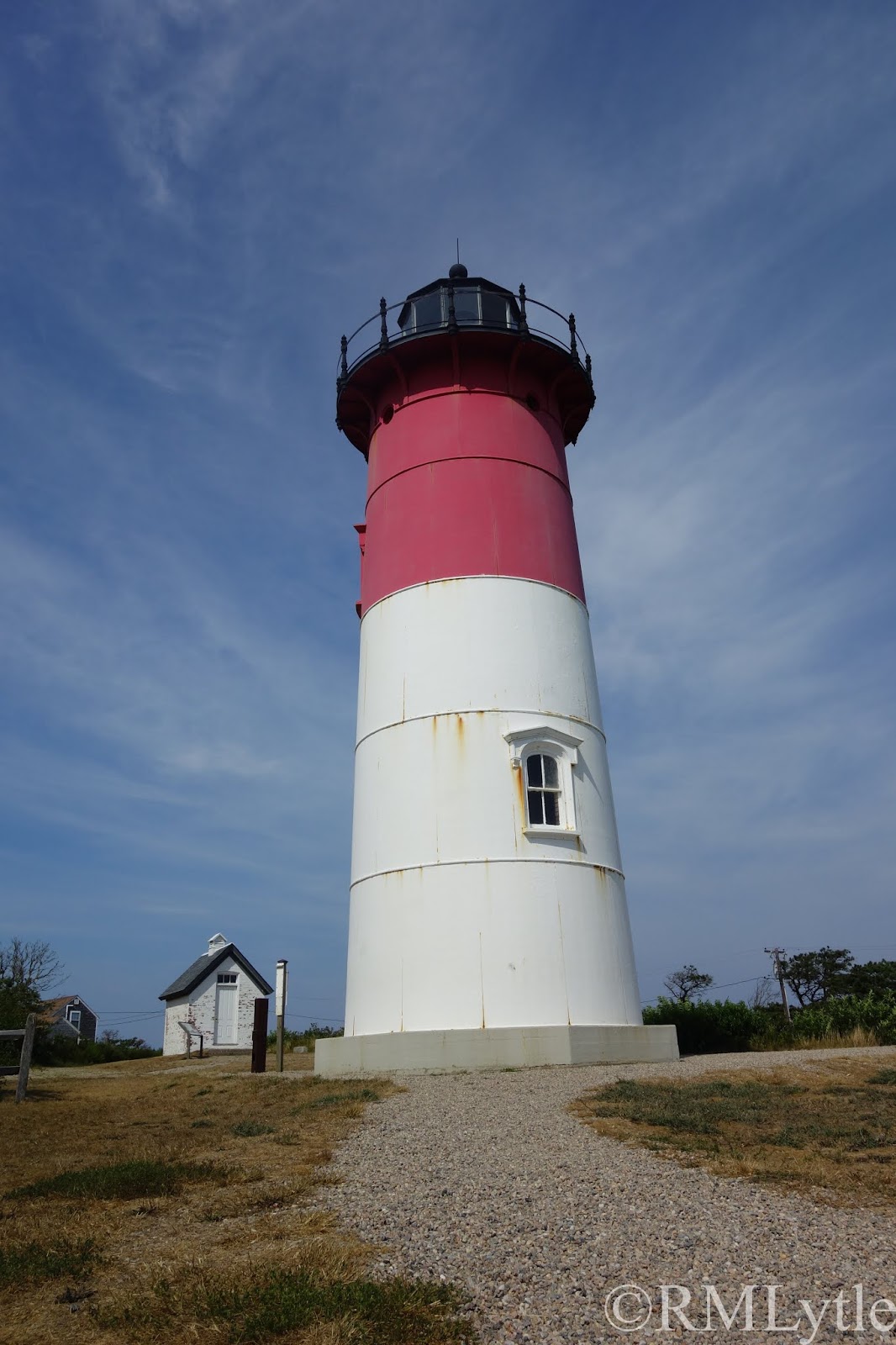
Obviously both Ian and I have a thing for lighthouses.

We worked our way south throughout the day, stopping at different beaches. As things got busier many became inaccessible without a sticker. We checked out some marina areas though. In one we found a substantial school of Northern sennet. This small barracudas are not seen that often, and they're a fish I've wanted to catch for years. 


We picked a specific area to spend the night thinking it wasn't an especially bad spot for a great white to wander by. In retrospect, it seems white sharks aren't as inclined to venture into intercoastal waters as some other shark species.


Well after dark I walked back down to the docks and found some bass feeding in the lights. This was the only time on the trip Ian and I both picked up a rod. Dock light fishing is something very engaging to me, but I hadn't gotten to do any since being in Florida.


Though the first day had passed without any shark sightings, we'd observed a humpback whale from the beach, a lot of birds and seals, and some interesting fish. I felt quite fulfilled, and also like we were gaining some ground in our quest. 
Until next time,
Fish for the love of fish.
Fish for the love of places fish live.
Fish for you.
And stay safe and healthy.


Thank you to my Patrons; Erin, David, John, Elizabeth, Brandon, Christopher, Shawn, Mike, Sara, Leo, and Franky for supporting this blog on Patreon. 

Friday, September 11, 2020

Cape Cod Observations

Observation is something that any good naturalist must be well versed in. I'd argue that the best anglers are usually also good if not great naturalists, and by proxy are excellent observers. That said most anglers are neither great at angling nor great at observing. That's to their own detriment. I myself end up lapsing into lack of awareness too, but I'm also so easily distracted that I just have to see most of what is going on around me and understand it. Often this leads to me putting my rod down. Not long ago, I went to Cape Cod, probably New England's most well known fishing destination, for two days. And though I could easily have spent most of those two days, if not darn near all of them, with a rod in my hand, I didn't want to. My friend Ian Devlin and I were there to fish, but with our eyes. Our quarry was the most impressive fish in these waters. We went to Cape Cod with the specific intention of seeing and photographing a great white shark from the beach. 


We could have gotten on a boat and had a far greater chance as seeing a white shark. We didn't ant easy, we wanted a very specific experience. I think of it in the same way I photograph snakes. When I find a snake my favorite way to photograph it is laying on the ground, very close to the animal, for a low angle tight shot. That's what I wanted to get with a white shark. Tight to the beach, dorsal and tail above the surface, me with camera in hand, keeping pace as the shark swims, sitting down for the lo angle shot. That's my dream, and Ian's as well. Secondary but also incredible would be a higher angle and more distant, a shot from up on the dunes looking down on the beach. 

Ian and I are cut from a similar cloth. I can think of very few people I know that I would rather have gone on this sort of mission with. Our mindset was going to be pretty much the same, and that is key to accomplishing the goal and enjoying the process. We were just going to go observe and try to take in as much of the surroundings of the outer Cape as we could. We'd play it by ear, learn what we could, and if we didn't see a white shark we'd have a fair understanding of the lay of the land and a better action plan for our next attempt. Also, most other people I know wouldn't have the patience and persistence to try something quite frankly extremely unlikely when there is so much else to do on Cape Cod. I myself am easily distracted, and I was sure Ian being there would make it easier for me to stick to our plan of attack and not veer off course looking for snakes or striped bass for too long.

From here on out, I'm going to keep the writing in this and the second and third posts about this trip very minimal. It's essentially just going to be foot notes and photo captions. I want this to be a mostly visual journey, because that's what it was for us. 


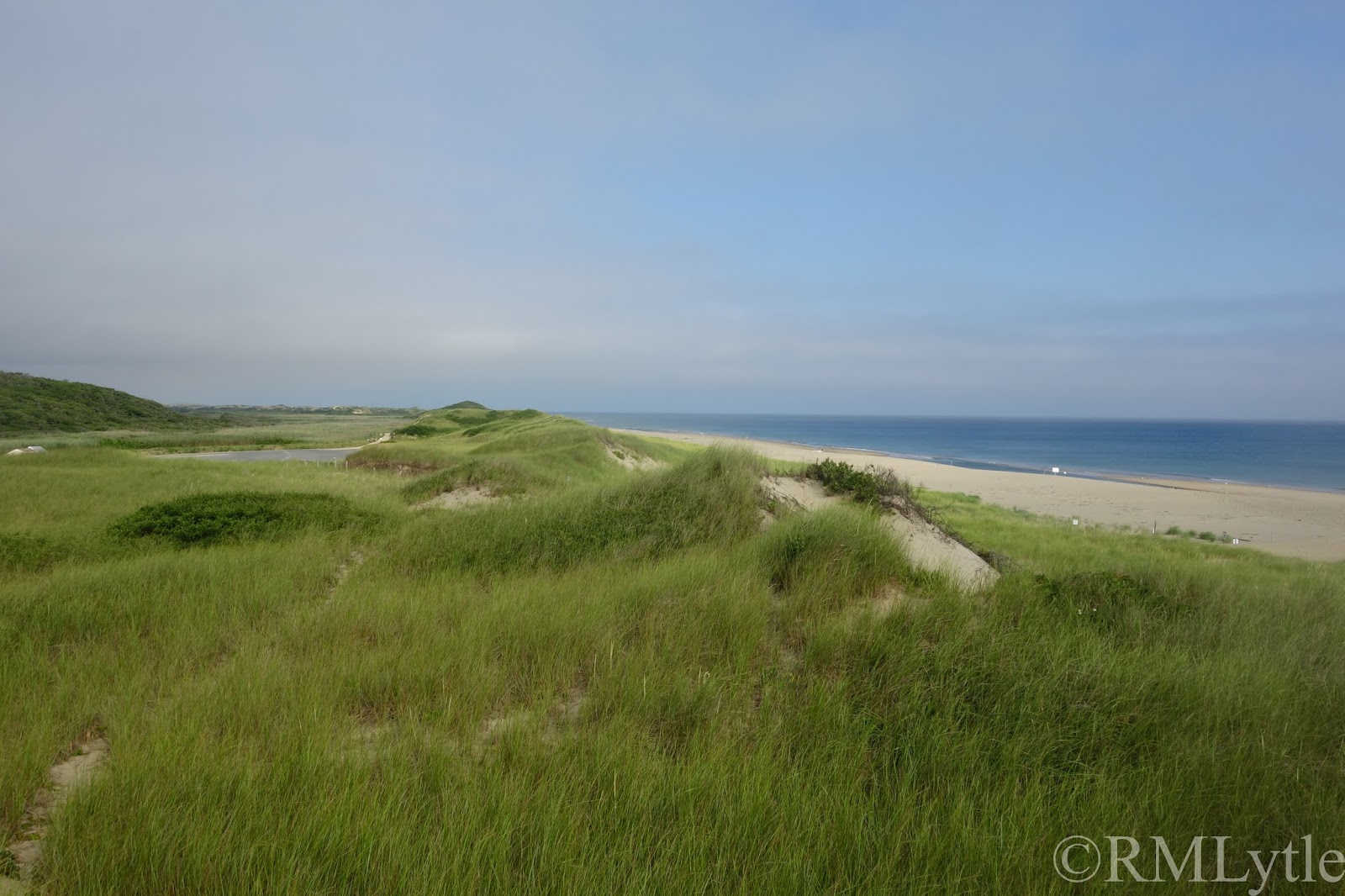
This was both Ian and my own first time on the outer Cape, and size and extant of the dunes was genuinely stunning.


The beach structure was like nothing I'd ever seen: huge long sand bars, a deep first trough, and incredible ocean holes.


Though we did see lots of seals and some large colonies, to both Ian and I it seemed like the number had been far overblown. It's my opinion that there's no "seal problem" at all on Cape Cod... these animals have simply become and easy scapegoat for fisherman. 

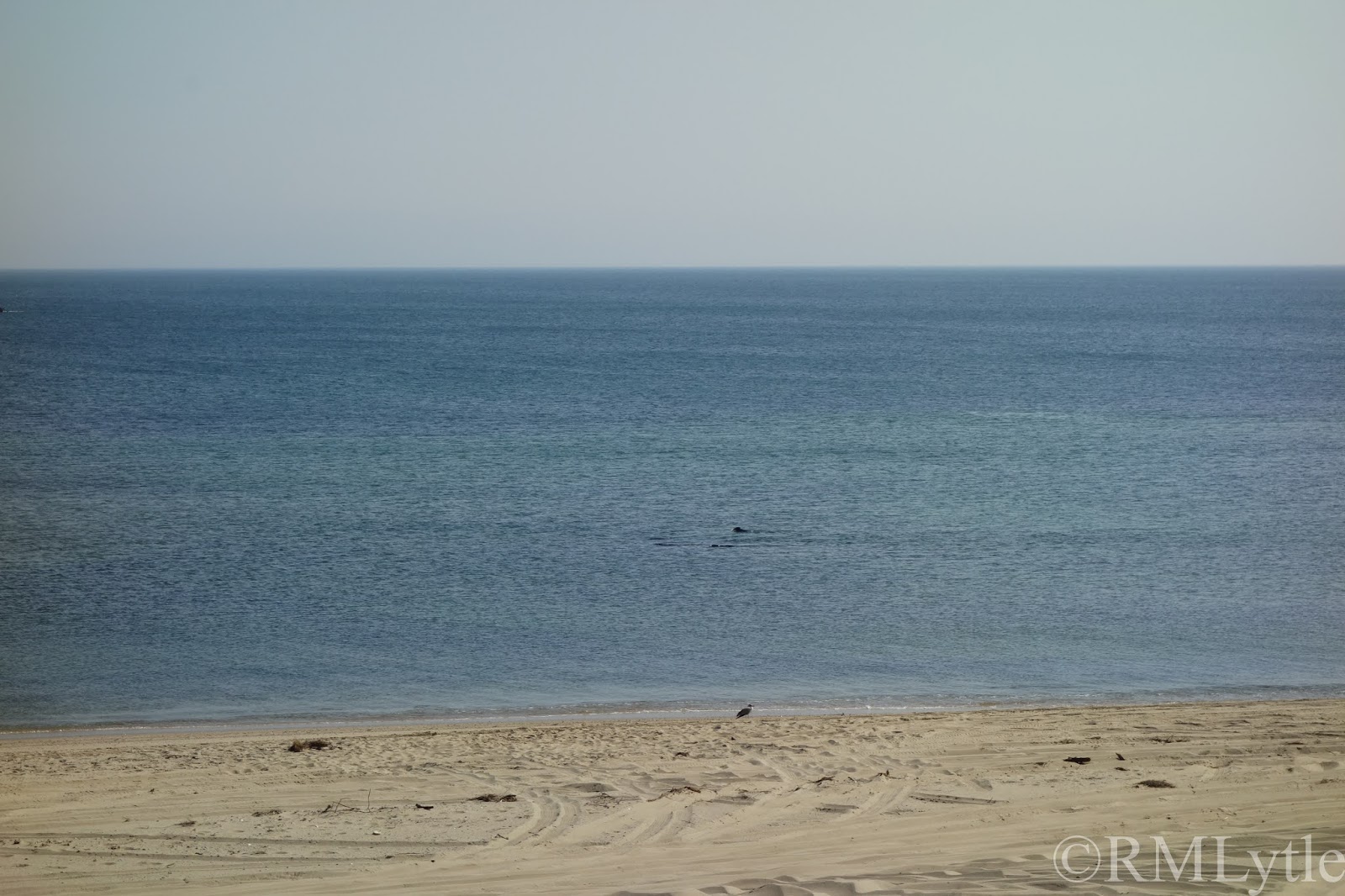
This humpback whale was quite close to the beach at Race Point. For me, it was the highlight of the trip. I'e been fascinated by whales since ell before I ever picked up a fly rod.


Race Point Lighthouse


Marsh hawk. Ian knows birds far better than I.


Segregation.


*Our hike to and from Race Point was longer and dryer than would have been ideal. That part of Cape Cod is basically a desert. Ian drew the connection to a scene from "Beavis and Butthead Do America" as we basically stumbled through the dunes back to the truck. 

Until next time,
Fish for the love of fish.
Fish for the love of places fish live.
Fish for you.
And stay safe and healthy.


Thank you to my Patrons; Erin, David, John, Elizabeth, Brandon, Christopher, Shawn, Mike, Sara, Leo, and Franky for supporting this blog on Patreon.