Wednesday, September 8, 2021

1wt Hickory Shad

 Some days I don't find quite what I set out looking for... many days, frankly. I spend a lot of exploring new water, or fishing familiar water at new times and in new conditions. I have to do this to stay on top of things. I'm trying to have a running schedule of what goes on everywhere I fish throughout the year. One evening a little while back I was looking for bonito. I was not finding said bonito though, and there weren't really bass around to pick up the slack. I did have my 1wt with me though, and that provided me an opportunity to do something a bit different when I found a school of peanuts being disturbed by hickory shad late in the day.

It seems to be a bit easier to get hickory shad feeding on very dense peanut schools than it is to get schoolie bass. If the Triple P is off, hickories are your friend. Sinking a fly under the peanuts and fishing the periphery is effective, and it doesn't seem that matching the profile of the peanuts matters at all. 

I could have just used my 5wt again, but I wanted to really test the 1wt. Anyone that has caught these shad knows they fight pretty well for their size. I figured the little rod had just enough backbone to land fish without killing them. I was right, I had no problem adequately fighting these fish. It was certainly more fun though. I have an old Ocean City reel on that rod right now and the drag is really loud. So far though I hadn't had the chance to hook a big enough fish to really make it scream. The hickories did just that. It was awesome. 

Of course, hickory shad are a delicate fish compared to most. If you aren't prepared to give them everything you've got on such light tackle, or to take them home with you, don't use a 1wt. If you utilize the strategies I highlighted in my recent fish fighting post though you'll have no problem safely catching and releasing shad on a 1 to 3wt fly rod and 4x. 


As the sky darkened more and more I realized I had to slow down my retrieve until I was hardly moving the fly at all. Most of the fish ate it as it sunk. I'd make a cast, let the fly fall, and suddenly I'd be tight. I didn't need to set the hook, the fish did it for me. Eventually though the feeding diminished too much and the bite was over. It sure was fun while it lasted, and far better than giving up after failing to find the bonito.

Until next time, 

Fish for the love of fish.
Fish for the love of places fish live.
Fish for you.
And stay safe and healthy.


Thank you to my Patrons; Erin, David, John, Elizabeth, Brandon, Christopher, Shawn, Mike, Sara, Leo, C, Franky, Geof, Luke, Streamer Swinger, and Noah for making Connecticut Fly Angler possible. If you want to support this blog, look for the Patreon link at the top of the right side-bar in web version.

Monday, September 6, 2021

Brook Trout By Definition

 Most of us know what a brook trout is. If you have read my ramblings for any significant length of time, I would hope you have some idea, at least. But in New Hampshire, or at least in New Hampshire's fishing rule books, rainbow trout are brook trout. Oh, and so are brown, golden, and Loch Leven trout and their hybrids. On the other hand brook trout, Salvelinus fontinalis, are their state fish.

If you think that's absurd, so do I. Brook trout are brook trout. They are one of only two native char left in New England. Given they are also New Hampshire's state fish, you'd think they'd want to try to protect them. Perhaps it's unsurprising though that a state that defines brook trout as a number of species and strains of fish that are definitively not brook trout- and most of which are not native -in the very set of rules set in place to govern angling, is in fact doing a very bad job of protecting its native char. 

Native Fish Coalition has published an open letter to New Hampshire regarding this absurdity. Read it here: nativefishcoalition.org.

This is a brook trout.

This is not a brook trout. 

Until next time, 

Fish for the love of fish.
Fish for the love of places fish live.
Fish for you.
And stay safe and healthy.


Thank you to my Patrons; Erin, David, John, Elizabeth, Brandon, Christopher, Shawn, Mike, Sara, Leo, C, Franky, Geof, Luke, Streamer Swinger, and Noah for making Connecticut Fly Angler possible. If you want to support this blog, look for the Patreon link at the top of the right side-bar in web version.

Edited by Cheyenne Terrien

Saturday, September 4, 2021

Chesapeake Bay Multispecies Fly Fishing

 Noah and I did an eel pickup down in Maryland a little while back. It was a one stop shop and we had a fair time window before the scheduled pickup, so we of course decided to fish first. Noah had already fished the area on previous pickup trips, so he had a pretty good idea of where we should fish. He'd caught spot, white perch, and some exceptionally tiny striped bass previously but we hoped to add Atlantic croaker and some other species to that list. 

We awoke in muggy conditions at our hotel and drove to the area we'd fish in darkness. Upon arrival, there were vague signs of false dawn but it was mostly still dark. The little public fishing dock we'd found had a light on it that was attracting some needlefish, which proved too finicky for us to catch. It took a while before we were actually catching anything. The spot croaker came along first and they were a lifer for me. 

Lifelist fish #181: Spot croaker, Leiostomus xanthurus. Rank: Species

I was using the 1wt, and on such light fly gear that little spot was a fun scrap. I was essentially nymphing, using BHHESH and bouncing along the pilings. Sometimes I'd make short casts and figure eight retrieve. Both strategies worked fine. As the sun rose the action picked up a bit.


Working long the bulkead towards the exit of what appeared to be an old boat basin I caught something different. It was clearly another small drum of some sort and certainly a new species but for a while we weren't sure what it was. Noah did a bit of research on the way out and determined that these were American silver perch. 

Lifelist fish #182: American silver perch, Bairdiella chrysoura. Rank: Species


As things progressed we got more spot, more silver perch, and soon some extremely tiny striped bass and some pumpkinseeds as well. The water in this part of the Chesapeake was just fresh enough that there were a few sunfish kicking around. Catching them adjacent to the other species would seem stranger to me had I not already experienced catching bluefish, stripers, pumpkinseeds, and common carp on the same day in the same estuary in CT. The tininess of the stripers was to be expected, since the Chesapeake is the most important spawning ground for striped bass on the East Coast. Unfortunately it is also one of the most environmentally damaged waters I have ever seen. The Chesapeake is being killed from pesticides and nutrient runoff at an alarming rate. It is also being severely over-fished. It's unfortunate that this is far too often ignored as a part of the equation in the decline of striped bass stocks, especially when you talk to fisherman. 


After a little while we decided to move just a little bit south to see if we could find something different. Indeed we did, under a bridge not far away. Tiny bass were blitzing on silversides and juvenile spot in the shadow of a bridge. We began hammering them, as well as the white perch that the were schooled up with. 


It was fast fishing that kept my 1wt bent and the little click and pawl reel singing, and in time I also discovered that there were quite a few spot hanging around as well. I actually caught them by indicator nymphing. I employed this tactic in salt water in Florida to great affect last March, and indicator fishing in saltwater is something I intend to delve deeper into soon. Float fishing saltwater isn't non-existent but it isn't common either, and using an indicator while saltwater fly fishing is even less frequently done. The possibilities interest me. 


Noah was fishing a small soft plastic on a jig and mostly catching schoolies and white perch. Lots of them, actually. They were pretty fired up. I kept with my nymphs, but switched up when Noah caught something that surprised us both- a speckled trout! Speckled trout aren't unheard of in the Chesapeake but it was pretty far from my mind when considering likely species in the are we were fishing. It was a tiny little thing, but any speckled trout is a speckled trout and it would be a lifer for me. I up-sized a bit and after more of the same old same old, I eventually and pulled up a baby trout! I'd missed so many opportunities to catch this pretty, toothy drum species in Florida. I honestly didn't think for a second my first speckled trout would come from Maryland. 

Lifelist fish #183: Spotted seatrout, Cynoscion nebulosus. Rank: Species.

None of these fish were big. None of them were rare either. They were definitely all fun on the 1wt though. It's unfortunate that the Chesapeake Bay is in such a bad way. If its possible to have this much fun there now, I can't even imagine how good it was years ago. Like the Everglades and so many other places, we have lost so much and continue to lose so much more. 

Until next time, 

Fish for the love of fish.
Fish for the love of places fish live.
Fish for you.
And stay safe and healthy.


Thank you to my Patrons; Erin, David, John, Elizabeth, Brandon, Christopher, Shawn, Mike, Sara, Leo, C, Franky, Geof, Luke, Streamer Swinger, and Noah for making Connecticut Fly Angler possible. If you want to support this blog, look for the Patreon link at the top of the right side-bar in web version.

Thursday, September 2, 2021

Catching Bait

 There is such an incredible amount and variety of bait in Long Island Sound this year. An absurd amount. If you are a fly angler fishing saltwater, this is a year to take advantage of of it. Not because of the fish that will eat them this year, which of course will be wild, but to catch the baits themselves. 

Okay, you might have raised an eyebrow at that. But whether you find catching the baitfish themselves fun or not, it is important to understand what your query eats. Fishing for those baitfish is a fantastic way to gather information about them to better design flies and alter your presentation when striped bass, bluefish, or hardtails are eating those very same fish. This is an aspect to fly fishing that is all too often ignored. 

A bit after Henri rolled in I was doing just that. Instead of looking for stripers I was after their food. There wasn't much striper fishing to be done anyway on this day. It was much too hot, the air pressure was high, and the wind and tide weren't good for it. I had with me my 1wt and a handful of small flies. I really hoped to encounter some Northern puffer but that's not what I found. Instead, I encountered hoards of finger mullet. Mullet are not a rare bait species in CT and RI but I don't always encounter them in any notable numbers. This year I'm seeing hundreds upon hundreds of mullet in places I've never seen any before. I just observed them for a while, watching how the school behaved and seeing if anything fed on them. It gave me a very good idea of how I should retrieve a fly when finger mullet are the bait of choice.


To get a better look at the fish themselves I had to catch one. Small mullet are very difficult to catch on hook and line, and all I needed was a reference photo and some quick notes, so I simple snagged one of them.


In the process of catching the mullet I noted the presence of loads of very small snapper bluefish. This is another species that striped bass often feed on. In fact, when striped bass are chasing down juvenile blues that are trying to migrate into the marshes from the open water where they were born, it is a prime opportunity to get some pretty nice bass on the fly. Sometimes the striper get downright reckless when feeding on these guys, but sometimes they get more picky and knowing how best to imitate the little blues will make a huge difference. My favorite flies and lures imitate their darting surface motions more than their profile and color, but sometimes a better mach is warranted.


Fishing for and handling baitfish shows you how the look both in the water and out, how they move, what profile predators see what they are looking at one, and so on. This is stuff you can't learn at the tying desk and sometimes something you can't learn if you're too focused on the predator fish themselves. I highly recommend taking out a light rod and small flies and specifically looking for the species your favorite fish eat.

Until next time, 

Fish for the love of fish.
Fish for the love of places fish live.
Fish for you.
And stay safe and healthy.


Thank you to my Patrons; Erin, David, John, Elizabeth, Brandon, Christopher, Shawn, Mike, Sara, Leo, C, Franky, Geof, Luke, Streamer Swinger, and Noah for making Connecticut Fly Angler possible. If you want to support this blog, look for the Patreon link at the top of the right side-bar in web version.

Wednesday, September 1, 2021

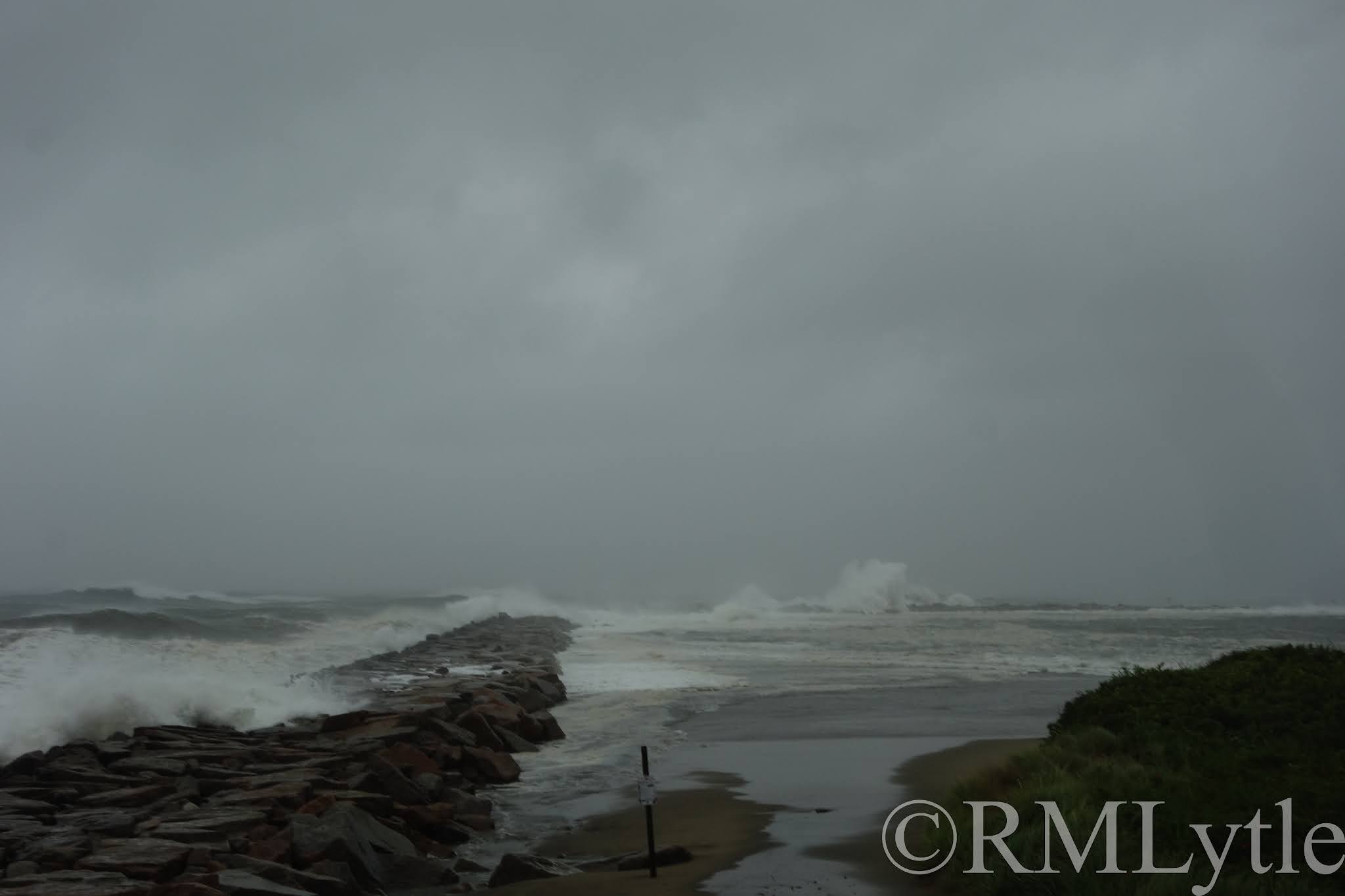
Intercepting Tropical Storm Henri

 Tropical Storm Henri did almost exactly what I forecast it to do, with some noteworthy deviation. The hype surrounding the storm and the possibility that it could make landfall on Long Island as a hurricane was undercut, literally by the storm being undercut by high pressure on the south side. This resulted in a very windy northeast quadrant and an earl landfall in RI as a tropical storm. We got luck in some respects because the tide was low, and the wind profile of Henri was capable of producing notable storm surge in Narragansett Bay IF he had made landfall around high tide. Rain was substantial and resulted in localized severe flooding in a number of areas, as was forecast. It was a bit frustrating from my perspective to watch people poo-poo the storm after it had passed. It's an incredibly selfish way too look at severe weather. There are some folks who lost property from this storm. Maybe your house wasn't affected, maybe your neighborhood wasn't, maybe even your entire town wasn't at all notably affected. But somebody definitely was. Scale it up and it would be like living within an area that was just within a tornado warning polygon and complaining about how it was all hype when your home didn't even get rained on... meanwhile there's a family five miles away wondering where they're going to live now that their home and vehicles are destroyed, and how they can move on without all of the irreplaceable things they just lost. 

Suffice to say I don't like how weather or weather forecasting is perceived by the general public. That is in part the fault of meteorologist for being unable to communicate something complex to laymen, but people could stand to be less awful to each other as well. Now that I'm done with all that, here's the fun stuff.


I chased Henri in Southern Rhode Island with my partner Cheyenne. I projected a landfall near the RI/CT border a day ahead of time and new that a combination of a safe road network and being in the storm's windy quadrant would make the Point Judith area a good target. Early in the morning of the day Henri made landfall we drove right into the fray. Big swell was rocking the jetties and throwing cobble up into the parking lot at Fisherman's Memorial, and at the lighthouse and Scarborough beach some of the strongest wind gust were battering the shoreline. Just inland, trees blocked roads and knocked out power.


I maintained situational awareness and kept us safe while navigating the treacherous conditions, and got us in the best locations I could to experience the storm. It was a fun storm for us, with minimal risk aside from the possibility of being blocked in an area for a short time because of downed trees. I was strategically planning routes based on how many road options there were out but we still almost got boxed in at one point. Only one of 4 roads out didn't have a tree across it. 
Wind gust exceeding 70mph were recorded along with some minor storm surge, making it the most significant tropical storm I've actually chased. I photo-documented Irene and Sandy but I was just a kid (still am but one with a car now)at the time, so I didn't get to chase those storms. 


As some folks cleaned up the mess Henri left, a a new storm was taking aim at the US coastline. Ida ended up being a storm of historic proportions, and as I sit here in Maryland getting ready to drive through what's left of her I can't help but wonder if I'll ever experience a storm like that. I'd like to, on one hand. On the other is this gut feeling that I shouldn't, because I know what I'll see. It would be worth documenting, and in the truest sense of the word it would be awesome. It would also change my life. I'd see things I never want to see. 

On a fishing related note, Henri pushed in Some really early albies. It's not lights out but they're here. More to come on that.

Until next time, 

Fish for the love of fish.
Fish for the love of places fish live.
Fish for you.
And stay safe and healthy.


Thank you to my Patrons; Erin, David, John, Elizabeth, Brandon, Christopher, Shawn, Mike, Sara, Leo, C, Franky, Geof, Luke, Streamer Swinger, and Noah for making Connecticut Fly Angler possible. If you want to support this blog, look for the Patreon link at the top of the right side-bar in web version.